
 The Wedding is a short story I wrote to celebrate the publication of the new edition of one of my first published novels. The Reluctant Debutante is a Regency romance and I’ve explained in a separate post why I’ve been wanting to re-edit it for years. I was delighted with the final result.
For the past few years I’ve chosen to include one of my free short stories at the end of each book as a bonus. I didn’t really have anything suitable for Giles and Cordelia’s love story but then it occurred to me that I could write one.
The Wedding takes place immediately after the event of the Reluctant Debutante and is a gift to my readers, who have followed some of these characters for years. To some extent however it’s also a gift to Giles Fenwick. Through nine years and ten books we’ve seen Giles go through some of the toughest times of any character in my series and if he didn’t arrive home after Waterloo with some form of what we’d now call PTSD it would be astonishing. I wanted Giles to have his happy ending.
The story also introduces a new character. Expect to meet her again. She’ll fit right in with the rest of them once she finds her feet.
I hope you enjoy it.
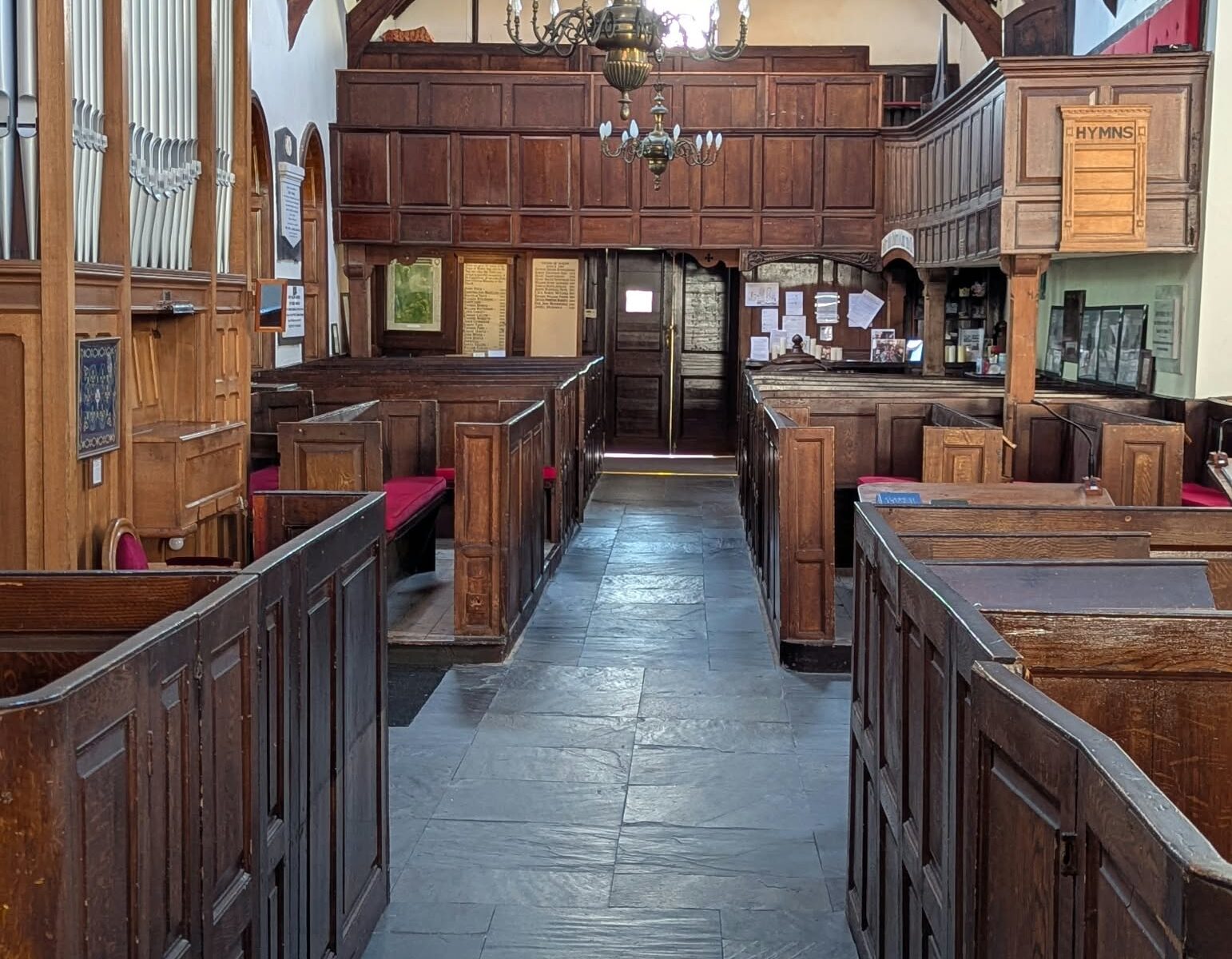
The images are photos of the church in Malew on the Isle of Man. My church in this story was fictional but it just might have looked like this.
The Wedding
London, 1819
“A note just arrived for you, Miss Summers.”
Cordelia Summers was so deeply absorbed in the book she was reading that she had not heard the arrival of the parlour maid. She had reached a particularly unnerving passage in the story and the interruption made her physically jump. She regarded the maid with some disfavour, waiting for her pulse to settle. The girl was small and slender with a glimpse of dark hair pinned up under her cap. Cordelia did not recognise her.
“I don’t know your name,” Cordelia said. “You must be new.”
The girl bobbed a curtsy, looking surprised. “Yes, ma’am. I’ve been here a month. Nancy gave notice to go home to look after her Ma after her sister died. The agency sent me.”
Cordelia set down her book reluctantly. She realised that her sharp tone had probably sounded rude and she had been raised to be polite to the servants.
“I’ve been away so much this year, I must have missed all of that. Will you tell me your name?”
“It’s Myers, miss.”
Cordelia smiled. “Did they not tell you that we call our female servants by their first names here? Apart from Mrs Craven, the housekeeper, of course: we wouldn’t dare. She’s so majestic.”
She was pleased when the girl gave a little giggle. “She is, ma’am. They did tell me but it’s different to my last place. I keep forgetting.”
“You’ll get used it. So what is your first name?”
“It’s Deborah, ma’am.”
“Well Deborah, welcome to the Summers’ household. Not that I’m going to be here for much longer.”
“No, ma’am. They tell me you’re to be married to an Earl.”
The girl sounded as though she took personal pride in such a triumph. She seemed to have completely forgotten about the letter which rested on the silver tray she carried. Cordelia waited for a moment then decided a prompt would be needed.
“Did you say that was for me?”
The maid looked startled. “Oh. Oh yes, ma’am. Sorry. I think it may be from his Lordship.”
She offered the tray and Cordelia took the note, recognising her fiancé’s neat, legible hand. She had often thought that Giles’ handwriting did not reflect his rather eccentric personality. The sight of it made her smile. She opened it and read quickly.
“Will that be all, ma’am?”
Cordelia looked up, surprised to find the maid still there. “Oh, yes. Thank you Deborah. Would you send Lucy up to my room and ask Barrett to bring the barouche round in about an hour?”
“Of course, ma’am.”
Cordelia cast a rather wistful glance at her book. “And Deborah, if you move my book to clean, please don’t lose my place.”
The parlour maid gave a sunny smile. “I shan’t touch it, ma’am. Word of honour.”
Cordelia made her way upstairs to her bedroom. It was a spacious apartment with two connecting doors, one leading to a bathroom and the other to a dressing room which Cordelia never used. Her personal maid was already there.
“Is the Earl taking you driving, ma’am?”
“Sadly not,” Cordelia said. “He has asked if I am free to meet with Mr Bowen about the redecoration of the Countess’s… of my bedchamber.”
“How exciting, ma’am. Have you thought about what colours you might choose?”
Cordelia stared at her maid. The woman looked genuinely interested. For a moment she wondered if there was any way she could send Lucy in her place. The thought made her smile. At the very least it would make Giles laugh.
The Earl of Rockcliffe occupied an elegant house on Piccadilly. A stately butler greeted Cordelia with quelling formality in the hallway. Cordelia was not intimidated. She and Wilmot were on excellent terms.
“Good day, Wilmot. Is his Lordship at home?”
“He is currently in conference with his man of business, Miss Summers, but hopes to join you as soon as…”
“Cordelia!”
She looked up feeling her heart lift at the sight of Giles running lightly down the stairs. He came forward, took both of her hands and kissed her.
“I’m so sorry about this. Aunt Agatha arranged it days ago and I completely forgot about it until he arrived on the doorstep with three underlings and boxes of design books and fabric samples. I would have sent him away but Bowen has come in person as a tribute to our consequence and I was sure you would tell me I was being rude if I told him to go to the devil and take his pattern books with him.”
Cordelia regarded her fiancé approvingly. “Giles, that is very noble of you. Really your social manners are improving all the time.”
“I knew you’d be pleased,” the Earl said rather smugly. “The only thing is that I’m in the middle of a business meeting. Can you deal with him on your own? I’ll try to join you as soon as I possibly can.”
“I shall manage perfectly well as long as you promise to join me for tea later.”
“I give you my word. You will make an excellent Countess, Cordelia. My relations cannot believe I’ve chosen so well. Wilmot, show Miss Summers to the blue salon, would you? You’ll find Mr Bowen there under a mountain of fabric samples.”
Cordelia had very little interest in furnishings and wall coverings but she had not quite liked to say so to the Earl. It had been a trying few weeks for Giles and she had a feeling that he was desperately trying to infuse a sense of normality into their betrothal, now that it had been formally announced. This was complicated by the fact that he was also trying to arrange the entire wedding as quickly as he possibly could.
She spent a rather tedious afternoon with Mr Bowen, of Bowen and Elting’s Furnishing Emporium, looking at fabric samples and paint colours, while her maid spent the time casting flirtatious looks at one of his assistants. Cordelia wished heartily she could have handed the job over to Lucy who was clearly enjoying herself. Her spirits rose immediately when the Earl appeared. He came to kiss her, apparently ignoring the presence of her maid and a collection of salesmen, approved her choices without hesitation then dismissed them all and led Cordelia down to the drawing room, where tea was awaiting her. Cordelia settled gratefully onto a sofa and allowed the maid to pour. When the door had closed behind the girl, Giles asked:
“How are you feeling? Still tired?”
“Not really,” Cordelia said. “I think the past few weeks had rather taken their toll but I seem to have regained most of my energy. Though looking at fabric samples is enough to send me to sleep. I had no idea there were so many shades of green. What have you been doing?”
“Far worse. I have been closeted with my man of business discussing settlements and matters of finance.”
“Oh love, you’re right. That’s much worse.”
“I appreciate your sympathy. He will now go away to talk to your father’s man of business. After a lot more paperwork, the latter will go back to your father. The whole process will then begin again in reverse. Do you know, I think your father and I could sketch this out on my note tablets in about twenty minutes over a beefsteak and a bottle of burgundy at my club. Being a penniless officer was never this much hard work.”
Cordelia laughed out loud. She set down her cup and reached for his hand. “My poor Giles. We should have eloped.”
“Don’t think I didn’t consider it. If it hadn’t been for this ridiculous imbroglio with The Times announcing my engagement to Charlotte Crookendon, then the threat of being sued for breach of promise, I’d have made the suggestion. As it is, there is a faint whiff of scandal drifting over the whole affair which means a very correct wedding is needed. Miss Crookendon and Mr Rigby have departed for the north to be respectably married at my expense, thank God. I’m hoping that in about a week you and I can set off for Leicestershire and be married by special licence as soon as it can be arranged.”
“Giles, in all the time I’ve known you, you have never cared a button about scandal.”
“I do if it touches you, love.”
Cordelia felt a little rush of happiness. “I’ll try very hard not to be scandalous then. Poor Mr Bowen found me a severe trial earlier. He was desperately trying to engage my enthusiasm for the colour of the walls in my dressing room. In the end I chose sage green. I’m not even sure what sage green is, but it seemed to please him. Giles, has it ever occurred to you that a dressing room is not really necessary?”
Her fiancé drank tea with a thoughtful expression. “Honestly? You may be right. Throughout my many years in the army I never had a dressing room. Often I didn’t have a bedroom. Tents were good. I liked it when I had a tent, but usually during my time as one of Wellington’s intelligence officers, I found that my bedchamber was under the nearest tree or shrub. Once I slept in a ruined pigsty.”
“Goodness. You have seen life in a way that I have never dreamed of.”
“However, I have a word to say in favour of dressing rooms. When we are living as man and wife, Cordelia, which cannot come soon enough for me, it occurs to me that there will be times when we’ll both be dressing for some occasion at the same time and it might prevent your maid being shocked by the sight of me in my underclothes. Or my valet getting the treat of seeing you in yours.”
Cordelia regarded him, considering the matter. “But in your house, my Lord, we have separate bedrooms.”
“Which we are never going to use. Just choose which you prefer. You’re right. It’s utter nonsense. Thank you for humouring me. Drink your tea and I’ll drive you home. I think I can manage to complete all the business here within two or three days and then we can go back to Leicestershire. By then I hope to have more information about who is going to conduct the ceremony.”
Cordelia looked at him curiously. “I’d assumed it would be Mr Roberts, the vicar of St Mary’s in Radley. We could get married in the church or, with a special licence, in either Radley House or at Dennington. Which would you prefer?”
“I don’t give a damn where it is. Radley, I think, because it would please your father. I do have a preference about who conducts the service though. The chaplain of the 110th Light Infantry is currently on his way from France in the company of my commanding officer, which won’t be much fun if there are delays because Major-General van Daan will yell so loudly they’ll hear him across the Channel. I’d really like the army chaplain to perform the service if he can get here in time. It’s something of a regimental tradition.”
Cordelia surveyed him then reached for his hand and raised it to her lips.
“I have a lot to learn about you, don’t I?”
“No,” Giles said simply. “Just about my past and my friends. You know everything you’ll ever need to know about me. My aunt informs me that things are going well with the dressmaker. Did she give you any idea how long it will be until everything is ready?”
“Madame Francine assures me that she will be ready for the final fitting tomorrow. If it was left to her, of course, I would still be adding to the order at Christmas. She is constantly remembering one more indispensable item of clothing which every fashionable bride requires. I have now called a halt to this nonsense, which seemed to surprise her a great deal. I will be ready, dear Giles, I promise you.”
He squeezed her hand. “I know I’m rushing you. Both my aunt and Lady Oakley are annoyed with me about it. It’s just that…”
“I know, love.”
He leaned forward to kiss her and Cordelia moved readily into his arms. She knew exactly what was worrying Giles. There had been two occasions when they had rather anticipated their marriage vows and Giles was anxious to be married as soon as possible in case she should be with child. Cordelia could not yet reassure him one way or the other. All she could do to calm his jangling nerves was to manage her wedding preparations as quickly as possible.
“I wish I didn’t have to do this in such a hurry,” Giles said abruptly.
Cordelia thought of several remarks which would normally have made him laugh. She discarded them all. Having made the decision to abandon his bachelorhood in favour of marriage to a merchant’s daughter, the Earl of Rockcliffe was taking the matter surprisingly seriously. Cordelia decided he needed reassurance, not humour. She took his face between her hands and looked into his eyes.
“Giles, this cannot come soon enough for me,” she said gently. “Just because I want us to be together. That’s all.”
He moved closer, drawing her back into his arms. Cordelia was just congratulating herself on soothing his anxiety when he spoke in thoughtful tones.
“Perhaps, after all, we should convert the Countess’s bedroom into a nursery. Just in case.”
He was laughing. Cordelia gave him a sharp smack on the back of his fair head but she was laughing with him. This was why she loved him.
“I don’t think so, my Lord. Didn’t you see the shade of green I chose?”
***
Giles Fenwick awoke in the early hours with his brain teeming with plans. He lay still for a while, realising with exasperation that there was nothing he could do at this moment and that sleep would have been useful at this point. During the years of his army service he had become accustomed to getting by with very little sleep but he had decided recently that he had either lost the knack since he inherited the title or that it was simply that he was growing older.
After a fruitless hour of tossing and turning, he rose and dressed quietly then went downstairs. The house was very quiet and he could hear the ticking of the grandfather clock in the front hallway. A glance at it told him that the servants would be up in about forty-five minutes. The sun would have risen by then. Giles considered, then went through the service corridor, down a short flight of steps, and into the big square kitchen at the back of the house.
The fire in the kitchen range had been banked for the night and Giles did not attempt to stoke it into life. Instead he lit a taper from it and kindled the ready-laid fire in the small stove, coaxing the flames into life with practised skill. He set a filled kettle to boil and went to collect a teapot. By the time he heard footsteps on the stairs down from the servants’ quarters at the top of the house, he was adding milk to his cup. The door opened. Giles did not look round.
“Ready for some tea, Hodgkins? Mrs Browne will be down soon I expect, so I didn’t make a start on breakfast.”
His valet trod across to the big scrubbed table. He watched as Giles filled the second cup and accepted it.
“Thank you, my Lord. Mrs Browne is going to have a fit if she sees you in here again. If I may make a suggestion, it would be better if we settled you in the breakfast room or possibly in the library with your tea, giving the impression that I made it…”
“I really don’t remember you speaking in such long sentences when we were in Belgium,” Giles interrupted, perching on the edge of the table and sipping his tea. “In fact when I first knew you, you were a newly promoted corporal and most of your sentences began with the word ‘fuck’ and ended with the phrase ‘you useless splay-footed bastards’. What happened to you, Hodgkins?”
“Civilian life, my Lord. Though when you wake up in one of these moods I’m occasionally tempted to revert to my old ways. What’s your young lady going to say when she finds you lighting fires and making yourself tea in the kitchen?”
“I’ve no idea. Though if she catches me doing it, there will presumably be a question about what she’s doing there herself. Don’t look so worried, Hodgkins. Even Mrs Browne can’t blame you. You can’t be expected to watch me all the time.”
“You should get another valet, sir. We could take shifts: a bit like picket duty back in the day. Mind you, at least I get a break when you go out. I trust Radford to keep an eye on you mostly. Why are you up so early? Pre-wedding nerves?”
Giles could not help smiling. “Not about being married. I’ve never been more sure of anything in my life. I just want to go back to Dennington and get on with it. All I seem to hear from my Aunt is stinging reproofs about me hurrying my lady into church without proper preparation.”
“What does your lady say about it?”
“She assures me the next fitting will be the last and if it’s not right then she’s wearing it anyway. She keeps telling me to go on ahead and arrange the wedding and she’ll join me in a few days.”
“I don’t think there’s any doubt that she will my Lord.”
“Nor do I, left to herself. The trouble is, she never is left to herself. She is haunted by her father and Lady Oakley and my Aunt Agatha. I can’t help worrying that if I go back to Dennington without her, we still won’t be married in three months time. And that’s too long.”
Giles broke off, realising he was about to say too much. He took refuge in drinking his tea again. Hodgkins did the same and they remained in companionable silence. Giles wished he could confide in somebody about his panicked need to hurry the wedding along. With a special licence, he and Cordelia could be married at very short notice. He suspected that left to herself, his beloved would have happily got married in her riding habit but she was showing very pretty deference to her elders in matters of wedding tradition.
Giles would not have cared had it not been for his nagging sense of anxiety that there might be a very real need to hurry. He could not bring himself to regret making love to his future wife before their wedding plans were finalised, or even begun. It had not been a sordid seduction to be concealed by a hasty marriage but a joining so perfect that he lay awake at night sometimes, just thinking about her.
What he did regret was waiting so long to make such an obvious decision and then rushing everything. He realised now that he had known he was in love with Cordelia for a long time but had been paralysed with uncertainty about whether he was good enough for her or even suitable husband material at all. He wished passionately that the Army of Occupation, stationed in France since Waterloo, had been wound up six months earlier. His friends, had they been closer, would have given him a swift kick and told him to stop being ridiculous. Then he would not now be in this state of constant worry in case Cordelia really was carrying his child and people began to suspect. Giles did not give a damn what people thought of him but he could not bear the thought of any hint of scandal touching Cordelia.
The sound of more footsteps on the stairs reminded Giles reluctantly that he was not on campaign any more and should probably not be found drinking tea with his valet and former NCO in the kitchen. He handed his cup to Hodgkins with a shared grin and slipped out through the scullery door to take the air in the long, narrow back garden until his valet appeared to let him in through a more respectable entrance.
Giles spent an hour with his secretary, going over the final paperwork regarding the marriage settlements and scrutinising his new will. Having been virtually penniless for most of his army career, Giles’ former will had been scribbled on his note tablets, giving his horses and any other possessions he happened to have acquired along the way to his closest friend. For several years this would have placed his meagre wealth in the hands of his Spanish guide, Antonio. After Antonio’s death at Castro Urdiales, Giles had written a new will in favour of Captain Michael O’Reilly, who had been with him on that bloody day. There had been little to leave but Michael would have looked after his horses well.
Giles scanned his most recent will and set it down on the table, smiling slightly. Michael was mentioned in this one as well and the sum he was able to leave his friend would have shocked the life out of the Irishman. He would almost certainly never know about it unless Giles was particularly unlucky but just writing it had made Giles happy.
“I think that’s everything, my Lord.”
“Good. Thank you, Matthew. I’m going to call on Miss Summers to have a rational conversation about when we can manage to get married. Depending on what she says, I think I’ll make arrangements to post up to Dennington to set everything in order. I’m of no use here and I suspect I’m driving you all mad.”
“I’m of no use either, my Lord,” Mr Bolt said. “If we can meet tomorrow to get everything signed and witnessed, I was wondering if I might come with you? If my mother sees that we’ve both left Town it might spur her into following us. I do think it’s her insistence that is causing the delay. Miss Summers feels that it is important to develop a good relationship with my mother and I have to say she’s doing remarkably well at it. All the same…”
“All the same, I would really like to be married before Christmas. I think it’s an excellent idea, Matthew. If we can get my Aunt moving before the end of the week, Cordelia will follow immediately. I’m going to try to set the date for the following Wednesday or Thursday. That gives another week for the General’s party to arrive from France. I hope they get here on time but I’ve written to tell him I’m not waiting. He’ll understand.”
“I’m sure he will, my Lord.”
“While I think of it, Cousin, there’s another matter I’ve been meaning to raise. I think three years as my secretary has been long enough for you to make your point about our respective social situations. Do you think there is any way I can persuade you to call me Giles? It’s what you used to call me when you first learned to speak and used to fall flat on your face trying to run after me everywhere. It can’t be that hard.”
Mr Bolt laughed aloud. “It’s not the done thing, sir.”
Giles pounced. “Sir. All right, that’s a big improvement on ‘my Lord’. Less formal and I’m entirely accustomed to my friends calling me ‘sir’ in the army. Let’s stick with that for now. Right, I have one or two letters to write and then I am going to walk over to Russell Square to see my fiancée. I might tell her that if she doesn’t start making arrangements to post up to Leicestershire, the wedding is off.”
“She isn’t going to believe you, sir.”
“I know,” Giles said sadly. “She knows me too well.”
***
The Earl arrived at the Summers’ residence in Russell Square into the middle of a minor domestic crisis. Cordelia was in her bedroom talking to Lucy about what to pack for the imminent removal to Radley House when one of the maids brought a message to say that Mrs Craven, the housekeeper, would be grateful for a word. Cordelia, who had known Mrs Craven for most of her life, recognised urgency behind the request and told Beth that she would see the housekeeper in the parlour in twenty minutes.
Her suspicion was confirmed by Mrs Craven’s expression. Cordelia did not ask her to sit down because she knew the housekeeper would refuse. Mrs Craven believed in strictly observing the social difference between employer and servants. Cordelia thought that it was a good thing the Earl’s various households were fully staffed so that there was no question of taking any of her father’s servants with her. She had spent enough time in his London home by now to recognise that Mrs Craven would die of shock at the Earl’s informality with some of his servants.
“What seems to be the problem, Mrs Craven?”
“It’s the new parlour maid, ma’am. I believe we need to dismiss her.”
Cordelia’s heart sank. She had taken over management of her father’s household at the age of seventeen and one of her first clashes with his formidable London housekeeper had been on the subject of dismissing staff without consulting her employer. Mr Summers had no interest in domestic matters and was happy to leave such decisions to his housekeeper, but Cordelia thought that Mrs Craven was too rigid in her views and disliked a high turnover of maids.
Her solution had been to instruct both the housekeeper and the butler to consult with her if they wished to dismiss a servant. Neither had been comfortable with the idea and there had been one particularly difficult incident when Hamilton, the butler, could not bring himself to explain to his employer’s unmarried daughter that one of the footmen had got the kitchen maid in the family way, but the system had settled down. Most of the servants had been with the Summers for years now.
Cordelia was not entirely surprised that Mrs Craven was unhappy with Nancy’s replacement. Deborah Myers was not a typical parlour maid. As far as Cordelia had been able to tell in such a short time, she was perfectly good at her job, was always immaculately turned out, and performed any request with a cheerful demeanour. Cordelia liked her.
At the same time, she sensed an air of feisty independence in the new parlour maid which she suspected would not please the rigid Mrs Craven. There was nothing wrong with Deborah’s manner: she was always perfectly polite, but she was not deferential. Cordelia wondered if this had spilled over into rudeness.
“I see,” she said in neutral tones. “What has she done wrong?”
“She’s not right for us, ma’am,” Mrs Craven began. “She’s too full of herself, that one. Walks around the place as if she owns it and has far too much to say.”
“That’s no reason to dismiss her if she’s doing her job well, Mrs Craven.”
“Well and that’s what I knew you’d say, ma’am,” Mrs Craven said. “So I’ve been watching her.”
Cordelia kept a tight rein on her irritation. “I see. What have you observed?”
At this point there was an interruption as the door opened. To Cordelia’s surprise it was Deborah herself, dropping a correct little curtsy. Cordelia saw Mrs Craven flush a little and was faintly amused. Like her housekeeper, she wondered if the girl had heard anything of the conversation.
“Begging your pardon, ma’am. I didn’t realise you weren’t alone. It’s the Earl, ma’am.”
Cordelia stood up. She knew that her face had lit up and was amused to see identical indulgent smirks on both the housekeeper and the parlour maid.
“We can discuss this later, ma’am,” Mrs Craven said.
“No, stay. It won’t take long and the Earl won’t mind. Send him in, Deborah.”
“I’m already in,” Giles said, over the girl’s shoulder. “Should I go back out again?”
Cordelia held out her hand and he came forward, took it, and kissed it. “Not at all. Mrs Craven has one or two things to discuss with me but she won’t mind you being here. Sit down. Deborah, will you arrange for some tea, please?”
“Yes, ma’am.”
When the door had closed behind her, Giles seated himself on the sofa beside Cordelia with a very correct distance between them in deference to the housekeeper’s presence. Cordelia could sense Mrs Craven’s discomfort but decided she did not care. If the matter was genuinely serious enough to warrant dismissal, there was no reason that Giles should not hear it. If Mrs Craven was being unnecessarily petty she would probably moderate her complaints in front of the Earl.
Giles gave the housekeeper one of his attractive smiles. “Please go on, Mrs Craven. Pretend I’m not here.”
The housekeeper looked at Cordelia. “If you’re sure, ma’am.”
“You’re not going to shock the Earl with the misdeeds of my parlour maid, Mrs Craven. What has Deborah done wrong, apart from not fitting in?”
“As I said, I’ve been watching her. She gets her half-day off, ma’am, same as the rest of them, as well as time to go to church on Sunday, morning or evening. And every third Sunday free. Your father has always been generous with the servants. Most of them don’t take advantage, though James is occasionally late back. But only by a few minutes and we know he visits his mother all the way over the river in Southwark, so Mr Hamilton gives him some leeway. Good footmen are hard to find.”
“And Deborah?” Cordelia said again, striving for patience. She had lost interest in this conversation the moment Giles walked into the room. She wanted the housekeeper gone so that she could kiss him and tell him that she would be ready to leave on Saturday.
“She’s been unreliable from the start, ma’am. Always late back and always with some excuse. One Wednesday evening I caught her sneaking in through the scullery door so that I wouldn’t realise she was late. I’m not sure she’s not done it before and I’ve not noticed.”
Cordelia considered. “How on earth did she get into the garden to manage that?”
“She told Susan that she’d climbed the side wall using the ivy, ma’am.”
“Goodness, that can’t have been easy,” Cordelia said admiringly. “I’m surprised it didn’t give way on her. I wonder if there are handholds in the brickwork? I must take a look.”
Mrs Craven gave her a look of frozen disapproval. Giles made a little snorting sound, hastily turned into a cough. Cordelia did not dare to look at him because she knew he would make her laugh. Another thought occurred to her.
“How did she… no, never mind. It really doesn’t matter.”
She had been about to ask how Deborah had known the scullery door would be unlocked, since it should definitely have been locked by that time. At the last minute, Cordelia realised that her errant parlour maid must have had an accomplice. Given Deborah’s bright-eyed prettiness, she suspected one of the footmen or the boot-boy had been suborned but if Mrs Craven had not thought to make enquiries, Cordelia was not going to put the idea into her head. Instead she said:
“Have you asked her about her timekeeping, Mrs Craven? You said she has given excuses but sometimes excuses are genuine reasons, as with James visiting his mother. While we certainly don’t want the girl climbing walls on a regular basis, she seems to me to be an excellent servant in other ways.”
“She can work hard,” Mrs Craven admitted grudgingly. “Though in my opinion she thinks she’s too good for it. As for excuses, it’s a new one every time. She’s unreliable, ma’am. I think she’s a liar and, if she is, what next? Liars are often dishonest in other ways. What if she turns to theft?”
“That’s a very big jump,” Cordelia said, trying to sound sympathetic. “I understand that Deborah’s lateness is causing you difficulties, Mrs Craven. But if that is the only complaint, I’m willing to give her another chance. I’m going to speak to her myself and I’ll make sure she understands that this can’t go on. We’ll give her another month. I won’t be here by then but I’ll speak to my father about it and you can take any further complaints to him.”
“Yes, ma’am. Though Mr Summers always used to prefer me to manage the servants myself.”
Cordelia did not miss the triumph behind the words. She managed to bite back a sharp reply, since she knew Mrs Craven was right. Mr Summers was a generous employer but he was not going to spend time or trouble over an unreliable parlour maid. He would take the view that he paid his housekeeper to manage the female servants and would leave it to her.
“That will be up to him,” Cordelia said, deliberately keeping her tone light. “Thank you Mrs Craven. I’ll speak to Deborah later today.”
“Thank you, ma’am. I’ll go and find out what she’s doing with that tea tray since she’s taking her time over it.”
Before the housekeeper had reached the door however, it opened to admit Hamilton the butler. He bowed and held the door for Deborah to bring in the tea tray.
“Your tea, Miss Summers. Set it down on the small table, Deborah. Miss Summers will prefer to pour for herself and the Earl. My apologies for not being present to admit you, my Lord. I was speaking to the manservants about household security and the importance of locked doors remaining locked.”
Cordelia saw Giles give a broad grin. “That’s an excellent idea, Hamilton. I was going to suggest something of the kind myself.”
The butler bowed again. Cordelia observed a distinct flash of amusement in his eyes.
“I felt sure you would agree with me, my Lord. Miss Summers can be reassured that when she departs shortly to the happy occasion of becoming your Countess, everything in her father’s household will continue just as she would wish.”
He ushered out the parlour maid and the housekeeper, gave a final bow and a small but decidedly conspiratorial smile to Giles and Cordelia, and closed the door firmly behind him. Giles slid across the sofa and took Cordelia into his arms.
For a short, but very satisfying interval, Cordelia forgot all about housekeepers and errant parlour maids. When Giles finally released her, she straightened her gown and checked that her hair was not coming down, then rose to pour the tea. Giles accepted a cup with a smile and she sat beside him with a contented sigh.
“Saturday,” she said. “I am leaving on Saturday. The gowns will be delivered tomorrow and we will take a day to pack. My father can’t leave Town until Monday because he has an important meeting with somebody from the Board of Trade whose name I can’t remember. But he’ll travel post and do the journey in a day.”
“That’s very good news. Does my Aunt know?”
“Yes and she has reluctantly accepted that I do not need an entire new wardrobe to be a countess. Lady Oakley is setting off tomorrow. She’ll spend a night or two at Ashleigh Manor with Sir Justin and Maria then join me at Radley.” Cordelia pulled a face. “I don’t really need her; Sarah can do everything I need. But her Ladyship has come over very sentimental about me not having a mother beside me on my wedding day. Which has been difficult because Mrs Bolt has been rather the same and managing two ladies, both trying to be maternal and squabbling over the matter, has been exhausting.”
“My poor Cordelia. Do I need to speak to them?”
“No because you’ll be rude and there’s no need. I can manage them. And once we’re married I’ll be at Dennington with you and it will be heaven.”
The Earl set down both of their tea cups and kissed her again, apparently in support of this idea. When she was comfortably settled with her head on his shoulder, he said:
“If you really can leave on Saturday, Cordelia, why don’t I wait and come with you? Matthew can escort his mother. Between us, he and I can convince her she should go on ahead to make sure everything at Dennington is in readiness, though if I know my housekeeper there will be no need. You and I can travel together very respectably with your maid and my groom.”
“I would love that, dear Giles. Have you remembered though that we have promised to dine with the Oakleys this evening?”
“I have tried to forget,” Giles said mournfully. He caught her eye and laughed. “I shall be there, I promise. Would you like me to collect you in my carriage?”
Cordelia opened her mouth to refuse, caught his eye and laughed. There had been little opportunity to socialise since their betrothal had been formally announced. London was very thin of company during the summer months and, in good society, only those with specific business in Town remained. There had been few opportunities for Giles to arrive with her on his arm as his betrothed and she realised how much he was looking forward to doing so.
“I would like that very much, my Lord.”
“Don’t you start. I gave Matthew a lecture this very morning about excessive formality. I need to get used to less of it now that the army is coming home. You’re going to be appalled at what some of them call me.”
“I don’t mind that as long as I am allowed to do the same.”
He grinned and rose to pour more tea. “Are you busy for the rest of the day? I thought I could take you for a drive. It’s a beautiful day.”
“I’d prefer to walk in the park. I’ve spent so much time inside with these wretched dress fittings and discussions about curtains and bed-hangings. I should really deal with my misbehaving parlour maid first though.”
“Call her in now and get it over with. Would you rather I left?”
“There’s no need to. Though I suppose she might be rather overawed if you’re present.”
To her surprise, Giles laughed aloud. “Cordelia, I admire your care for the servants and I hope it’s justified in this case. I was not going to say this in front of your Gorgon of a housekeeper, but that girl is not going to be overawed by anything wearing trousers. She has suborned your male servants and I suspect I even saw a twinkle in the eye of your very respectable butler. And when she sees me sitting over here she’s going to be looking for sympathy rather than censure from me and assuming she’ll get it.”
Cordelia stared at him in astonishment. “Giles are you telling me I’ve made a mistake in not supporting Mrs Craven? Should I have agreed to dismiss this girl?”
“Good God no, not over a few late returns from her afternoon off. As for the colourful variety of her excuses, I doubt she can come close to some of the stories I’ve heard from junior officers late for morning drill. Sir Paul used to collect his favourites in a notebook and read them out at the next mess dinner. It raised the roof. I simply wanted to mention that, regardless of your kindness, I am not sure this girl is going to settle down as a respectable parlour maid.”
Cordelia studied him for a long moment and made the connection. “Giles, was she making eyes at you?”
“In the two minutes from opening the door, admitting me and taking my hat?”
“Yes.”
“Very definitely, sweetheart. Shall we have her in then go for our walk?”
“No,” Cordelia said. “I believe I’ll see her on my own. Why don’t you wait in the library?”
***
Dinner at the Oakley mansion in Berkeley Square was a pleasant family affair and Giles enjoyed it immensely. Lord Oakley and his wife would not be attending the wedding, having commitments elsewhere, but Giles and Cordelia departed on a wave of warm congratulations, along with a recommendation to make sure that the Dowager Lady Oakley had several handkerchiefs with her as she would undoubtedly cry all the way through the service. Giles was smiling as he handed Cordelia into the carriage.
“If you’d told me a year ago I’d be dining with Oakley and glad of it I’d have laughed at you,” he said. “Strange that I never realised before how much like his younger brother he is. If Tom had survived Waterloo he’d have turned out just like him.”
Cordelia took his hand and squeezed it lightly and Giles moved closer to her, putting his arm around her. He had only recently begun to speak to her about his wartime service and the friends he had lost and it still felt strange but he was grateful that she always seemed willing to listen and never said the wrong thing.
It was still light as the carriage wound its way through the streets towards Russell Square. Although the polite world generally made its way to the country for the summer months, the streets were still busy with the rest of the residents. Traffic was heavy in some of the shopping areas, as deliveries tended to be made when the establishments were closed, and there were a number of wagons loaded with produce which were probably bound for either Covent Garden or one of the other local markets.
The carriage stopped just before Leicester Square and remained caught in a jumble of other vehicles for several minutes. After a while Giles began to feel uneasy. London had its fair share of pickpockets and footpads and, although nobody was likely to be foolish enough to hold up a gentleman’s carriage in broad daylight in the middle of Town, a carriage stuck in this kind of traffic was vulnerable and Cordelia was wearing a pearl necklace and earrings, as well as a diamond brooch, which were worth a small fortune.
Giles continued his light-hearted conversation with his fiancée, while casually sliding his hand into the side pocket of the carriage door. He removed the pistol that was always kept there and was surreptitiously transferring it to the pocket of his evening cloak when Cordelia said:
“What’s wrong, Giles?”
Giles looked at her, gave up the pretence, and took out the pistol to check that it was loaded and ready to fire.
“Probably nothing,” he said. “But this isn’t the best area to be stranded in and I like to be prepared. Let me call Radford and he can find out what’s going on.”
He rapped on the roof of the carriage. After a moment his groom appeared at the window.
“Radford, can you find out what’s happened and if there’s a way around it? And make sure that Graham has his pistol ready.”
“He has, sir. So have I. Be back in a minute.”
He disappeared and Giles gave Cordelia a reassuring smile. She smiled back.
“It is a mistake not to keep a pistol on this side as well,” she said seriously. “If a footpad is after my jewellery he’ll approach from this way and if you want to shoot him, you’ll have to fire across me. Never mind, we’ll rectify that next time.”
Giles stared at her blankly. “You can fire a pistol?”
“Surprisingly well, love. I’m surprised I’ve never mentioned it. I always carry one in the carriage travelling between Radley and London. I remember wishing I’d taken it with me into the tavern the night I met you and you were so vilely drunk.”
Giles continued to stare. After a moment he said:
“I’m extremely glad you did not, or I might not be here celebrating our impending nuptials. I have some very fine pistols at Dennington. We’ll try out your skill with them.”
“I should love to,” Cordelia said cheerfully. “Ah, Radford. What news?”
“It’s an upturned cart, ma’am. Blocking the whole road with a ton of cabbages and turnips. It’s going to take them a while to clear it, but I reckon if we can turn back as far as Haymarket we can make a detour around the square and make our way towards Russell Square through Charing Cross.”
“An excellent idea if we can manage to clear enough of this chaos to turn,” Giles said.
“Don’t worry, sir. Graham can turn this carriage to an inch and I’ll clear them.”
Giles leaned forward to watch out of the window as his groom waded into the tangle of carts, wagons and private vehicles. For ten minutes there was the sound of a former cavalry trooper bellowing at the top of his voice and a number of drivers and coachmen swearing back at him. Giles was reminded of a similarly chaotic scene he had once witnessed in the Spanish town of Ciudad Rodrigo, which had involved goats, mules and an oversized gun carriage. He smiled at the memory.
The carriage began to back up and Radford reappeared. He was carrying the musket which he always kept in a compartment on the back of the carriage and Giles understood why people had moved so fast. Radford shot him a grin then sprang up onto the back step and the carriage began to turn.
Traffic thinned a little as the carriage made its way along Haymarket, probably because everybody else was still tangled up with the overturned wagon. Giles sat back, relaxing again. Cordelia was looking out of the window at the shops and houses. Her absorption made him smile a little. When he had first met her he had been surprised at her open enjoyment of everything around her. There was no hint of boredom or cynicism in his fiancée and she had made him look at the world with new eyes.
There was another short delay as the carriage was held up by a crowd of pedestrians and a number of carriages apparently heading for the Theatre Royal on Haymarket. Several of the other big theatres only opened during the autumn and winter, when the Season was in progress, but the Haymarket operated for most of the year. Giles kept his hand close to his pistol but was not really concerned this time. Footpads could not easily escape through this crowd although he imagined the pickpockets were doing a very good trade.
His thoughts were interrupted by an exclamation of surprise from Cordelia.
“Giles, come here. Look at this. Over there, by that pillar. Is that my parlour maid?”
Giles shifted along the cushioned seat and leaned past her to look. For a moment he could not see whom she meant but then he saw the girl. She was hovering on the far side of the theatre, looking as though she was waiting for somebody. She wore her black uniform dress but without cap or apron and she had draped a dark woollen shawl over her hair. He was not completely sure but he thought Cordelia was right. Once again he rapped on the roof and Radford jumped down.
“Radford, I’m getting out for a few minutes. Get Graham to stop at the next corner and wait for me.”
“Yes, my Lord. Do I need to come with you?”
“No, I’m not going to hit anybody. I just want to check something.”
Giles jumped lightly down from the carriage on the side furthest away from the girl and waited until it moved away. He walked quickly, skirting around the outside of the theatre crowd, keeping his eyes on the slim figure by the pillar. A gentleman in evening dress would attract no attention here, unless it was from the local prostitutes, but it was early for them to be out touting for business. They would appear once the crowd had thinned out and then again when the performance was over.
Coming up towards the girl at an angle, he could see the pretty face clearly in the lamps which lit the outside of the theatre and he was in no doubt. It was definitely Deborah Myers and she was obviously doing her best not to attract attention. As he watched, trying to decide whether to speak to her or to leave the matter to Cordelia’s redoubtable housekeeper, a man appeared from the side of the theatre building. He approached the girl and spoke a few words. The girl spoke back and then the couple moved away, walking quickly down the street until they were out of sight.
Giles made his way back up the Haymarket and joined Cordelia in the carriage. She gave him an enquiring look and he explained. Cordelia groaned.
“That’s so annoying. I was hoping to escape on Saturday without any further drama but I can’t leave poor Papa to manage this.”
“It’s possible you could leave it to his housekeeper,” Giles said hopefully.
“I must at least hear Deborah’s explanation. Though I can’t imagine what it might be. She shouldn’t be out of the house at all this evening. The girls are expected to be back by six-thirty on their afternoon off.”
Giles took a deep, steadying breath. “I would not interfere in your management of your father’s house, Cordelia. But I do feel that I should warn you that if this wretched girl prevents you joining me in my travelling chaise very early on Saturday morning, I am going to hunt her down and wring her neck.”
She gave a gurgle of laughter. “I do hope that won’t be necessary, dear Giles. Don’t worry, it won’t take long.”
***
Cordelia summoned Deborah Myers to the parlour immediately after breakfast the following day. The girl was as trim and neat as always. She bobbed a curtsy and waited.
“Deborah do you remember the conversation we had in this room yesterday morning?”
“Yes, ma’am.”
“Do you remember that I told you what was expected of you and that you promised to mend your ways?”
“Yes, ma’am.”
“Then you will no doubt have a very good explanation as to why you were in conversation with a man outside the Theatre Royal Haymarket yesterday evening when you should have been back here ready to clean the grates and lay the fires and set the breakfast table. I’ve not heard anything from Mrs Craven about this. How did you get away with it this time? And no more lies if you please. There is no point. I’m just curious.”
The girl said nothing for a long moment. Then she said:
“I can’t tell you, ma’am.”
“You had better.”
“I’m sorry. But you’re dismissing me anyway and I’m not…”
She broke off. Cordelia understood.
“You’re not willing to get somebody else into trouble because they agreed to do your work for you? Well that’s something in your favour at least. I’m sorry, Deborah. I was hoping you would make an effort, but it’s clear you have no intention of doing so. I will…”
“I understand, ma’am,” Deborah said earnestly. “Though it’s a bad time to leave them without a second parlour maid, with several of the servants being sent to Radley to help with the wedding party and Mrs Garrett the cook bad with her rheumatism again. Last time that happened I did all the running around for her, so all she had to do was sit with her feet up and give instructions. Mr Summers never even noticed anything was different.”
Cordelia blinked in surprise. “It that actually true or is this another one of your stories?”
Deborah drew herself up to her full height. “Of course it’s true,” she said haughtily. “I wouldn’t lie to you.”
Cordelia felt the conversation slipping away from her. “Yes, you would,” she said. “You already have. Several times.”
“Oh that’s not really lying, ma’am. That’s just putting the facts in a different way so as not to upset people.”
“That is the biggest piece of nonsense I’ve heard in a long time,” Cordelia said. She was very thankful Giles was not here. He would have been laughing by now and she was struggling to keep a straight face as it was. “As for the household being short-handed, it hardly matters since my father will be at Radley for my wedding.”
“Of course, ma’am, but while he’s away they was going to get the man in to give the range a good clean and blacking and repair the scullery floor. They’ll need extra hands with all the moving and clearing and cleaning up afterwards. And the sweep’s coming and you know you like somebody to keep an eye on him in case he lights fires under the climbing boy.”
“Mr Jackson does not use a climbing boy. He uses a set of new patent brushes from Scotland which do the job very well. Which is why I employed him.”
“You can’t say he won’t take short cuts if there’s nobody to watch him, ma’am. They always do. And Mrs Craven can’t be relied upon because she doesn’t think a chimney gets properly cleaned without a boy to do it. I’ve heard her say so, round the table at mealtimes.”
Cordelia could not help herself. She began to laugh. “Deborah, stop. This is enough. I’m completely charmed by your reasoning but I can’t ask the rest of the servants to work with a girl who comes late back from her afternoon off because she’s making assignations with some man outside a Haymarket theatre. I’ll pay you your week’s notice because you’ve made me laugh.”
To her considerable surprise the girl’s dark eyes were suddenly stormy with anger.
“I was not making assignations with men,” she said furiously. “You can dismiss me if you like, ma’am, but I won’t have you ruining my reputation like that. I’m a respectable girl.”
“Deborah, you were seen.”
“By who?”
“By the Earl of Rockcliffe, who knows your face perfectly well.”
“Ho. Well if the Earl of Rockcliffe has anything to say to me he can say it himself.”
“He’s not your employer, Deborah. I am. You can stay tonight and collect your wages in the morning. Do you have somewhere to…”
“I’ll leave right now,” the girl said. “And you can keep your money. I won’t have people thinking…”
Cordelia took a deep breath. “That’s enough,” she said loudly. “Don’t say one more word until you’ve regained control of your temper. Go and stand over by that window and don’t speak again unless you can do so civilly.”
For a moment she half expected the girl to storm out of the room but Deborah turned on her heel and marched over to the window. She stood motionless for several minutes. Cordelia waited. She was amused to realise that she could see just by looking at her when the girl was calm again. She had the most expressive face and posture that Cordelia had ever seen.
The thought caught and held. Cordelia studied her suddenly through new eyes. Abruptly she thought she understood.
“Come back over here, Deborah,” she said quietly.
The girl seemed to read something in her tone. She approached, looking more wary than before.
“I have only just realised that the reason you are struggling to behave like a parlour maid, Deborah, is because you are not in fact a parlour maid at all are you? You are simply acting.”
The girl said nothing. Cordelia surveyed her for a long time. “I suspect that in addition to your dramatic skills you are also a dancer.”
“Yes, ma’am.”
“Do you sing?”
“Yes. I’m very good.”
For the first time Cordelia gave a genuine smile. “I believe you,” she said. “And the man at the theatre?”
“I had an audition, ma’am. That’s what I’ve been doing. Going for auditions. I’ve had a regular spot in the chorus at Drury Lane for the past few years but I want a solo part. I’m good enough and I’ve worked at it. I’m not going to get stuck in the chorus until I’m too old to dance any more. There are too many chorus girls hanging around Covent Garden selling themselves… sorry, ma’am. I shouldn’t have said that to you.”
“There’s no reason why you should not. I’m not a child; I’m perfectly aware of how such women come to be there. But that isn’t you, is it Deborah?”
“No, ma’am.” The girl lifted her head proudly and, now that she was looking for it, Cordelia could see the unconscious grace of the dancer in every line of her body. “I’d get on a lot quicker if it was, mind. The quickest way out of the chorus is through the theatre manager’s bed. Or one of his wealthy patrons. Someone like…”
She stopped again and Cordelia considered for a moment then said:
“Not these days, Deborah, but I do take your point.”
“Well I wouldn’t really blame a girl if she did, ma’am. He’s very handsome and very charming.”
“And very much unavailable.”
“Of course, ma’am. Anyone can see that his Lordship only has eyes for you. As I said, I wouldn’t anyway. I want to do this on my own.”
“I can’t keep you on here, Deborah. It’s not fair on the others and, besides, if you’re going to keep running off to auditions, Mrs Craven is going to dismiss you the moment I’m out of the house.”
“Oh no, ma’am, you don’t understand. I got the job. I’ve been taken on as the second lead and understudy for the leading lady at the Haymarket for the November season. It’s a really big thing. I auditioned for the manager and then for some of the patrons over the past two weeks. Yesterday they gave me a solo to sing between the play and the farce to see if I could hold a real audience. They stood up to applaud, ma’am.”
Cordelia was baffled. “Then why…?”
“Rehearsals don’t start for another six weeks. I don’t have anywhere to stay and a week’s notice won’t buy me board and lodging until I get my first wages from the theatre. It’s why I’ve tried so hard here, ma’am. Helping in the kitchen as well as my own duties. I thought if I could stay on… I’d have given Mr Summers proper notice of course.”
Cordelia decided that she was defeated. She shook her head.
“Deborah I have no idea how much of this is true. Or if any of it is. So I’m going to find out. While I have my final fitting for my wedding clothes and get ready to travel to Leicestershire I am going to ask the Earl to go round to the Haymarket and check on your story. If it turns out to be true, I’ll speak to my father and to Mrs Craven and you’ll be given your six weeks, providing you work hard and don’t cause any further trouble. After that you’re on your own.”
The girl’s face was luminous with joy. “Ma’am, thank you. My story is true, as the Earl will find. And I will work so hard for those six weeks that Mr Summers will come home to a cleaner house than he’s ever seen. I’ll start by offering to help Lucy with your packing.”
“I think she’ll manage, but thank you.”
“Will you really ask the Earl to make enquiries?”
“Yes because I don’t have time myself and I don’t trust anybody else to do so discreetly.”
Deborah looked delighted. “Well! That’s such a piece of luck. I mean, with the Earl asking about me at the theatre, they’ve got to wonder if his interest in me is more than he admits. That will make the management very happy. Thank you, ma’am.”
Cordelia could not speak at all. She shook her head and indicated the door. Deborah glided towards it with the grace of a cat. She opened it and Cordelia thought of a final question.
“One thing, Deborah. You must have needed recommendations to obtain this position. How on earth did you manage?”
“Those?” Deborah gave her most dazzling smile. “Oh I wrote those myself, ma’am. I learned to read and write at the Jewish charity school and my handwriting is lovely but somehow I’ve always been able to change it to make it look different. Maybe it’s something to do with the acting. I made up the names and addresses. People never check, you know.”
“I see. Thank you, Deborah. When I return to Town I will be sure to check the programmes of all the theatres. I confidently expect to find that you have either attained the top billing you so desperately want, or that you’ve been transported for forgery. Send Mrs Craven to see me, will you?”
***
After the chaos of the past few weeks it was a relief to be at Dennington. Giles delivered his bride-to-be into the rapturous embraces of Sarah Grayson, her former governess at Radley House, and arrived at his ancestral hall during the quiet of a summer evening. He greeted his butler, sent his valet to unpack his trunks, then braced himself as one of the footmen released his dog into the panelled hall. Antonio made his usual attempt to leap into his arms, still apparently unaware that he was no longer a puppy. At five-years-old he was a tall, shaggy animal with liquid brown eyes and grey and white fur which had grown very long. Giles hugged him, chased him around the hall until his butler remonstrated with him, then led him into his private sitting room.
Antonio flopped onto the rug in front of the fireplace, exhausted with happiness, and Giles sat in his favourite armchair. He looked around the slightly shabby room and wondered for the first time if his bride would want to redecorate this.
The door opened and his under-housekeeper entered with a tray. She set the wine down on the sideboard, poured a glass of the excellent madeira and brought it to him. Antonio sat up hopefully. The woman glanced at him.
“Lie down you silly dog. You don’t want wine. You’ll do well enough later on as he’ll be eating alone tonight. Welcome home, sir. Cook is preparing supper for you now. Will you eat in the family dining room or would you prefer it in here?”
“In here, Hannah. Thank you. I’m exhausted, but so glad to be home. Have you had a chance to see your husband yet?”
“Briefly, in the yard. He won’t stop until he’s made sure the horses are fed, watered and properly rubbed down. You know what he’s like. The boys are excited he’s home though.”
“Well you can take my message to the kitchen, then be off with you. It’s been weeks; you’ll have a lot to catch up on. The maid can bring me my supper. How’s the smallest member of the Radford family?”
“She’s very well, sir. She’s moved from walking to running now though, so she’s a handful. And she’s learned the word ‘no’ although ‘yes’ seems to be taking a bit longer.”
“She’ll learn it fast enough when she sees a use for it. I’m going to be married, Hannah. Can you believe it?”
“I can, sir. There’s letters for you on your desk but I brought this one through. I thought you might want to read it tonight.”
Giles took the letter, peered at the handwriting then grinned and opened it. He skimmed its contents then looked up, his heart full.
“They docked on time,” he said. “They’re on their way and expect to be here the day after tomorrow at the latest. They’re going to be here.”
“Well of course they are, sir,” Hannah said easily. “Lady van Daan will have had the arranging of it. I’ll guarantee there won’t have been a postilion out of place for the entire journey. You rest now. I’ll make sure they bring supper through as soon as its ready.”
***
Through a series of unrelated events, Cordelia had never visited Dennington as its future mistress. She arrived early the following morning and Giles conducted her through the rooms himself, much to the chagrin of Mrs Hill, the housekeeper, who had obviously hoped to take that privilege onto herself. Cordelia understood and found time to speak quietly to Mrs Hill, suggesting that she would very much appreciate a second tour after the wedding when the housekeeper could introduce the staff and apprise the new mistress of all the domestic details that the Earl could not possibly know. Mrs Hill melted.
Cordelia enjoyed the tour and also the subsequent ride over the estate. She was tired when they arrived back at the house and was grateful when Giles suggested tea in the drawing room. Cordelia was removing her riding hat to hand to the butler when an attractive woman, probably in her thirties, appeared from the service quarters and bobbed a curtsy.
“Good afternoon, sir. I’ve told them to serve tea in your private sitting room. You won’t want to be sitting in the formal drawing room with just the two of you. I’ve taken the liberty of ordering some cake as well. You’ll be hungry after your ride. Will Miss Summers stay to dine, sir?”
Giles looked at Cordelia. “I don’t know. Will Miss Summers stay to dine? I can escort you back in the carriage and Radford can bring your horse over tomorrow. I warn you my Aunt won’t be here today. She and Matthew are dining over at Ashleigh. But I doubt anybody will care about propriety just now.”
“I would love to stay to dinner,” Cordelia said. She was studying the servant curiously. There was something about this woman which suggested a familiarity with Giles.
Her fiancé seemed to realise that an introduction was due. “I’m going to leave it to Mrs Hill to introduce the household staff, Cordelia, but I’d like to do this one myself. This is Hannah Radford, my under-housekeeper. Mrs Hill is growing older and sooner or later will be due a pension and an honourable retirement. She’s training Hannah to replace her. Hannah, my future Countess.”
The woman dropped a slightly deeper curtsy. “It’s an honour, ma’am. I couldn’t be more happy.”
Cordelia began to understand. “Radford. Is he your…?”
“My husband, ma’am. Second husband. My first died in the breach at San Sebastian.” Hannah glanced at Giles. “I’ve known the Earl since he was a lad of seventeen, just joined up.”
“Oh.” Cordelia felt a flood of sheer happiness. “Oh I see. Hannah it is so good to meet you. I’ve felt… there’s an entire part of his life that I know little about and I can’t talk to his groom or his valet.”
“You can’t talk to Hannah either,” Giles said indignantly.
“Yes I can.”
“Of course you can, ma’am. There’s lots of time. Go and have your tea now. Oh, my Lord? Antonio is in the sitting room.”
Giles’ expression made Cordelia laugh aloud.
“Christ, I’m not sure I was ready for this all in one day. You do like dogs, don’t you Cordelia?”
“You know I do, Giles. You’ve met my dogs at Radley.”
“Yes. Well you’re about to meet mine. Brace yourself.”
Cordelia spent the hours before dinner in a delightfully shabby sitting room with her feet up on a sofa and a large shaggy dog stretched out across her lap. Occasionally Antonio the Brave, as Giles insisted on calling him, reached up to lick her face. Cordelia permitted it. She was too happy to object.
They dined early in what Cordelia suspected was the breakfast room. Her fiancé seemed to have shed most of his earlier anxiety. He seemed relaxed and happy and Cordelia enjoyed the mood. She decided this was what she wanted, in between house parties, the Season and his parliamentary responsibilities: a simple dinner with her husband and an evening playing cards and preventing the dog from jumping on the table. It felt like perfect happiness.
She was reluctant for the day to end, but it must and Giles sent for the carriage to be brought round. Cordelia remembered that he had promised to lend her a book, so Hannah lit the lamps in the library and left her to rummage in peace.
She had found the book she wanted and collected two more that interested her when she was surprised to hear sounds of an arrival at the front door. Cordelia assumed it must be Mrs Bolt and her son returning from their evening at Ashleigh, then she remembered that Giles had told her that his Aunt Agatha had already moved into the Dower House, so would not be returning to the hall tonight.
A masculine voice enquired for the Earl and presumably the calling card was considered acceptable because booted feet sounded in the hallway. She could also hear Giles coming down the stairs before the butler had time to apprise him of the arrival. Cordelia went to the open door. She saw his face the moment he recognised his visitor. He stopped abruptly, staring. The expression on his face was such that Cordelia was almost afraid. She shifted her position as far as she could so that she could see the newcomer.
He was tall and broad-shouldered, probably in his mid-thirties. Like Giles, he was fair-haired but with a less fashionable cut. He wore an officer’s red coat with the silver-grey facings she had seen on the portrait of Lady Oakley’s son. Since meeting Giles, Cordelia had learned to recognise the various army insignia and she realised that she was looking at a major-general. It did not require any imagination to guess which one.
Giles took the rest of the stairs two at a time and came to a halt in front of the other man. He stood to attention and saluted in one fluid movement which brought sudden tears to Cordelia’s eyes. She had never seen him do it before and was amazed at how natural it seemed, even in civilian clothing. The other man returned the salute without speaking.
“You made it,” Giles said. His voice was unsteady with emotion. “I can’t believe you made it, sir. How the hell did you get here that quickly?”
“We will have a conversation about the condition of the roads between Portsmouth and Leicestershire at another time, but trust me when I say that I was fucking glad that was a hired carriage and not my own, since I’m not sure it will ever be the same again. How are you Major Fenwick? You’re looking rather more haggard than I was hoping.”
Giles smiled. “It’s been a difficult few weeks. I’ve got rather a lot to tell you, to be honest, sir. Why don’t you come through into the library?”
“Rather a lot to tell me? Giles, you cannot possibly think I arrived here without a thorough briefing from Colonel Wheeler and his wife? To say nothing of the anxious reports I’ve been receiving with monotonous regularity from the likes of Nick Witham, Simon Carlyon, my second-cousin-twice-removed and her talking parrot. The news I have been getting about the antics of the new Earl of Rockcliffe over the past couple of years almost made me come back to England over a year ago in order to douse you in your ancestral horse trough, to sober you up and remind you of who you really are. The only reason you’ve made it this far unscathed is that we had a letter from Johnny, suggesting that you might be on the mend. Are you?”
“Mended,” Giles said succinctly. “Almost. It might take a few weeks to recover from the latest drama, but I’m going to be all right, sir, I promise you. Thank you for coming, it means the world to me. Is Lady van Daan with you?”
“Of course she is, Major. You can’t think she’d allow me to make this journey unsupervised? She’s happily settled at home with the children and a number of house guests. You’ll see her very soon, I promise you, but I wanted to ride over tonight. I hope you don’t mind. I couldn’t wait. Have you actually fixed the wedding date yet?”
“Yes, it’s on Thursday. I left it as long as I could. It’s going to be a very quiet affair but I wanted you to be there. What about…?”
“The people who should be here, are all here, Giles. When can I meet her?”
“Tonight. Now. She’s here in the house, though I was about to take her home in the carriage. She’s about somewhere. Look, come through and have a drink. I can’t believe you rode over here this late. Can you stay the night?”
“I was hoping to, if you can provide supper.”
“Of course, but I need to get Cordelia home. Let me look for her, she’s…”
Cordelia ducked back into the room. For a panicked moment, she considered hiding between the bookshelves but then she realised that it would only make things worse. Apart from some appalling language, she had heard nothing to dislike about her fiancé’s former commanding officer. In fact she rather liked what she had heard. Taking her courage in both hands she stepped back into the doorway, just as the two men turned towards it, and gave an apologetic smile.
“I’m sorry, I’ve been eavesdropping. I came in to look for a book and then I didn’t want to interrupt.”
Giles’ face lit up. “Cordelia. It’s fine. It’s perfect; don’t worry about it. Come and be introduced.”
Cordelia looked up into the face of the other man. She had been utterly confident in her dealings with Giles’ aunt but she realised now that these army relationships were the ones that really mattered and she was briefly terrified.
Major-General Sir Paul van Daan reached for her hand and lifted it to his lips with a charming smile.
“Miss Summers, it is very good to meet you. Please accept my apologies for my appalling language. I’d no idea you were there. Will you join us for a drink?”
Cordelia felt her heart lift. She looked at Giles and shook her head. “I’m so glad you are here, sir. It means the world to Giles. I’m looking forward to getting to know you and longing to meet your wife. I’ve heard so much about you both. But just now, I think you two have a lot to talk about. Giles, why don’t I go home in the carriage without you? It’s not far.”
“No,” Sir Paul said firmly. “I’m the one who has turned up unexpectedly here. I’m sorry about it. Once I was so close I couldn’t wait. Take your lady home, Giles. You can point me in the direction of a drink and a fire and…”
“I’ll do better than that, sir. I’ll leave you in the capable hands of my under-housekeeper. She’ll see that you’re fed and watered and can fill you in on the doings of her family. I won’t be more than an hour.”
Sir Paul gave a broad smile. He took Cordelia’s hand and kissed it again.
“Good night, Miss Summers. It’s such a pleasure to meet you. I’m looking forward to introducing you to my wife.”
Cordelia looked back as Giles handed her into the carriage. The unexpected guest was standing in the doorway watching them leave. She settled back against the seat and Giles sat beside her and took her hand.
“I thought he’d be older,” Cordelia said. It sounded ridiculous. She tried again. “I thought he’d be more stern.”
“You can’t have known what to think, love. I’ve barely talked about any of them. It’s been too painful.”
Cordelia studied him as the carriage set off. “Why did you sell out, Giles?”
“It was my duty. And also… also I wasn’t sure how I could carry on after Waterloo. I’ve been torn in two ever since. But not now. Now I’m in exactly the right place.”
Cordelia snuggled into him with a little sigh. She was smiling but she realised there were also tears in her eyes. She felt oddly as though she had made it to the other side of some invisible barrier and found Giles there waiting for her. It made her very happy.
***
The little church in Radley village was surprisingly full. The front pews were occupied by the family and friends of the happy couple while the back held those members of the domestic staff who had been given permission to attend.
The service was conducted by the Reverend Carl Swanson, now an army chaplain, who had been a lieutenant-colonel and Giles’ commanding officer until the amputation of his left hand after the battle of Vitoria. Giles stood at the front of the church, looking out over the crowded pews at the faces of friends he had not seen for far too long. It felt ridiculous now, that he had not travelled to France to visit them, although at the time he could not bear to do so.
Keren Swanson was seated beside Anne van Daan, along with Major Michael O’Reilly and his Spanish wife. Behind them were Captain Ross Mackenzie and his wife, sharing their pew with Captains Carlyon and Manson and Captain Witham with his wife. Giles noticed that she was with child. Colonel Johnny Wheeler was present too, though his wife had been unable to make the journey as she was very close to her time.
There were people missing. Some of them were serving elsewhere and could not make the journey. Others were not here at all but lay buried in some quiet, foreign field, often without a gravestone. Giles spoke to them silently, wishing they were here.
“Stand to, Major. I think the bride is here.”
Giles felt a flutter of nerves. He turned to look at his groomsman. Major-General Sir Paul van Daan was resplendent in dress uniform. Many of the guests were similarly attired and Giles felt strangely out of place in his dark suit and crisp white cravat. Only his waistcoat gave a nod to his regiment, being silver-grey: the exact colour of the regimental facings.
Cordelia came into the church on her father’s arm, dazzling in cream silk and gold lace. She was followed by her attendant and close friend, Maria Pavey, who fussed with her gown and straightened the circle of flowers on her head.
Giles could not take his eyes from Cordelia as she made her way towards him. She was smiling broadly with no hint of nervousness and Giles felt his own nerves slip away. Beside him, Sir Paul gave a soft laugh.
“I have seen some very lovely brides, Giles, but your lady could outshine most of them. She’s beautiful.”
“She is, sir. And so much more.”
“That I understand.”
Mr Summers relinquished his daughter’s hand to Giles and moved back to sit beside Lady Oakley in the front pew; across from Giles’ Aunt Agatha and her son, who were in pride of place on the groom’s side. Giles kissed Cordelia’s hand and turned with her to face the altar.
The service passed in something of a blur – interspersed with sudden moments of clarity. The bride spoke her vows in clear tones. It steadied Giles and he tried to do the same. He had attended a number of weddings where it seemed to him that the couple recited their vows as children did their lessons. Giles made himself concentrate on the meaning of the words and on how he felt about saying them to Cordelia. The steady presence of Carl Swanson helped. Giles had known Carl since first arriving in Portugal, eight years ago, both as a commanding officer and a friend. There had been times, during the most difficult parts of Giles’ service, when only Carl had seemed to know the right thing to say or do. Only now was Giles able to admit to himself how desperately he had wanted it to be Carl guiding his steps into married life. He found himself hoping that Cordelia understood how important all of this was to him. He knew he had got it right when he looked up after slipping the ring, a family heirloom, onto her slender finger. Warm brown eyes were studying him gravely through a sheen of tears. Giles could feel that his own cheeks were wet as well. He raised her left hand to his lips and kissed it.
The spell was not broken until Carl spoke the final words and Giles took his wife into his arms, very gently, and kissed her. They walked out into blinding sunlight and were immediately engulfed in waves of congratulations and embraces. Giles responded over and over and hoped that he was managing to make some sense. He was not convinced.
Eventually a hand took his arm, gently but firmly, and steered him towards the waiting carriage. He looked around and saw Anne van Daan’s smiling face.
“In you get. Paul is rescuing your wife. Don’t worry about your guests: I will get them organised and back to the house for the wedding breakfast. I’ve spoken to your coachman and to Radford and they will be taking the long way round, to give you an opportunity to remember how to speak again. Congratulations Giles. Your wife is lovely and that service was so perfect that even I cried.”
After some consideration they had decided to hold the wedding breakfast at Dennington rather than at Radley, so that Cordelia would not feel obliged to help organise it. Giles had placed the arrangements in the capable hands of his Aunt Agatha then left her to it. He was grateful to Anne for her understanding of his bemused emotional state. For a while he sat quietly in the carriage with his arm about Cordelia. She seemed equally unable to talk much, so most of the journey was conducted in a contented silence. As the carriage made the turn onto the long, straight road leading to the gates of Dennington, Cordelia seemed to come out of her trance.
“Are you ready, Giles?”
“Yes,” Giles said. “You?”
“Yes. Though it occurs to me rather belatedly that the one disadvantage of staying at home rather than going off on honeymoon directly is that it may be difficult to induce our guests to leave.”
“It won’t. Between Aunt Agatha and Lady van Daan they’ll be out of there in good time, I promise.” Giles kissed her gently then gave a little smile. “It’s so good to see my friends again but there will be plenty of opportunity now that the regiment is back in England. Or at least it soon will be. I’m dying to ask so many questions about what is going to happen next but I’m not going to do that today or the whole breakfast will end up being one huge army gossip session.”
“I feel as though I have rather a lot of catching up to do myself in that quarter so I wouldn’t mind.”
“I would,” Giles said firmly. “The army had around fourteen years of my undivided attention. Today is ours.”
The meal was excellently cooked and elegantly served; with champagne and good wine to accompany it. Giles ate, drank and talked, looking around the table at his family and friends. He found his mind drifting back to other meals, eaten out of mess tins around the camp fire. The faces around him were so familiar to him that, for a while, it felt strange to be sitting among them as he was now: an Earl and a married man. Then he decided that was ridiculous. He had never been happier in his life.
Toasts were proposed and speeches were made. Sir Paul van Daan’s speech was a masterpiece of humour and unashamed sentimentality and Giles felt a suspicious prickle of tears as the toast was proposed at the end. His own speech was all for Cordelia and the ensuing cheering was as uproarious as a mess dinner. Giles sat down with relief, leaned over and kissed her gently.
“Is it almost over?” he whispered. She giggled.
“Almost, my Lord. Lady van Daan has been talking to your Aunt Agatha. I must say you were right: they make a formidable team. Shortly, Colonel Wheeler will propose the loyal toast and then the ladies will take tea in the drawing room, while the gentlemen drink port in here. Lady van Daan has asked if she might accompany me to help me change and I have said yes, even though I am a little in awe of her. In the meantime, Radford will have called for the carriages to be brought up. We will assemble on the drive for one last glass of champagne, then we will wave off our guests and can collapse in peace.”
“That’s the part I am looking forward to. I perceive that, as usual, Lady van Daan has left me with nothing useful to do. Today I’m grateful for it.”
***
Cordelia felt unaccountably shy as she led Anne van Daan to her new bedchamber. This one had not yet been redecorated and Cordelia rather liked the faded rose-coloured hangings. She wondered if she might ask the decorator to keep the same colours.
Her companion kept up a soothing flow of conversation about the day, which did not require much effort from Cordelia. She had not had much opportunity to speak privately with Anne so far and there would not be time to do so now. Cordelia realised that she was desperately keen to make a good impression on this beautiful, formidable woman, who was clearly an important part of Giles’ life. She had been taken aback to find that Anne was only a few years older than herself, although she must have a wealth of experience that Cordelia could not begin to imagine.
She was a little surprised when Anne cheerfully dismissed Cordelia’s maid and began to unbutton the wedding gown herself. Cordelia made no objection. She was tired and she found the other woman’s company soothing. Once she was seated before the mirror in her petticoats, with Anne brushing out her dark hair, her companion said:
“I’m not sure if Giles found the opportunity to tell you, but he asked me to help you this afternoon.”
Cordelia looked round, surprised. “Did he? No, he didn’t mention it. I’m glad though. I want to get to know his friends and you’ve been very kind.”
“We’ll have plenty of time. If the army attempts to send my husband anywhere for the next year or two I am going to shoot somebody, and I do know how.”
“So do I,” Cordelia said. “Giles was very surprised.”
Anne laughed aloud. “I don’t know why. I thought we’d trained him not to underestimate females.”
Cordelia met her eyes in the mirror, smiling. “You did, ma’am. You did a very fine job.”
“Good. I hope I am not about to offend you, Cordelia, because I’m almost a stranger to you but Giles confided in me yesterday. He thought you might need another woman to talk to and you can hardly speak to Lady Oakley or his Aunt Agatha. He said there was a possibility that you might be with child.”
Cordelia sat in shocked silence for a moment. Anne set down the hairbrush and went to where the soft-green day dress hung on the door of the closet. She shook out the material and smoothed it unnecessarily, giving Cordelia time to absorb her words. Eventually Anne turned and gave a little smile. “You don’t have to talk to me, Cordelia. Now or ever. I just want you to know that you can.”
Cordelia found her voice, though it sounded jerky and on the verge of tears. “Thank you. You’re so good. It’s not that. It’s just that Giles doesn’t know yet. I’m not.”
Anne paused then moved back to her side, pulling up a low stool. “You’re not?”
Cordelia shook her head. The tears were falling. “No. I realised… it happened yesterday. It’s been six weeks; I’ve never been this late before. I convinced myself. And Giles.”
“And you’re disappointed.”
Cordelia became aware that Anne was holding her hand. She nodded. “Yes. Although also a little relieved. But I’m afraid Giles will be upset. I should have told him before the wedding, but I couldn’t.”
The other woman gave a soft laugh and placed a handkerchief into Cordelia’s hand.
“I don’t think anything could upset Giles today, Cordelia. He’s walking among the stars; I’ve never seen him so happy.”
“I’ve never felt so happy myself.”
“Good. I have to say I’m impressed with how well you’ve managed today. When I have my monthly time I am frequently as grumpy as a Spanish mule. Let’s get you dressed and we will chase your guests away. It’s high time. Just remember that when it does happen, and it will, I have a great deal of experience as a midwife and I’m only fifteen miles away. Don’t hesitate to ask for advice. Though I hope by then we’ll know each other a lot better.”
“Oh so do I, ma’am. Thank you.”
“You’re welcome. And it’s Anne. Or Nan. We’re not that formal in the 110th and you’re part of the regiment now.”
***
They drank a final toast in the warmth of the afternoon sun out on the broad driveway, with carriages lined up ready to depart. Several of the guests were returning to the Van Daans’ house near Melton Mowbray for the night, before travelling on to their own homes. Colonel Wheeler intended to set off immediately on the first leg of his journey to Derbyshire, where his wife awaited the birth of their child. His carriage was the first in line and he was saying farewell to his friends, when something caught Giles’ attention. He shielded his eyes against the sun. A small figure, carrying a band-box, was tramping up the drive to the house.
Giles watched her come, shocked into silence. Gradually the other members of the wedding party became aware of his preoccupation and turned to stare as well. Cordelia moved to his side and took his arm.
“Giles. Am I seeing things or is that my parlour maid?”
Giles took a deep breath. “Unless we are sharing the same nightmare vision, love, that is indeed your parlour maid. Although given that she is approaching our house, approximately a hundred and twenty miles from where she should be, I think it is probably your former parlour maid. I am going to drown that girl in the lake. Right now.”
He felt a hand on his shoulder. “Breathe, Major. Remember your training. You’re not allowed to drown stray females. Carl, do you remember when you almost got arrested for murder on your wedding day?”
“That’s a very loose version of events, Paul.”
“Well I think that the Earl of Rockcliffe might be about to outdo you. Should I ask who this is, Giles? I’m really hoping she’s not your responsibility?”
“Implying that she looks as though she might be, sir? Don’t worry. This is a case of my wife’s sympathetic nature coming back to bite her. Stay here Cordelia. I’ll get rid of her.”
“Giles, no. This is my problem. I’ll speak to her.”
Resignedly Giles followed as his wife approached the girl. Deborah Myers looked as though she had been walking in the hot sun for far too long, but she managed a dazzling smile.
“My Lord, my Lady. Congratulations. I didn’t know it was today or I would have waited. Not that I’ve got anywhere to stay but in this weather I could have managed outdoors for a night. It’s all right if you find somewhere out of the wind and don’t…”
“Never mind that,” Cordelia snapped. “What are you doing here? How did you get here? And what on earth made you think you had any right to disrupt my wedding day?”
“I didn’t mean to, ma’am. My Lady, I mean. I’m so sorry. I didn’t know you’d be married from here, I thought it would be Radley. I came up on the stage then hitched a ride on a drover’s cart as far as…”
“Why?” Giles snarled, trying to keep his voice down. He was painfully conscious of the interested regard of around thirty wedding guests.
“I was turned off, my Lord. Without a character too, which don’t matter much seeing as how I’m going back to the theatre. But it’s like I said to her Ladyship last week. I’ve not got the money for board and lodging between now and then.”
“Why?” Cordelia said in astonishment. “What on earth did you do?”
“Oh nothing new, my Lady. It’s just that Mrs Craven had it in for me. She was right angry that you told her she had to keep me on for the six weeks, so she went looking for something else. She checked those recommendations and, of course, the addresses didn’t exist. I suppose you didn’t tell her that you already knew. Not your fault my Lady, you couldn’t have known.”
“Oh God,” Giles said in hollow tones. He thought he knew Cordelia well enough to realise that she was not going to abandon this infuriating girl to her fate. He wondered if they could persuade Mr Summers to allow her to work at Radley for the six weeks. He also wondered what chaos she might cause there during that time. The possibilities seemed endless.
“So you came here?” Cordelia said. She sounded disbelieving.
“For a job, ma’am. My Lady. No point in looking in London now: it’s the quiet season. But I thought you’d been so kind and you never meant her to dismiss me. I can work hard, you know that. I expect you’ll be busy over the next few weeks with bridal visits and entertaining. And I’m sure you’ll want the rooms given a good turning out to welcome your Countess, my Lord. In six weeks I’ll be gone and you won’t see me again. Unless you decide to take a box at the Haymarket for my debut season.”
Cordelia seemed stunned into silence. Giles opened his mouth to blast the girl with the information that, far from embarking on a round of bridal visits, he had been hoping to close the door on the world and not emerge for several weeks. Before he could speak however, a woman’s voice on the edge of laughter spoke from behind him. He turned and realised that while most of the guests had hung back politely, pretending not to be listening, the Van Daans had moved closer.
“Dear me, what a predicament,” Anne van Daan said. “I understand that… what did you say your name was?”
“Deborah, ma’am. Deborah Myers.”
Anne was smiling. “Cordelia, do I understand you intended that Deborah should remain in your employment for the next six weeks?”
“Yes, ma’am. Or rather my father’s employment. The housekeeper cannot have properly understood my instructions.” Cordelia sounded slightly desperate. “It was ridiculous of her to come all this way without any guarantee of employment but I can’t just turn her away, though I’d very much like to.”
“Don’t worry about it at all. Tell me, Deborah, do you have any experience with children?”
“Yes ma’am,” the girl said instantly. “In one of my previous posts…”
“She doesn’t,” Giles said quickly. “She’s lying through her teeth. She’s an actress with a job at the Haymarket starting in six weeks’ time but she is not a parlour maid, let alone a children’s nurse. You can’t, ma’am.”
“Are you afraid of dogs?” Anne continued, as though he had not spoken.
“Oh no, ma’am. I like dogs.”
“Well this is most fortuitous,” Anne said cheerfully. “I always like to give my nursery maids a few days off during the summer months. They work so hard. Your lack of experience won’t matter at all, Deborah, because my children will soon show you what to do. Rather like you, they have a great deal of character. I will pay you the usual rate, which you’ll receive at the end of your term of employment and, if you’ve done a good job and behaved yourself, I’ll pay for your journey back to London. If not, you can walk it. A long march is an excellent time to think over one’s choices and strive to do better in future.”
Deborah looked astonished. “Well ma’am. That’s a very generous offer. If Lady Rockcliffe advises me, I’d be happy to accept.”
Cordelia was looking at Anne. “Ma’am are you sure? She is a hard worker. She’s just…” She spread her hands helplessly as though words failed her.
“I think I have the measure of Deborah and I’m sure we will get on very well. Giles, Cordelia, go up the steps, turn and wave and then go inside and close the door.”
Giles walked forward and embraced her. “Thank you,” he said fervently. “I really hope she doesn’t…”
“Giles,” Anne interrupted, laughing. “Have you ever come across anybody I cannot manage?”
“No, ma’am. Goodbye. We’ll see you very soon.”
Inside the house it was very quiet. Faintly, from the direction of the big dining room, Giles could hear the clatter of crockery as the servants cleared away the remains of the wedding breakfast. The grandfather clock ticked steadily. Other than that there was silence. Giles closed his eyes.
Footsteps clicked on the polished floor.
“You must be exhausted,” a motherly voice said. “Go into the parlour and sit down. I’ll bring the tea tray through immediately and I’ll tell them you’re not to be disturbed for any reason. Congratulations my Lord. And welcome home, Lady Rockcliffe.”
Giles opened his eyes. “Thank you, Hannah,” he said with real gratitude. He led Cordelia through into the parlour, fought off Antonio’s enthusiastic greeting, and sat opposite his wife in his favourite armchair.
“I’m too tired to talk.”
“I was thinking perhaps we could spend a quiet hour reading and drinking tea. Just to calm down.”
“That’s an excellent idea,” Giles said in relief. “What are you reading?”
“It is called Frankenstein and it’s a novel about a scientist who finds a way to create a living creature from body parts. It’s actually quite terrifying but I am enjoying it.”
Giles surveyed his wife, admiring the lovely face while wondering if anybody else’s wedding day had been quite like his.
“It sounds charming, love,” he said cheerfully. “I think I’ll stick to The Times.”