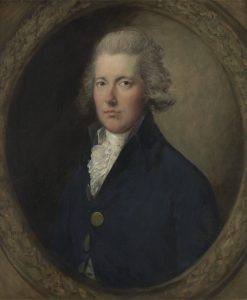
Today on Blogging with Labradors, I am delighted to welcome back Jacqueline Reiter with a guest post on the Walcheren campaign of 1809. Jacqueline is a historian and the author of a biography entitled The Late Lord: the life of John Pitt, 2nd Earl of Chatham and also a novel called Earl of Shadows which covers Chatham’s life up to the death of his brother, William Pitt, in 1806.
Jacqueline is currently researching the life of Sir Home Riggs Popham, the controversial navy officer who plays a key role in both An Unwilling Alliance and This Blighted Expedition.
This Blighted Expedition follows the story of the navy, the army and the local population during the Walcheren campaign of 1809 and in this post, Jacqueline explains the background to one of Britain’s greatest military disasters.
Walcheren 1809: A ‘Blighted Expedition’
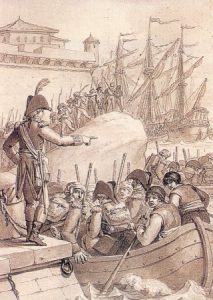
The expedition to Walcheren in 1809 overshadowed all Britain’s prior wartime preparations, including those for the Peninsula. Consisting of 40,000 men and over 600 ships, ‘it was incomparably the greatest armament that had ever left the shores of England’. [1] It was also one of Britain’s greatest military disasters. Within six weeks of leaving the shores of Great Britain, more than one in four soldiers were ill. At least one in ten died.
Why Walcheren?
The campaign represented Britain’s commitment to an alliance with Austria as part of the War of the Fifth Coalition. Austria received £2 million and a subsidy of £400,000 a month to fight Napoleon in central Europe, and the British government pledged to provide a military diversion in a sphere of their own choosing.
The plan was to capture the island of Walcheren in the Kingdom of Holland – currently a French satellite state ruled by Napoleon’s brother Louis – and destroy the French fleet and dockyards at Flushing and Antwerp. Antwerp was the second largest French naval base after Toulon, and the British had been receiving reports for some time that the French had a fleet of men of war fitting out there. One of Britain’s worst nightmares was that Napoleon would rebuild the fleet he had lost after the battle of Trafalgar and invade Britain (or worse, Ireland).
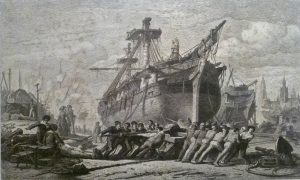
The attack on Walcheren and Antwerp was not intended to lead to any long-term continental military commitment. It was effectively a raid – in the words of Lord Castlereagh, the Secretary of State for War, ‘a Coup de Main.’ [2] Speed and near-perfect military and naval cooperation would be crucial to get an enormous army and huge numbers of ships down the complicated navigation of the Scheldt River (and bring them back again)
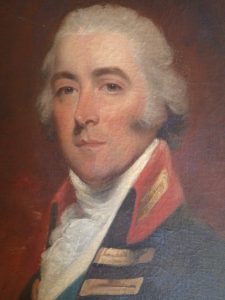
An unfortunate choice of commanders
For the military command, Lord Castlereagh chose Lieutenant General John Pitt, 2nd Earl of Chatham. Chatham was more a politician than a soldier; there were rumours that he had only been appointed because he was close to King George III. This was probably untrue, but Chatham was almost totally inexperienced and notoriously lazy. His nickname was ‘the late Lord Chatham’, because he nearly always was.
The naval command went to Rear Admiral Sir Richard Strachan. Strachan’s most famous exploit was off Cape Ortegal when he captured several French vessels that had escaped after Trafalgar, but he had never participated in an amphibious operation. ‘Mad Dick’, as he was known, was impatient, impulsive, and difficult to work with.
The expedition sails (… eventually)
The plan had been for the expedition to leave before the end of June, but preparations were not complete until mid-July, and contrary winds delayed the departure still further. At this point, bad news arrived: on 6 July, Napoleon had defeated the Austrians at Wagram. This tremendous blow removed one of the main strategic reasons for the expedition, but it was not called off on the grounds that victory might keep Britain’s only ally in the war.
The expedition finally sailed on 28 July and immediately ran into trouble. The fleet reached the Stone Deep off Walcheren as intended, but a gale blew up, dismasting two ships and running a third aground. This led to a significant change of plan.
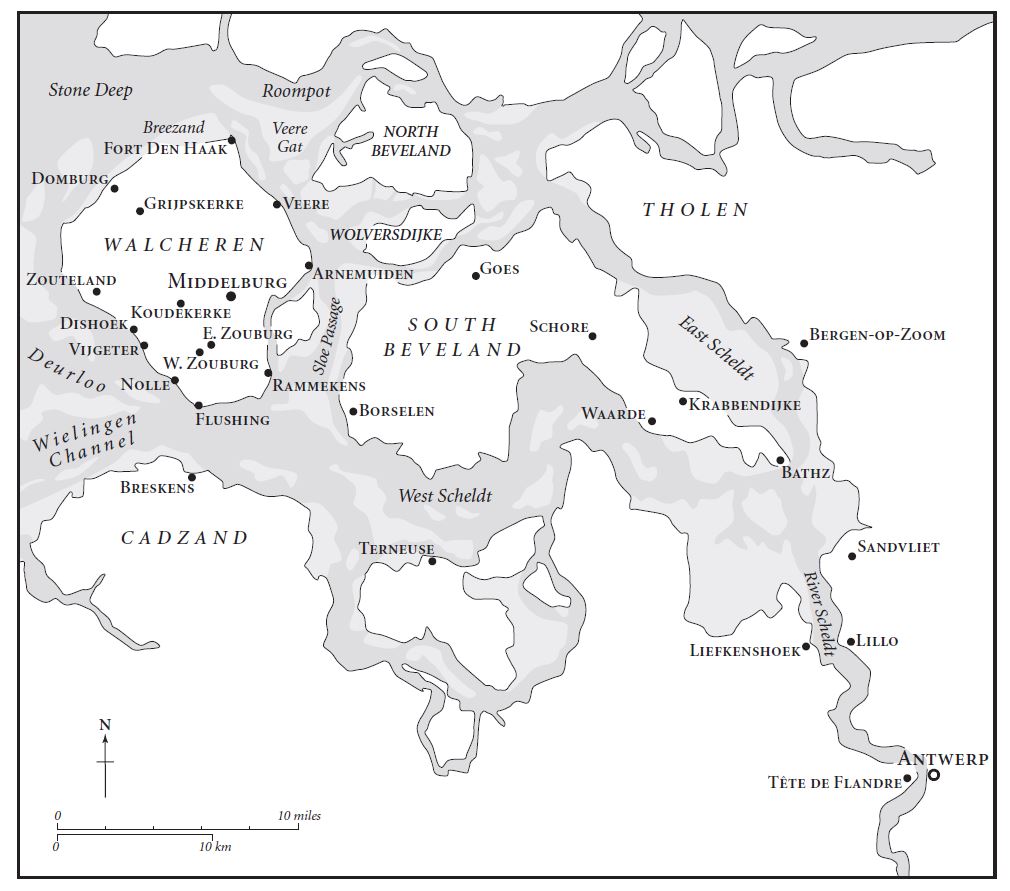
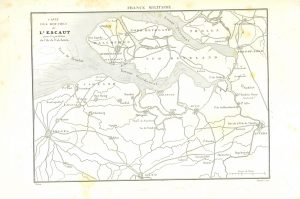
The Scheldt River basin was divided into the East and West Scheldt by Walcheren and the nearby island of South Beveland. Only half the fleet should have entered the East Scheldt to land 12,000 men on Walcheren and 8,000 men on South Beveland. The other half of the fleet should have waited for the narrow channel into the West Scheldt to be secured, then carried the remaining 20,000 men directly to the designated landing place at Sandvliet.
The 29 July storm, however, forced almost all the fleet to enter the East Scheldt and shelter in a protected anchorage known as the Roompot. This meant the army now had to wait for the fleet to dash past Flushing into the West Scheldt, or funnel the siege resources for Antwerp through the Sloe Passage (the narrow channel between Walcheren and South Beveland). Both options would be difficult and potentially time-consuming.
Keep calm and carry on
For now, the British landed at Breezand on Walcheren and Welmedinge on South Beveland and initially made rapid progress. By 3 August, South Beveland and almost all Walcheren was in British hands, and the army laid siege to Flushing.
At this point, however, the expedition became bogged down. An intended landing to disable the French battery at Cadzand failed. With both Cadzand and Flushing in French hands, the fleet could not easily enter the West Scheldt to carry Chatham’s army and siege equipment to Sandvliet. Worse, Strachan was struggling against contrary winds and could not blockade Flushing from the sea until 8 August. The same winds helped hundreds of French troops sail into Flushing every day.
The bombardment of Flushing
Flushing now had to fall, and fast, so the British decided to attack Flushing the same way they had assaulted Copenhagen in 1807: by bombardment. But constructing the batteries was delayed by the dreadful weather, by lack of leadership among the engineers, and by the enemy, who cut the dykes on 10 August to flood the British lines.
The batteries finally opened on 13 August at 1 pm. Five of the six British batteries (the sixth was not fully ready until the following day) poured fire on the town from 52 pieces of ordnance. The bombardment was supported by several gunboats from the sea and, on 14 August, by seven ships of the line that Strachan had daringly brought through the channel between Flushing and Cadzand.

The bombardment went on almost continuously for 36 hours. By 2:30 am on the 15th, however, the French could clearly resist no longer. They surrendered unconditionally, and at 3:30 am the land batteries and men of war fell silent.
Flushing’s garrison of 5,000–6,000 men went to Britain as prisoners of war, and the British finally entered the ruined town. Even seasoned campaigners were horrified at the destruction that had taken place: ‘I beheld the most deplorable picture that can be conceived. Scarcely one single house in it, that has not received some shots, but the greater part of them … altogether destroyed. Many houses are burnt to the ground, and among them is the handsome stadthuis, and one large church. A more complete ruin cannot be fancied. [3]
On to Antwerp! (… or maybe not)
The first stage of British operations was now complete. The second stage – Antwerp – was still to come. Chatham, however, took his time. He did not set out until 21 August on a stately three-day journey to Fort Batz, the southernmost point on South Beveland, preceded ‘by a column of eight waggons, in the first of which was a live turtle.’ [4] (Chatham’s fondness for turtle soup, combined with his habit of sleeping in till past noon, earned him the sobriquet ‘Turtle Chatham’.)
Chatham’s lack of hurry also mystified the French, who nicknamed him ‘MilordJ’Attends’ (‘My Lord I-Am-Waiting’), [5] but Chatham probably considered Antwerp out of reach: 30,000 French troops were in the area, 11,000 in Antwerp alone, under the command of Marshal Bernadotte.
In any case, Chatham had other things on his mind. ‘Walcheren fever’ – probably a combination of malaria, typhoid, typhus, and dysentery – had struck.
Walcheren fever
The fever was sudden, sharp, and devastating, and by the time Chatham reached Fort Batz, it was spreading at a terrifying rate. Of 37,727 men, 2,702 were in hospital, and 14 had already died. By 3 September, only 11 days after first records of the epidemic, 8,194 men were sick – nearly a quarter of the whole army. [6]
On 26 August, Chatham called a meeting of his lieutenants general to discuss proceeding to Antwerp. The next day, the generals submitted their unanimous recommendation: with so many sick and so many French reinforcements round Antwerp, the only viable option was to suspend the campaign.
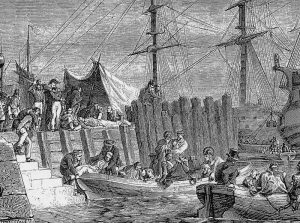
The British now began a hellish retreat to Walcheren. Sick men were left lying on the ground without shelter for as long as two hours because the available spaces on the transports were soon outstripped by the spread of disease. The doctors themselves were also falling ill, and medical supplies – particularly bark (quinine) – were running low.
By 4 September, the British had fully evacuated South Beveland. The next day, the French took possession of the island again.
Things fall apart
On 7 September, Chatham was recalled – but ordered to hold onto Walcheren at all costs, as the government hoped to use the island as a military base. By now there were nearly 11,000 sick, close to a third of the entire army. Chatham sailed home on 14 September, leaving a garrison of 16,000 men under Lieutenant General Sir Eyre Coote.
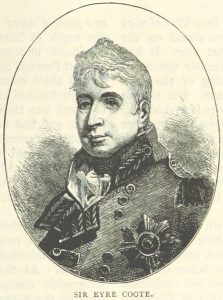
Coote was (to put it mildly) not happy. On 23 September, with more than 9,000 men in hospital and 300 new cases of sickness a day, Coote wrote home: ‘The alarming progress hourly made by this fatal disease, is such that if it should continue in the same proportion for three weeks longer … our possession of this island must become very precarious … [as] it is scarcely to be supposed that he [Napoleon] will lose so favourable an opportunity of attacking.’ [7]
Miraculously, the French held back, but the British government was in no state to make quick decisions. The Walcheren failure had blown the cabinet spectacularly apart; Lord Castlereagh even fought a duel with Foreign Secretary George Canning. When the government finally turned its thoughts to the Scheldt at the end of October, it decided nothing more could be done and sent Lieutenant General George Don to evacuate what was left of the army.
After destroying the dockyards at Flushing, the last British troops left Walcheren on 23 December. Four days later the island was again in French hands.
Walcheren’s long shadow
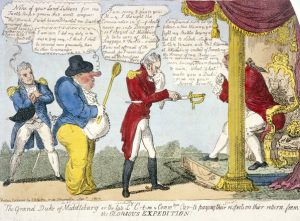
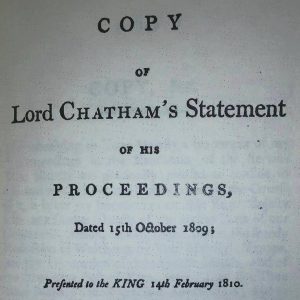
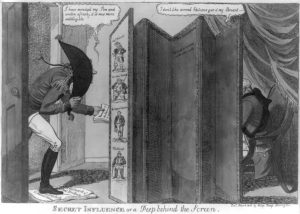
The campaign left a bitter legacy. Parliament held an inquiry into the disaster in 1810. Chatham did not help his cause by submitting a narrative to the King exculpating himself and blaming all delays on Strachan and the navy; his reputation was destroyed and he was forced to resign his government post. Strachan got off more lightly, but neither he nor Chatham was actively employed again.
Despite this, the inquiry was something of a whitewash. The government’s decision to keep Walcheren until December was even approved by a parliamentary majority.
The real victims were the sick. By February 1810, nearly 4,000 men were already dead of Walcheren fever. The final number of dead was probably closer to 8,000. [8] Of the survivors, many never fully recovered. In 1812, Wellington complained that many units under his command in the Peninsula had been ‘so much shaken by Walcheren’ that they were near-useless. [9] As late as 1824, a doctor commented on a regiment that had served at Walcheren: ‘So many years afterwards, the disease is even at this period occasioned by relapses.’ [10]
Further Reading
Gordon Bond, The Grand Expedition (Athens, GA, 1971)
Martin R. Howard, Walcheren 1809 (Barnsley, 2011)
Jacqueline Reiter, The Late Lord: The Life of John Pitt, 2nd Earl of Chatham (Barnsley, 2017)
Notes
[1] Sir John Fortescue, History of the British Army (London, 1899–1930), vol. VII, p. 56.
[2] Lord Castlereagh to Lord Chatham, July 1809, Correspondence, despatches, and other papers of Viscount Castlereagh… (London: William Shoberl, 1851), vol. 6, p. 292.
[3] Jacqueline Reiter, ‘“Day after day adds to our miseries”: the private diary of a staff officer on the Walcheren Expedition, 1809, Part 2’, Journal of the Society for Army Historical Research 96 (2019), pp. 231–250, p. 239.
[4] Diary of Sir Frederick Trench, National Army Museum 1968-07-261, ff. 65–66.
[5] Théo Fleischman, L’Éxpédition Anglaise sur le continent en 1809 (Mouscron, 1973), p. 70 n. 7.
[6] Journal of the Proceedings of the Army under the Command of Lieutenant General the Earl of Chatham, The National Archives, WO 190.
[7] Sir Eyre Coote to Lord Castlereagh, 23 September 1809, A Collection of Papers relating to the expedition to the Scheldt presented to Parliament in 1810 (London, 1811), pp. 147–149.
[8] Martin R. Howard, Walcheren 1809 (Barnsley, 2011), p. 201.
[9 ]Quoted in Howard, Walcheren 1809, p. 215.
[10] House of Commons, Report from the Select Committee on the Penitentiary at Milbank (London, 1824), p. 74.
 This Blighted Expedition (The Manxman Book 2) is due to be published on 31st October 2019 and is currently available for pre-order on Amazon.
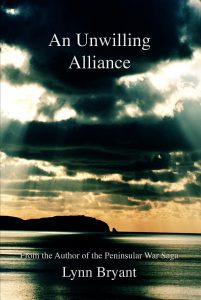 An Unwilling Alliance (The Manxman Book 1) has been shortlisted for the Society for Army Historical Research Fiction Prize and is available on Kindle and paperback from Amazon.

 Today on Blogging with Labradors, I am delighted to welcome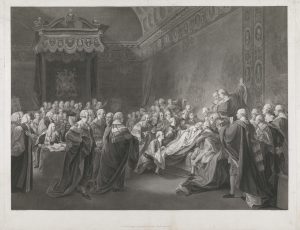
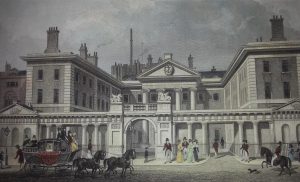
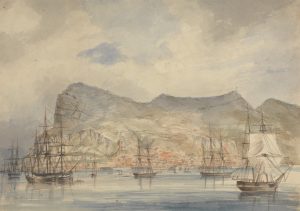

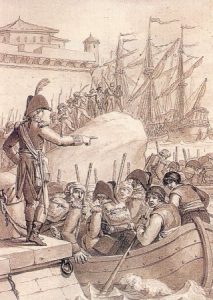 Private Correspondence: Walcheren 1809 is from a series of letters found in the papers of Captain Hugh Kelly RN and in the Van Daan collection. Experts on the period have often commented on how much correspondence appears to be missing from the well-known Peninsular War officer. It is known that General van Daan corresponded regularly with the Duke of Wellington over the years, but sadly few of these letters have been discovered and by a strange omission, none were included in the Duke’s edited correspondence.
 Extract of a letter from Captain Hugh Kelly, RN to Major Paul van Daan, August 1809
 Extract of letter from
  Extract of a letter from
  Extract of a letter from Major Paul van Daan to Captain Hugh Kelly, September 1809
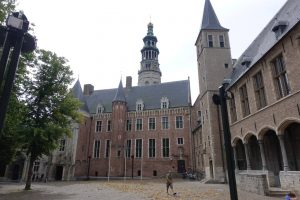 Middelburg Abbey originated in the twelfth century. Monks from Antwerp established a large religious foundation with two churches and extensive lands on Walcheren and in other parts of Zeeland. Many of the surviving buildings from the monastic period are Medieval Gothic, and date from the late sixteenth century.
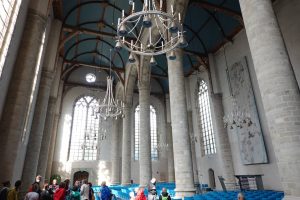 The New church features a double nave and dates from the rebuilding that followed the fire of 1558. It replaced an earlier church built around 1300 which also featured a twin nave. The eastern wall of the New church is also the western wall of the Choir church, and the two interiors were originally connected through an arch, but this was subsequently blocked up. After 1833 the New church became the only parish church for the central walled area of Middelburg.
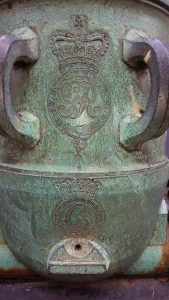
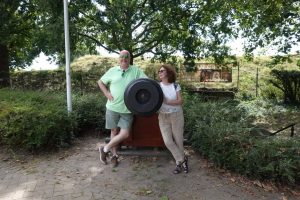
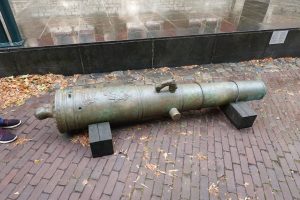 There is a big, open square in the middle of the Abbey buildings, with trees and seats and a couple of cannon which look rather as though they had been carelessly abandoned by some negligent commissary officer. There is also the entrance to the museum and cafe.
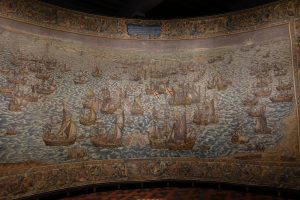 This part of the building has been thoroughly modernised inside, giving little sense of the original abbey. The museum has exhibitions over a number of floors. It is very well designed and put together with very modern themes, but I will be honest and admit that I was a little disappointed. While I wasn’t expecting to find anything about the campaign of 1809 which was not especially significant in Dutch history, apart from the people who died in Vlissingen and Veere, I was very much hoping for some information about the history of Middelburg and Walcheren and that was very much lacking. The one exhibition which dealt with history, was an amazing selection of tapestries telling the story of the rebellion against Spain. I loved that section. Much of the rest of the museum was beautifully put together but gave very little actual information about the town or its history. Given that there is no other museum in Middelburg to do that job, I thought it a shame, although I did pick up some useful information about historic costume.
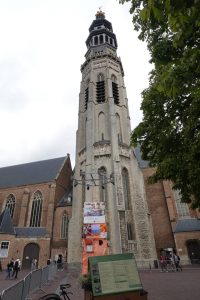 We climbed Lange Jan to see the fabulous views over the town, following in the footsteps of my fictional Lieutenant Durrell who found it a quiet haven away from the chaos of the campaign in 1809. After coffee and cake outside a local cafe, dodging another rain shower, we went back to Veere to the two museums there. The Veere Museums consist of the City Hall and the Scottish Houses on the quay, both fabulous historic buildings.
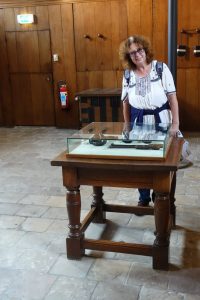 The museums in Veere were far more interesting in terms of history, although I have to say that there was still more art than history in both of them. I really enjoy art, and I loved the story of the English family who set up an artists’ community in Veere before the second world war. I still felt a slight sense of frustration, however. These towns have so much history and I came away knowing very little about the people, the development of the town, their economy and agriculture and what shaped them. Perhaps there’s a museum somewhere else in this area that I’ve not found which offers that.
 Having said that, I had a fabulous day. The museums were great at what they did, even if it wasn’t what I wanted, and I thoroughly enjoyed myself. I also found, in a rather more modern painting of a woman in traditional Dutch costume, my perfect Katja de Groot. Honestly, I couldn’t stop staring at her. Isn’t she beautiful?
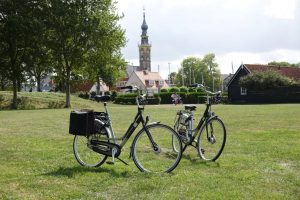 Our Walcheren Expedition, day 2, could be sub-titled “What I learned about cycling.”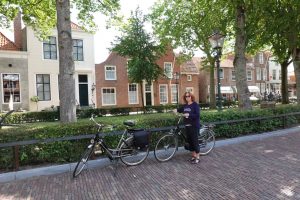
 Perhaps it’s time to venture off the prom and try a few gentle hills at home…
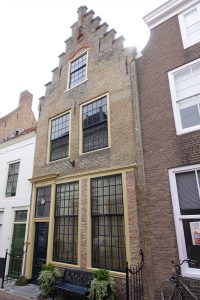 Given that, we were very fortunate to find an apartment, through Airbnb, on Korendijk, which is directly on the canal and is where my Dutch heroine, Katja de Groot, was living with her three children when the British invaded in 1809. Much to my joy,
 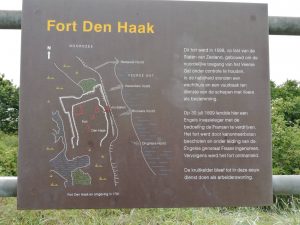 All the same, the wide beaches and strong winds definitely give a good sense of what Chatham’s men faced when they landed on Walcheren. We even managed to find the location of Fort Den Haak, where
  Following General Fraser’s trail, we drove to Veere, which is a beautiful little town which refused to surrender immediately to Lord Chatham’s army and was battered from both land and sea to persuade it to do so. There is a walk around the fortifications of Veere which we did, and it gives a good sense of the town defences, although most of what exists today was built from 1810 onwards when the French returned, including a fine selection of artillery from 1810 and 1811. We’ll be back to do the museums another day.

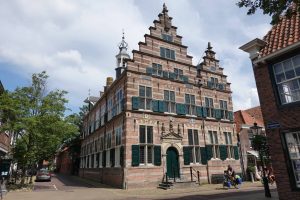 Our Walcheren Expedition: Preview took us to Naarden. We travelled to Walcheren via Amsterdam, which gave us the opportunity to spend a couple of days visiting some friends who live in Naarden. I’d not been there before, and given that most of this trip is about Me Me Me, I had already decided to let everybody else plan these few days. It says a lot about my friends that day one was spent exploring the seventeenth century star fortress and day two was spent at the
 The town of
 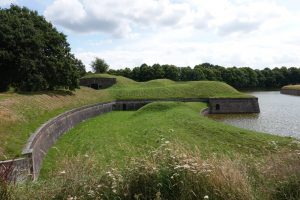 The current star shape of Naarden dates back to the 17th Century, when the fortifications were improved after the siege of 1673. Naarden was part of the New Dutch Waterline, a defensive line through the Netherlands which I’d never heard of before. I would love to do a tour of these forts, they look stunning, but that will have to be another visit.
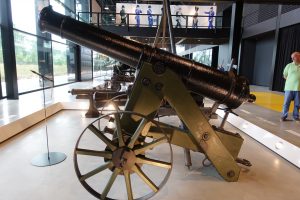 The National Military Museum is definitely a full day out. It is situated on the former air base at Soesterberg and apparently combines the collections of the former Military Aviation Museum in Soesterberg and Army Museum in Delft.
 It wouldn’t feel right to end this first section of our trip without mentioning our evening out at the
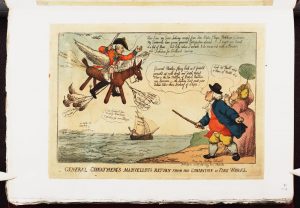 On this day in 1809 the Walcheren Expedition finally got underway, after many delays and I thought I’d celebrate the event by sharing my own interpretation of the days leading up to the departure of “The Grand Expedition” from my forthcoming book,
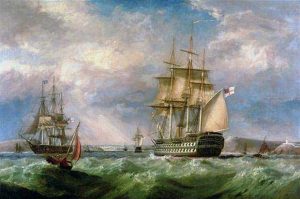 An excerpt from This Blighted Expedition
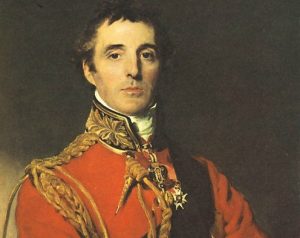 The Battle of Salamanca was fought on this day in 1812 across the rolling plains around the small Spanish village of Los Arapiles. In this excerpt from
  After a little more than a fortnight at Rueda, it was a relief to Paul to get his brigade moving. Night marches could be difficult, depending on the terrain, but most of his men were very experienced and followed each other through the darkness, relying on the voices of NCOs and officers to guide them. The clink of horses and the thudding of hooves followed the progress of the cavalry who were advancing with the light division. Paul rode up the long column to find General Charles Alten in conversation with his big German orderly. Peering through the darkness he recognised Paul and waved him forward.
 We visited the battlefield during our tour of Portugal and Spain in 2017. The Salamanca battlefield site is immense; not in actual size since it probably isn’t the widest battlefield Wellington fought over, but in the sheer amount of information available. I was
 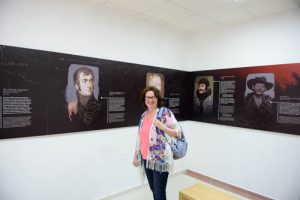 I was so glad we did. This is definitely the best small museum we visited. For one thing, everything is in both Spanish and English which wasmuch more useful than our desperate attempts to translate interpretation boards in other places. For another, it is amazingly detailed and accurate. From the advantages and disadvantages of the different infantry formations of line, square and column, to the best way to load a musket, somebody here had done their research and very well.
 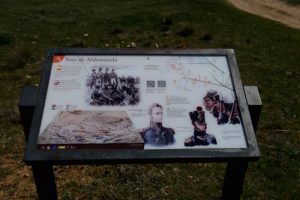 With the help of the museum, the interpretation boards, which are excellent, my trusty battlefield guide and a map, the Battle of Salamanca became suddenly very clear to me. Driving from board to board and then climbing hills and rocky outcrops to view the various vantage points of the battle it was very easy to visualise how Wellington was able to split the French line and send their army fleeing within a few hours.