
Daylight Robbery

By Charles Towne

Daylight Robbery: a Christmas short story for 2025

Introduction

Welcome to Daylight Robbery, my rather belated Christmas short story for 2025. I’ve had a bit of a dry run on short stories during this half of the year. I didn’t manage a Halloween one and this one is late. My excuse is the publication of An Inexorable Invasion followed by Winter Quarters, the second collection of my short stories. December has also seen my daughter and her boyfriend moving into their new house, quickly followed by the announcement of their engagement. It’s a very impressive list of excuses, you’ve got to admit.

As the Peninsular War Saga moves towards the end of the war I have to be more and more careful about spoilers when choosing topics for short stories. For this one I’ve moved away from the war zone to pick up the story of the Van Daan family at home. Regular readers will easily slot this story into the timeline but I hope it can also be enjoyed in its own right.

The treatment of veterans after the Napoleonic Wars has been dealt with in an excellent book by Evan Wilson called the Horrible Peace.  You’ll be hearing more of this in later books, though one suspects the veterans of the 110th and associated regiments will be well-supervised by an over-conscientious Major-General without enough to do until his next campaign.

I hope you all had a great Christmas. Wishing everybody a very Happy New Year. Bring on 2026.

Daylight Robbery

It was barely light on a cold December morning when the travelling carriage was brought round so that the servants could load up the luggage. The driver stood in the shelter of the porch with one of the post-boys discussing the route they were to take to London and where they would stop to change horses.

The master of the house stood in the hallway listening and managed to stop himself going over to give them their instructions one more time. It was possible to travel from Leicestershire to London in one day, especially in a well-built carriage and several changes of horses but as Mrs Patience van Daan would be travelling with a young baby, she would break the journey halfway at the house of a cousin.

Sir Franz van Daan waited until the carriage was fully loaded. Mrs van Daan’s maid brought a pile of warm rugs for the journey and placed them on one of the seats. There was a long pause but nobody else appeared. Franz closed his eyes and counted to ten very slowly. His younger son had once told him he sometimes found it helpful when trying to control his explosive temper. Franz did not think it was helping him much at all.

Eventually there were sounds from above and his daughter-in-law began to descend the main staircase very slowly. Behind her, the nursemaid carried the wriggling form of his granddaughter who, at six-months-old, was the youngest member of the household. She was wrapped in so many blankets and shawls that she looked twice her usual size. Franz watched as the nursemaid carried her to the front door. He did not envy the three women who had to share a carriage with Elizabeth. She loathed being swaddled like a newborn and had an astonishingly loud yell.

Patience paused beside him. She looked tired and her eyes were red as though she had been crying again. Franz felt a pang of sympathy alongside his exasperation. For many years he had got on very well with his elder son’s wife and he wished he knew what to say to her now.

“Have a safe journey, my dear. Give my regards to your Cousin Alice and if you are very tired, stay with her for an extra night. Once you’re back at Tevington House you’ll soon pick up.”

“If my child dies of cold during this journey I will never forgive your son. Or you.”

Franz felt his sympathy slipping away again. “The way you have her wrapped up, she’s more likely to smother,” he said shortly, then forced himself to stop. “Patience, if you’re really that worried, tell Nurse to bring her back inside and unload her things. I’ll be here over Christmas and you have a fully staffed nursery. She’ll be very well taken care of.”

“As if I would leave my daughter behind.”

“With her grandfather?”

“With anybody,” Patience said. Franz was horrified to see her eyes fill with tears again. “I cannot believe that Joshua could be so unfeeling as to order me to choose between a dangerous journey in freezing weather or abandoning my child.”

“Oh for God’s sake ma’am, do not enact me another Cheltenham tragedy,” Franz snapped, losing his patience entirely. “You’ve travelled in far worse weather than this over the years, without turning a hair. You’ll be in London by midday tomorrow. Josh has an entire battalion of nursery maids ready to look after his daughter and your only job is to be with your husband, enjoy the Christmas season and try to feel more like yourself again.”

“I will never forgive him for this,” Patience sobbed, taking refuge behind her handkerchief.

“I hope you don’t mean that,” Franz said, managing a more moderate tone. “Many women would be pleased that their husband wants their company so much that he is prepared to insist upon it, rather than…”

He broke off, realising that he had been about to say something completely inappropriate. To his relief she did not respond. She gave a small, stiff bow and turned towards the door. Franz caught her arm and kissed her gently on her wet, cold cheek.

“I hope that this time together will remind you both of how happy you were before,” he said tiredly. “Goodbye, Patience. God speed your journey.”

She said nothing. The nursemaid waited beside the door. As Patience swept through it, Franz limped quickly to the door.

“Wait,” he said. The nurse paused.

Franz bent over his granddaughter. She was awake and looked rather grumpy but at the sight of him she gave a broad toothless smile. Franz felt his heart turn over. He bent to kiss her and knew a sudden pang of anxiety in case Patience was right and they should not be travelling in such cold weather so that they could join Joshua in London. Then he reminded himself how robust his other grandchildren were and was reassured. Elizabeth did not look at all delicate.”

“Goodbye, Elizabeth,” he said softly. “Look after your mother. I’m going to miss you.”

***

The truth of that statement struck Franz anew as he sat down to a belated breakfast. Southwinds, his country home, was a big house and needed a family to fill it. Since the death of his wife and daughter of smallpox more than twenty years ago he had spent most of his time in his London house, managing his ever expanding business empire. It had made perfect sense to do so and it was only recently that Franz had begun to wonder if he had spent twenty years running away from his grief.

In recent years, Southwinds had been full of children again as Josh and Patience had taken on the task of raising the family of his younger son; an ambitious and successful army officer. Major-General Paul van Daan was still in Europe, serving with some distinction under Lord Wellington. His second wife was with him and his five children, ranging from eleven to just one year old remained with his family in England.

The arrangement had worked well for many years but had become complicated since Patience, at the age of thirty-four, had finally given birth to a healthy daughter after years of miscarriages or stillbirths. Joshua had been overjoyed and Franz was delighted for them but the birth seemed to have affected Patience badly. Instead of taking pleasure in her child, she seemed to be overwhelmed by fear for her and her protectiveness meant that she was reluctant to leave the baby even to spend time with her husband.

Franz did not really blame his son for putting his foot down and insisting that Patience join him in London for the Christmas season, though he was not sure about his timing. Still, experience had taught him to remain firmly out of his sons’ personal lives and all he could do was hope that things improved.

In the meantime, he was faced with the unexpected prospect of Christmas alone in the big, empty house. It was not really empty of course. Servants brought his breakfast, served his tea or coffee and cleaned the rooms. Franz was so accustomed to their presence that he barely noticed them. It would not have occurred to him to start up a conversation with the footman or the groom, though he reflected that his younger son would have done so without hesitation. The thought made him smile.

Franz had received a number of invitations to Christmas house parties but, assuming that Josh and Patience would be at Southwinds, he had declined them all. The rest of his grandchildren were spending Christmas in Yorkshire with their other grandparents and Franz had anticipated a quiet season. At seventy-five, he was still limping slightly from a fall on the hunting field the previous winter and he had been looking forward to the peace. He had not expected it to be quite this peaceful.

Still, he was a grown man and it would do him no harm to eat his Christmas dinner alone this year. It was time he stopped feeling sorry for himself. It was a bright, cold morning and he should send a message to the stables and go for a ride.

It had taken a long time for his broken leg to heal and the fall had shaken Franz more than he had been prepared to admit to anybody else. It had made him feel old in a way that nothing else ever had. Josh and Patience had fussed over him and his younger son had written good-humoured orders take care of himself and slow down a little. Franz was exasperated by all of them.

For a while, he had unwillingly followed advice and taken a groom when he went out riding, in case he should fall again, but that made him feel even more old and decrepit and he hated the feeling. For the past month he had gone back to riding alone as well as covering more difficult ground and longer distances as the weeks went by. The weather was miserable and sometimes, as he rode back into the stable yard soaked to the skin and shivering, he wondered if he was mad. But he knew he was beginning to regain both his fitness and his confidence so he persisted.

There was no danger of rain today, though it was bitterly cold. Franz took the road out towards Ashfordby Hill and rode up to the crest. There was a broad view out over the patchwork fields and low rolling hills of the Leicestershire countryside. The sky was a brilliant blue with small, puffy white clouds blowing ahead of a chilly breeze and the winter sun was deceptively bright with no warmth behind it.

Franz did not mind. After several weeks of rain and occasional sleet it was glorious to be out in such weather and he could feel his mood beginning to lift. There had been a heavy frost the night before and some of the fields still sparkled in the sunlight. He hoped that Patience would have such weather for the first leg of her journey. It might raise her spirits and prevent her from spending the entire time brooding over her husband’s unreasonable behaviour. On the other hand, if Elizabeth yelled for the entire journey, Patience was going to arrive at her cousin’s house even more aggrieved and probably with a headache.

Franz set his chestnut mare into a canter. Ruby was not his usual mount. Caesar, his tall, black stallion, had fallen badly when Franz’s accident had occurred. The hunt master had advised shooting the distressed animal but Franz refused. His head groom was good with sprains and strains and assured him that Caesar had not broken the leg and could heal, although he would probably not be able to hunt again.

Franz did not care. Caesar had been his favourite hunter for many years and he had not realised how much he had come to love the horse until he was faced with the prospect of losing him. With his own broken leg, it was impossible for him to visit the stables for several weeks and he fretted over the horse. He also mocked himself silently for all the times he had laughed at his wife and his younger son for their sentimentality over animals.

Caesar had healed and entered an honourable retirement where his only job would be to sire a new generation of prime hunters in the Van Daan stables. At some point Franz wanted to look around for a new horse; possibly a gelding. He had not regained his enthusiasm for the hunting field but he loved to ride. In the meantime, Ruby suited his more restrained pace. She had originally been bought for Patience, but his daughter-in-law was not an enthusiastic rider and the mare needed the exercise.

On the far side of Ashfordby Hill there was a cluster of houses, too few to be called a village. They were in poor repair and Franz tried to work out whose tenants these might be. Possibly the cottages were on common land but it was unlikely. The Leicestershire countryside had been carved up and enclosed into big estates many years before Franz had purchased Southwinds. Whoever this land belonged to, and he suspected he knew, was a poor landlord.

Franz trotted down towards Ratcliffe, a small village with a particularly fine fourteenth century church. The road was reasonably good given the recent weather and he cautiously allowed Ruby to canter for a while, reining her in as the open countryside gave way to a series of small but dense coppiced areas on both sides of the road. Deer were common in this area and even a pheasant, surprised into sudden flight, might startle a horse.

The sound that tore through the winter silence was far worse than a startled game bird or bounding deer. Franz had no warning and jumped as much as the terrified mare. Ruby reared up with a shriek of fear and Franz felt himself falling from the saddle once again.

His body hit the ground hard, driving the breath from him. For a long moment he lay winded on the rutted road. He had landed in a huge muddy puddle and he could feel the water soaking into his clothing. His hat had fallen off. He could hear the thudding of hooves as Ruby took off in panicked flight. Hopefully she would find her way back to her stable which would alert the grooms that their master was in trouble.

Eventually Franz caught his breath again and cautiously moved. Everything ached but he felt no agonising pain in his weak leg or anywhere else. Miraculously he thought that this time he had escaped serious injury. Carefully he eased himself into a sitting position and looked around.

A shadow across the road told him that someone was approaching from behind him. Presumably whichever idiot had let off a shot in the coppice had been after game birds and had not thought to check if the road was clear. Franz thought he had probably been lucky not to have been shot by some inexperienced or careless sportsman and took a deep breath, ready to give the gentleman a piece of his mind, when the shadow fell across him and the man stepped into view. Franz closed his mouth and said nothing. He was in worse trouble than he had realised.

The shotgun, as he had expected, was an old fowling piece but the man wielding it was not a gentleman. He was tall and thin and it was hard to judge his age although Franz suspected he was younger than he looked. Desperately hard living, including periods of hunger, had hollowed his cheeks. His long frame was slightly stooped and his clothing was worn and badly patched. He had no cloak or overcoat and he was visibly shivering. Franz wondered if that was due to cold or nerves but it did not really matter. All he could see was those shaking hands on the shotgun. It was pointed directly at Franz.

“Money,” the man said, through clenched teeth. “Whatever you’ve got on you. And your watch. Also that ring. Argue with me and I’ll cut your bloody finger off.”

Franz took a deep steadying breath. “All right,” he said, trying to keep the tremor from his voice. “Though the ring might be a problem. It’s been on this finger since my wife gave it to me and my knuckles have swollen since then. Can I stand up?”

“Are you armed?”

“No.”

The man stared at him from bloodshot blue eyes then nodded. Franz struggled painfully to his feet, wishing himself twenty years younger. He felt old and vulnerable and frightened and he hated it.

“If your wife wants you back alive she’d be glad to lose that ring,” the man said.

“She’s not here to care any more. She died twenty years ago along with my daughter. I’m going to reach into my pocket for my purse. There’s not much in it.”

He threw the leather purse to the footpad and the man caught it. He shook it and pulled a face.

“Not much to you, but it’ll feed me for a while. Your watch?”

Franz reached into his coat. He felt a pang as he withdrew the watch; it had been a gift from his father-in-law during the early years of his marriage and he never took it out without thinking of Lord Tevington, who had welcomed an upstart Dutchman into his family with extraordinary generosity and kindness. Still, it was not worth his life, so he tossed it to the footpad and was surprised once again at the dexterity with which the man caught it.

“What’s your name?” Franz asked.

The man sneered. “So you can report me to the magistrate?”

“That will only work if your name is known to him and I’m not convinced,” Franz said. “You don’t sound local and if there have been robberies along this road before I’d have heard of them.”

“What makes you say that?”

“Because I am a magistrate,” Franz said evenly. “Your first name will do.”

The footpad hesitated. For a long moment Franz was sure that he would not answer but then he said:

“Jack. My name’s Jack. Now the ring.”

Franz hesitated for a long time then took a grip on the gold signet ring. He knew perfectly well that it would not come off. Age had swelled his knuckles. For a time he had wondered if he should ask the goldsmith to cut it off but it was perfectly comfortable and he could not bear to lose it yet. It spoke of Georgiana and happier days when he had been young and in love with his wife. He tugged several times, his eyes on the shaking shotgun.

“I can’t do it,” he said finally.

“Do it or I’ll fucking cut it off.”

Franz had heard of cases where men had bled to death after a thief had cut off a finger. He felt slightly sick. He also felt, to his surprise, a new sense of anger and determination. He was old and had begun to feel very frail since his accident but there had been a time when he was young and, during his years with the East India Company, he had faced worse dangers than this. Unexpectedly his memory of that younger man gave him courage. He held out his hand.

“Go on then.”

He caught the look of sheer horror on the other man’s face and knew, with a little spurt of triumph, that he had not misjudged his opponent. This man had been driven to theft and violence by sheer desperation but he was not comfortable with it.

Unexpectedly Franz thought of his younger son. It had been a dinner party many years ago when an elderly neighbour had been holding forth about the appalling quality of recruits into the army; so many of them coming from criminal backgrounds. Paul had listened, his wine glass balanced in his hand. He had drunk far less than anybody else at the table. Opposite him, his first wife Rowena had worn an anxious expression, probably knowing what was about to happen.

“How do you know so much about these men, sir?” Paul had asked. “Forgive me, but it’s easy to judge sitting around this very comfortable table after a meal cooked by my father’s excellent chef. But how do you know their quality or their abilities unless you’ve worked with them?”

“And I suppose you think you know better, boy?”

Paul set down his glass. “Well yes, sir. I do.”

Franz took a long steadying breath. “Why don’t you put the gun down?” he said evenly. “You have to be at least thirty years younger than me. More, I’d guess. You can lay me out in a second, cut off my finger and steal my ring. I’ll probably bleed to death before anybody finds me. Though if we’re going to do this by the side of the road, you’d better do it quickly. Somebody could come past at any time. Why don’t we go over into the trees where you were hiding just now? That way you can kill me whenever you want to.”

He turned towards the trees and began to walk, horribly aware of how exposed he was to a shot in the back. Part of his brain was screaming at him not to be an idiot. The other part was thinking, considering, planning. The other part, God help him, was curious.

The trees provided some shelter from the wind and it was a little warmer. Franz turned to his attacker. The younger man looked anxious and miserable. Franz decided to press his advantage and held out his hand.

“Go on then. Get it over with, boy.”

“I’m not going to cut your finger off.”

“It’s a gold ring. My wife gave it to me.”

“What’s wrong with you?” the man said furiously. “I’ve got the money and the watch. I’m going to run now. Don’t follow me or I’ll shoot you and you’ll die waiting for them to find you.”

Franz felt unexpectedly calm. “If you can’t cut my finger off, I don’t think you’re going to shoot me, boy. Put down that fucking gun. It’s shaking so much you’re as likely to shoot yourself in the foot as to kill me. What in God’s name are you doing out here?”

“That’s none of your damned business.”

“Jack. Is that your real name?”

“That’s none of your business either.”

“If you’re going to shoot me or cut my finger off, I’d really like to know the name of the man who did it. Humour me.”

Abruptly the man lowered the gun. “Jack was my brother’s name. He was killed in Spain, at a place called Vitoria. He was my mother’s favourite.”

There was a long silence. Franz weighed up his options like the businessman he was. For the first time, he did not think he was about to die.

“My son was at Vitoria,” he said conversationally. “Have you ever been to the church here in Ingleby? The parson’s son lost his left hand in that battle. I knew him from a boy. It was hard.”

There was a long painful silence. Then the footpad began to cry.

“My name is Churchill. Private Jonas Churchill of the 27th Foot. That’s who I was. I was sent home after Sorauren. That’s a place in the mountains. They shot me in the knee. I’ve got a wooden leg.”

Franz abruptly understood a number of things. One of them was why this man had not run away. He could not.

“You can keep the watch and the money. But they’re not worth that much. My horse will have gone back up to the stables. They’ll be out looking for me in a bit. You should go, if you want to. But selling the watch will be hard in this district. Have you robbed many men?”

“A few. I had a job for a while at the inn, over in Ratcliffe. But I was too slow and the landlord dismissed me. Since then I’ve done odd jobs here and there.”

“What about your family?”

“Mother died last year. There’s nobody else. Except…no family. Look, I’m going.” Churchill hoisted the gun. “You’re right, they’ll find you. I’m sorry. I’ve got to eat.”

Franz felt a flood of relief as he realised he had not misread the situation. At the same time, the man’s words nagged at him.

“What did you mean about your family? You said except. Except what?”

“He’s not my family. He’s nothing to do with me.”

“Who?” Franz said. He felt a sudden sense of unreasonable urgency, although he had no idea why.

“It’s not your business.”

“You made it my business when you stole my money and threatened to kill me. Fairly soon my grooms will be out looking for me. Unless you’re willing to shoot them, they’ll overpower you in minutes. Who?”

There was a long painful silence then Churchill capitulated. “A boy. Just a boy. I found him in a ditch. I don’t even know his name but he’s alone and starving. I’ve been feeding him. He’s just a boy.”

Franz felt a chill and then a sense of absolute certainty. “Where is he?”

“Back there, hiding in the trees. Look, you can just go. I won’t hurt you.”

“You were never going to hurt me,” Franz said. “Take me to him. Right now.”

***

The boy was probably six or seven years old. He was huddled against the trunk of a big oak tree, deep in the woodland, under what Franz recognised as a tattered old army greatcoat. It explained why Private Churchill was shivering without his coat on.

Franz did not need to examine the child closely to recognise his desperate condition. He was painfully thin, his sunken face completely white and his lips faintly blue. The hands that clutched the coat around him were skeletal and his feet were bare. Franz turned to look at Churchill. In comparison to this boy, he looked almost healthy.

“When did you find him?”

“Almost a week ago. I was making my way towards Leicester. Begging where I could. Stealing when I had to. I thought there’d be more chance of work there, though not many places are hiring through winter time. Still, I thought one of the inns might give me a try. I was looking for somewhere sheltered to sleep when I heard him crying. Could barely hear him, mind.”

“Was he alone? Where had he come from?”

Churchill shrugged. “God knows, but he wasn’t alone. Didn’t start that way, I mean. The other one was dead. A woman. Stiff and cold.”

“So you took him.”

“Not for good. I can’t adopt him; I can’t even feed myself. I thought I’d try and get to a town. The Parish will have a workhouse or an orphanage.” Churchill looked down at the boy. “But it’s so slow. I can’t walk fast and the past day he’s not been able to walk at all. I tried carrying him on my back, but he’s heavy for a man with a wooden leg.”

Franz felt sick. Finally he moved forward, dropped stiffly to one knee and put a hand on the child’s head. As he did so, the boy opened his eyes. They were a very dark brown, with long lashes, and they looked incongruous in the gaunt face.

Franz felt a wave of helpless panic wash over him. He was not equipped to deal with this and had no idea what should be done about it. Churchill was probably right. The child should be taken to the parish officers in one of the bigger towns. If he survived, and Franz was by no means sure that he would, they would know what to do about him.

Franz straightened painfully, his eyes still on the child. The dark eyes were staring back at him with something like curiosity.

“Can he speak?”

“At the start he cried for his Mam a bit. Not for a few days now. He’s dying, isn’t he?”

There was grief in the other man’s voice. Franz turned to look at him. Abruptly he felt ashamed of his own helplessness in the face of what this man, far too close to starvation himself, had tried to do for a boy who could not even tell him his name. Franz thought of the regular, very generous donations he made to various charities every year for the relief of the poor and indigent. In recent years he had begun to give to veterans’ charities as well.

He realised abruptly that he had always given help at a comfortable distance but had never troubled to see what his money was supposed to be relieving. Clearly, in this case, nothing had reached these two at all. He wondered how many more like them were wandering the highways of England, starving to death in ditches and forests. And here he stood, warmly wrapped in a good overcoat, wondering what to do next. He looked back at the shivering child who seemed to have lapsed into unconsciousness again. Franz was suddenly terrified he would not wake up.

He thought briefly about his family. Joshua, always competent, would probably know exactly which parish officer could be called upon to deal with a starving orphan and would also call the constable to arrest the footpad. Patience would have left the matter in her husband’s hands, possibly making a donation towards the child’s upkeep should he survive.

Franz did not know his other daughter-in-law quite as well but given that Anne spent her time working alongside the army surgeons in the worst possible conditions, he suspected she would have known exactly how to treat this child and would not be standing irresolute wondering what to do next. And then there was Paul.

“What would Paul do?” Franz said softly.

He did not realise he had spoken aloud until Churchill gave him a bewildered look.

“Who?”

Franz began to strip off his heavy coat. “Over there. Use it to cover yourself and the boy. Keep him as warm as possible. Talk to him. You could write what I know about medical matters on the back of a calling card but even I can see that if he falls asleep now he might not wake up. I’m going to set off on foot back to my house. I imagine I’ll meet my grooms on the way. I told Bartlett which way I was riding.”

“I…yes, sir. Will you be calling the constable then?”

“No. Which reminds me, hand over my watch and purse in case a constable turns up anyway and searches you. We’ll discuss your situation later. Either that or you can leave the boy here alone and try to make a run for it. You won’t get far on that leg. I don’t think you’re going to do that though. You’ve carried him this far.”

Franz held out his hand and Churchill took out the purse and watch from inside his thin jacket. Franz pocketed them, nodded and set off back to the road. It was cold without his coat and his leg was aching but he walked as briskly as he could.

He had not made it to the top of the hill before the first of his grooms came into view, cantering towards him. Franz stopped, catching his breath. Bartlett, his head groom, reined in beside him.

“Thank God you’re all right, sir. Ruby came in riderless so we thought you’d taken another tumble. Are you…?”

“I’m perfectly fine, Bartlett, though there’ll be a new crop of bruises tomorrow. Stop blathering and listen to me; there’s a crisis and I need you to do as you’re told and not ask questions. I’ll explain later.”

He issued a series of precise orders in the same tone of voice he might have used to his personal secretary, if the blasted man was not currently in France somewhere, probably getting drunk with Franz’s younger son. Bartlett was a reliable man and listened carefully before turning his horse and galloping back towards Southwinds at full pelt. Franz turned and walked more slowly back towards the coppice, then waited under the trees for help to arrive.

It arrived quickly, though by then he was shivering. His coachman drew up the small carriage at the side of the road and one of the grooms came forward with Franz’s riding cloak. Franz drew it around him gratefully.

“This way. I told Bartlett to send a message over to the barracks in Melton Mowbray so we’ll go straight there.”

“He told me, sir. Are you sure? Why the barracks?”

“Because I think an army surgeon might do better with this than my usual physician, who is unlikely to want to get his hands dirty treating these two. I’m not sure I blame him. I suspect my greatcoat might be harbouring lice before the end of the day but we’ll deal with that later.”

“Might not be that much of a problem if they’ve been living out in this weather, sir,” the groom said unexpectedly. “Lice don’t like the cold.”

Franz stared at him in surprise. “Really? The things I am learning today, Fisher. My two new responsibilities are over there under that oak tree.”

Fisher had stopped to stare. “Are you sure you want these two in your carriage, sir? I could order up the gig.”

“And then they could freeze to death on the journey to Melton? Use your brain, Fisher, if that’s possible. Get them in the carriage and I’ll ride with them. If you’re that squeamish, you can ride on the box with Martin.”

“Yes, sir.” Fisher gave Churchill another doubtful look. “You sure you’ll be safe with him? He might be armed.”

“He won’t be armed. Wait there.”

Franz went forward and bent over the boy. To his relief the dark eyes were open again. Churchill had wrapped him in the coat and put both arms about him. As Franz reached him, he started to rise.

“Stay still,” Franz said softly. “Do you still have the gun?”

“I…it’s just there, sir. Under the holly bush.”

“Push it out of sight before you stand up. My grooms carry pistols in case of highwaymen or footpads and if they think I’m in danger they’ll shoot first and ask questions later. I’ve gone to a lot of trouble, you annoying young bastard. I’m not having you shot now.”

Churchill kicked the gun out of sight and rose very slowly. He had obviously grown stiff with the cold and as he tried to take a step, his leg seemed to give way. Franz caught him before he hit the ground and steadied him.

“How the hell did you learn to walk again on that thing?” he asked.

“It’s hard, Painful. You just have to get on with it.”

Franz nodded. He turned to Fisher.

“Help him into the carriage. He’s very weak and he’s got a wooden leg. Left the real one in Spain.”

Fisher’s eyes widened and his expression cleared. “Oh, a veteran, is he? That explains it. We all thought you’d gone mad, Sir Franz. Alright, Private, hold on to me now. I’ll get your boy in a minute.”

“I’ll bring him,” Franz said. He had not intended to try to carry the child but suddenly he wanted to. Watching as Fisher hoisted Churchill into the carriage and reached to tuck a rug around his shivering body, he tried to imagine how hard it must have been for a man in his condition to carry a child through the frozen countryside in search of food and shelter. That he had brought the boy this far suggested remarkable courage and determination.

Franz bent and scooped up the child, still wrapped in the coat. He stood for a moment, letting himself feel the weight, then eased the boy onto his shoulder. He was appalled at how light he was. It was not difficult to lift him into the carriage at all.

Inside he arranged the boy on the forward seat, tucked more warm rugs around him, then sat next to him ready to catch him if the carriage hit a bad rut in the road. Churchill sat opposite him, looking around with wide eyes. It occurred to Franz that the man had probably never been inside any vehicle more luxurious than a public stage.

The thought made him smile a little. He decided that today was proving very uncomfortable in places but definitely educational. He also realised with surprise that he had stopped thinking about his age; though he suspected that when he woke up tomorrow his bruises might remind him.

Churchill did not speak for a while and Franz’s attention was on the child. He took both cold hands in his gloved ones, trying to share some warmth. The boy was sleepy but the abrupt change in his circumstances seemed to have woken him up a little which Franz hoped was a good sign. He hoped desperately that Dr Welbeck had received his message and would be in barracks when they arrived. He was surprised at how little faith he had in his own doctor when it came to treating the results of poverty and starvation.

Franz climbed down from the carriage in the barracks yard. He was relieved to see the familiar figure of the quartermaster of the second battalion emerging from the administrative building. Captain Henry Clinton was a tall, slim man with ginger hair and a pleasant smile. Neither battalion of the 110th was currently in barracks but there were always a few companies of new recruits and a collection of sick and wounded men who had been sent home to recover.

Franz had met Clinton a number of times socially which made his task easier. He shook the Captain’s hand warmly.

“I take it you had my note, Clinton?”

“Yes. You were lucky: Dr Welbeck is doing his rounds in the infirmary as we speak. Bring your vagabonds into the office, Sir Franz. It’s warm and there’s a sofa in there for the child. Welbeck can examine them privately when he gets here.” Clinton surveyed him thoughtfully. “In the meantime I think you should have a glass of hot spiced wine by a warm fire. Your man said you took a tumble in the middle of all this.”

Franz pulled a face. “I seem to be making a habit of it recently. Old age, I suspect. I can carry the boy…”

“Let your groom bring him,” Clinton said, gently but firmly. “Come and sit down. As senior officer in barracks I have the privilege of using the General’s parlour when he’s away. I’m enjoying the luxury.”

Franz gave in. He joined Clinton in the parlour, took a chair by the fire and accepted the wine gratefully. Clinton sat opposite, sipped his drink, and studied Franz.

“Would you mind telling me more about what happened, Sir Franz? Where did you find these two? I gather you were out riding.”

Franz told his story, carefully omitting to mention the gun and Churchill’s attempted robbery. As a Justice of the Peace he was perfectly at liberty to quash any attempt to prosecute the man but he was looking to find a place for Churchill where he would no longer feel the need to prey on lone travellers and he wanted Clinton’s sympathy. He merely said that the man had come out from the coppice and startled the mare. It was a plausible tale and Clinton did not question it.

Dr Welbeck appeared and Clinton led him into the office. Franz joined them without waiting for an invitation. He found Churchill sitting rather awkwardly on the big sofa with the child stretched out beside him. He rose as the three men entered and saluted instinctively at the sight of Clinton’s uniform. Clinton acknowledged the salute gravely.

Franz gave the doctor a brief summary of the tale he had told to the quartermaster. He saw Churchill’s eyes widen a little at the omission of the robbery but the man was quick-witted and said nothing. Welbeck thanked Franz with the absent manner of a man whose mind was on his job then shooed both him and Clinton out so that he could examine his new patients.

They sat finishing their wine in the parlour until Welbeck joined them. He accepted a drink and a seat.

“The man is well enough,” he said. “Half-starved of course and that leg of his is rubbed raw the way he’s been walking around on it. Damned fool thing to do, but I don’t suppose he could help it. I asked him why the devil he’s scrounging jobs in taverns when that leg and his previous service entitles him to a pension.”

“I wondered that myself,” Franz admitted. “I’m very ignorant about army pensions but I’m sure my son has spoken about it.”

“Well Private Churchill doesn’t seem to have realised he was entitled to one. He’s been without a regular home since he was discharged from the hospital so I suppose his regiment may have simply lost track of him.”

“They haven’t bloody tried hard enough then,” Clinton said. He sounded angry. “I’d be ashamed to find one of our men tramping the highways on a wooden leg because the regimental paperwork is in chaos. I’m going to write to General van Daan to ask if he feels like having a conversation with whoever commands the 27th in the field. I’m fairly sure they’re still out there.”

“Do you think he would do so?” Welbeck asked in surprise.

Franz met Clinton’s eyes and saw a gleam of amusement.

“I forgot, you’ve not met him yet, Welbeck. He will take on the task with relish.”

“And bad language,” Franz added.

“Oh good God yes. Appalling language. He once told me he learned it in the Navy as a boy.”

“He didn’t have to adopt it so enthusiastically,” Franz said grimly. “I think it is an excellent idea, Clinton. I’ll write to him about it as well, but it should come formally from within the army. In the meantime, I would like to ensure that Private Churchill has somewhere to stay until he has fully recovered. And afterwards. I have nothing but respect for a man in his desperate situation who took on the care of an orphaned child. He’s due something for that, not just from the army but from the rest of us.”

“I agree,” Clinton said quietly. Franz thought he still looked somewhat amused. “He can remain here. I’m sure we could find him a place in some local charity institution using your considerable influence in the district, Sir Franz but he’s an army man. He’ll feel more comfortable with us. We’re almost empty at the moment apart from three companies of recruits, fully trained and equipped ready to be sent out to France in January once we get the transports arranged. We’ve also got a fever ward with about twenty patients and another ward with about a dozen recovering wounded. That will fill up again in a few weeks; I’ve had a letter from Captain Mackenzie with details of the wounded from these latest actions.”

Clinton glanced uncertainly at Franz, who was perfectly able to interpret his hesitation.

“No need to worry, Clinton. My daughter-in-law is an excellent correspondent and has sent me the reassuring news that my son has still not managed to kill himself, though it sounds as though he made a damned good try this time. He is recuperating however, which means he will be bored and only too happy to spend some time making the lives of the 27th Foot miserable over their inadequate care of their crippled veterans.”

“That’s what I thought, sir,” Clinton said, relieved. “Given the amount of space we have, we’ve allocated one of the barracks to some of our walking wounded who don’t really have homes or families to go back to. There are about ten of them and they earn their keep helping with cleaning and other jobs around the place. Once he’s recovered a bit, Churchill can join them until his pension is sorted out.”

Franz felt a rush of relief. “Are you sure, Captain? I’m happy to pay for his keep if necessary.”

Clinton smiled. “You could send a few bottles as a contribution to the Christmas festivities, sir. We will be celebrating in the traditional manner of the 110th which means I’ll be drinking with the enlisted men. It will shock the life out of Private Churchill, mind. They’re very proper in the 27th. But I wager he’ll get used to it very quickly.”

“I hope he does,” Franz said warmly. “Thank you.”

He drained his wineglass and sat quietly for a moment. Then he looked up at the doctor.

“You haven’t mentioned the boy.”

Welbeck sighed. “I can’t know, Sir Franz. Nobody can. He is severely malnourished and there are signs of a chest complaint but that is hardly surprising. He has spoken a few words, however so we know his name and where he came from. His father was Ned Lawlor, a labourer on Sir John Glossop’s estate. Sir John is in London and the place is run by the old estate manager, a man called Dighton. Lawlor died in the autumn from some fever and Dighton evicted the widow and young Ned. They were trying to make their way to Leicester. For work, I suppose. He can’t remember much apart from her dying on the road and then Churchill picking him up.”

“Does he have the fever?”

“Not that I can tell, but he’s very weak and he’ll need care. Men who have been starving for weeks can’t start eating or drinking normally straight away. I’ve seen men die from gorging themselves too quickly. It happened on the retreat to Corunna. In addition, this poor brat has frostbite on both feet.”

“Will you have to amputate?” Clinton asked.

“I’m going to try to avoid it. He’s very young and they often heal better at this age. Or that cough might turn nasty and he’ll simply fade away. I can’t tell. He’s an orphan so they’d probably take him at St Michael’s House but they’re overrun there with those unable to feed themselves through the winter. The staff are overwhelmed and I doubt they have the time for the nursing he’ll need. I have another idea.”

“Go on,” Franz said.

“I expect you know Mrs Mackenzie, the wife of the first battalion quartermaster. She lives in town with her children and she’s in and out of here all the time. She helps with the nursing when we’re very busy and she’s set up schools for the enlisted men and their families. She’s due to be over tomorrow to see Captain Clinton. I’m going to ask her if she can take young Lawlor.”

Franz was horrified. “You can’t possibly do that, Doctor. I know Mrs  Mackenzie and she has children of her own. With her husband away, you can’t expect her…”

“I don’t expect anything. If she can’t do it, we’ll have to manage him here, at least until we know whether he’s going to live or die. But I’ve worked with Mrs Mackenzie for a few years now. I think I know what she’ll say.”

Franz was silent for a while, realising that the matter had been taken neatly out of his hands. After all, that was why he had brought Churchill here, to men who would understand what had happened to him and hopefully care enough to help.

“Thank you,” he said finally. “I have a feeling you’ve left me little to do here and I should probably be getting back before my household assumes I’ve had yet another accident. They behave as though I’m thoroughly decrepit and ready to expire at any moment.”

Dr Welbeck grinned and rose to shake his hand. “I don’t see any sign of that myself, Sir Franz. It’s been an honour to meet you. Why don’t you go through to see your patients before you go? I’ll send regular updates I promise you. Are you at Southwinds this Christmas?”

“Yes. Alone, for once. My grandchildren have gone to Yorkshire to terrify Sir Matthew Howard’s household and my elder son and his family are spending Christmas in London. He is in the middle of some delicate negotiations which could open up some interesting new business opportunities. I’ll be joining him in the New Year so that I can look over his shoulder and tell him all the things he is doing wrong, but he can have a peaceful Christmas.”

The two men laughed. Franz went through and spoke to Churchill. He thought the man seemed completely bewildered, but not unhappy. Ned Lawlor was sitting up, his hands wrapped round a steaming cup of what looked like some kind of broth. The fact that he was strong enough to hold it felt reassuring to Franz. He ruffled the child’s matted hair and told him to behave as if he had been a healthy six-year-old capable of causing trouble. To his silent satisfaction, Ned managed a little flicker of a smile. It gave Franz hope.

He was alone in the carriage on the journey back to Southwinds which gave him time to think. Back at home, his servants fussed over him. His valet had ordered a bath and set out fresh clothing, whisking away his muddy riding clothes as though he shared his master’s concern about lice. When Franz was dressed he went downstairs to find that wine had been set out beside his favourite chair in the library, along with his book and the latest copy of the Times, which must have arrived when he was out.

Franz sipped his wine and turned the pages of the newspaper to the columns giving news of the army. He read the section through twice, feeling a familiar lift of pride that his son had been mentioned in Lord Wellington’s latest dispatch. Then he set the paper aside and walked through to the terrace at the back of the house. The sun was already beginning to set. It was a cold, clear night and the winter sky was streaked with burnished copper and gold. Franz stood holding on to the stone balustrade. It was so beautiful that he could ignore the chill for a while.

They would be calling him in for dinner soon. He usually dined early when he was at Southwinds, especially when he was on his own. He was glad of it today. Already he could feel an ache in his back and a soreness in his hip from his fall. Still, he was fully mobile and bruises would heal, even though it took rather longer these days.

Unexpectedly, Franz started to laugh. He stood chuckling, watching the final rays of the sinking sun. It was ridiculous how his little adventure had sent his spirits soaring. Many years ago, as a young man in India, he had faced far more perilous situations than an encounter in broad daylight with a half-starved pair of beggars on a highway three miles from home. Nevertheless, the episode had cheered him up enormously. He had spent half-a-year complaining about his family and his household treating him like an old man. He wondered suddenly if that was because he had been behaving like one.

“No more,” he said firmly to the trees and shrubs and spreading lawns of his home. “You’d be laughing at me if you could see me, Georgiana. Huddling away on my own for Christmas as if I’m in my dotage. Go on, love. Have a good laugh. I wish Paul and Anne could be here. I’ve still never danced with my younger son’s wife, and she’s so beautiful and so full of joy. Well that will have to wait. But I think it’s time I introduced myself to her family.”

***

The post-chaise drew up outside the big house at Helton Ridge just after midday. After sending his household into a frenzy of packing and travel arrangements, Franz had spared no expense on his journey: hiring the fastest vehicle with frequent changes of horses. He spent the nights in comfortable inns and arrived in Thorndale two days before Christmas, feeling tired and a little anxious. He had sent a message ahead by a fast courier, so barring accidents his hosts should at least know he was coming. All the same he could not help feeling a little apprehensive in case a long explanation was going to be required.

He need not have worried. The post-boy had barely managed to lower the steps when there was a shriek of excitement. The front door flew open and two children raced down the wide steps and across the drive towards him. Franz held out his arms, careful to brace himself against the carriage to save himself from being knocked over. He found himself engulfed in two enormous hugs and he felt his eyes fill with silly tears of sheer happiness.

“I’m guessing you had my message then,” he said in some relief. “Francis, you’re standing on my foot and you’re as heavy as a young elephant. Move.”

“Sorry. We’re just so pleased to see you,” his grandson responded cheerfully. “Your room is all ready and Grandma Harriet let Grace arrange the flowers by herself, so don’t be surprised if they look like an angry bunch of weeds.”

The fair-haired girl turned frosty blue eyes onto her brother. “You look like an angry bunch of weeds, Francis. If only I had a scythe.”

Franz was laughing. He embraced them both again. “There will be no bloodshed today, Grace. Give me your arm, Francis, and you may take me to meet Sir Matthew and Lady Howard.”

His host and hostess awaited him in a high-ceilinged hallway. The house was more modern than Southwinds but it was elegantly furnished. Franz shook hands, thanked them and apologised for his earlier refusal and his abrupt change of mind. Lady Howard brushed his apology aside laughingly.

“We were just happy to receive your message. The children have been so excited and my husband and I have been longing to meet you.”

“I should have come before,” Franz said. “Habit is a strange thing sometimes.”

He stopped suddenly, his eye caught by the huge fireplace where an enormous log burned.

“Is that a Yule Log?” he asked.

Lady Howard laughed. “It is. We’ve never had one before, but the children wrote to us about it. I understand you had intended to revive the custom if they’d been at home this Christmas so we decided to start a custom of our own. I’m glad we did. The estate workers loved it.”

Franz walked towards the fire, staring into the flames. He had proposed to his wife before a slow-burning Yule Log more than forty years ago. He could not remember the last time he had felt this close to her. He turned back to Lady Howard, smiling. She smiled back.

“A glass of sherry to warm you up after your journey, Sir Franz?” Sir Matthew said. “Or would you like to go up to the nursery to greet the rest of your grandchildren first, while they’re unpacking your bags?”

“The children. Please.”

Lady Howard laughed and slipped her arm through his. Franz remembered suddenly that this was not Sir Matthew’s first marriage which meant she was Anne’s stepmother. He thought that she must have been very influential on her youngest stepchild because she had a warmth and understanding that reminded him of Anne. Briefly Franz’s thoughts drifted to Churchill and his young protégé and he wondered how they were getting on. He had received a message from Mrs Mackenzie on the morning of his departure and the prognosis sounded hopeful.

Franz walked beside his hostess towards the nursery. He could hear Grace and Francis already there, excitedly proclaiming his arrival. It sounded like Bedlam. He decided that he had made a very good decision about how to spend Christmas.

The Reluctant Debutante and other stories

The Reluctant Debutante and other stories are taking a break over Christmas but will return much refreshed in 2026…
This is a general update for my readers on the state of play with some of my early books and some news that change is afoot. Don’t panic it’s nothing bad.

In addition to reading the Peninsular War Saga and the Manxman series, a number of you have also read my earlier books, in particular my two Regency romances. Both these are linked to the main series of books and to the short stories.

In between researching and writing new books, I’ve taken time out to re-edit some of those early books. Back then I didn’t have a ‘proper’ editor and I’ve known for a while that even some of the earlier books in the series would benefit from Heather’s eagle eye on them. That work is ongoing.

Having recently taken a long look at the two Regencies, I’ve made the decision to temporarily take them down from Amazon while we bring them up to the same editorial standard as my more recent books. I’m particularly keen to do this with The Reluctant Debutante as the romantic hero in that one is none other than Giles Fenwick, who has become an increasingly central character in the Peninsular War Saga.

There’s nothing wrong with Giles’ love story but having re-read it with a critical eye, I think I can make it a lot better. Nothing about the plot will change, but I believe that the new edition will be better edited, better written and that the Earl of Rockcliffe will sound a lot more like Giles. When I wrote that book back in around 2016, I didn’t really know Giles at all. I’d like to do him justice.

The rewrites shouldn’t take too long and once I’m ready for the relaunch I’ll let everybody know. There’ll be a free promotion followed by a period at a lower price for anybody who originally bought the book but would like to read the new version. For anybody who wouldn’t, it won’t make any difference to your understanding of the timeline. The story won’t change at all.

This is quite a useful thing to do over the Christmas period when there’s a lot going on and I’m deep in researching Manxman four. I’m also hoping to get the second volume of collected short stories out into the world before Christmas so I won’t be idle.

The books I’ll be taking down in addition to the Reluctant Debutante are my other Regency A Regrettable Reputation, which features Nicholas Witham and my two early standalone novels. I’ve always intended to replace the covers on A Respectable Woman and A Marcher Lord to bring them into line with my other covers and this will be a great opportunity to do so.

I’m looking forward to reissuing the books once they’ve been properly edited and I know I can be proud of them. Major Fenwick and the others deserve nothing less.

Thanks as always for your support and for reading and loving the books. The reviews so far for An Inexorable Invasion have been amazing. I’m so grateful.

An Inexorable Invasion – and so it begins

An Inexorable Invasion – and so it begins is just a very small taster of what is to come in book ten of the Peninsular War Saga. Those of my readers who have spent the past eight years getting to know Major-General van Daan can probably make a rough guess at what happens next…



Chapter One

The forward pickets were relieved at dusk and were almost blue with cold by then; blowing on numb fingers to keep them nimble enough to load and shoot a musket if necessary. The changeover was usually accompanied by cheerful greetings and a good deal of banter as the departing sentries described how miserable the posting was going to be, while their replacements scoffed at them for being softer than the camp women who would probably make a better job of guarding the outposts.

For weeks, the Light Division picket line had been close enough to the French to cause a few skirmishes. It had also led to a good deal of fraternisation. This was particularly bad among the German hussars who often accompanied them because they had quickly discovered that the opposing French cavalry vidette was also provided by a German regiment. The opposing sets of cavalrymen spent much of each day in friendly conversation but this evening brought an unpleasant shock. Along with the relieving pickets, provided by a company of the 110th Light Infantry and a dozen cavalrymen from the 9th Dragoon Guards rode a tall figure on a big roan gelding.

The officer’s uniform was hidden by a dark greatcoat but every one of the pickets recognised the commander of the third brigade of the Light Division. He was accompanied by his ADC, a slim young man in a grey cloak riding a neat bay mare. Both reined in, staring in surprise at the scene before them. They had arrived just in time to find the two opposing cavalry videttes comparing the best fishing spots on the banks of the River Nive while the pickets from the 43rd Light Infantry were bartering with half a dozen French infantrymen. They were offering the French packets of tea and what looked like wrapped packages of tack biscuits in return for French brandy and business was brisk.

There was a long, agonised silence as the two groups stared at each other.

Published on November 10th 2025. Order your copy here.


An Inexorable Invasion: Book Ten of the Peninsular War Saga

An Inexorable Invasion: Book Ten of the Peninsular War Saga is up for pre-order at last. Publication date will be November 10th, the anniversary of the Battle of the Nivelle in 1813.

It is December 1813.

The great powers of Europe are meeting to decide whether to seek a negotiated peace or a decisive victory over the Emperor Napoleon. Major-General Paul van Daan and his brigade are beginning to look forward to the end of the long war but the fighting is not over yet.

Now fully established on French soil, Wellington’s army faces Marshal Soult’s defeated troops once again in three days of fierce combat on the banks of the River Nive.

For the first time in his career Paul is faced with not one but two colonels fleeing the field with their battalions, leaving General Hill’s corps in desperate peril. Ensign Laurence Fox is still adjusting to his new post as Paul’s ADC when he is called upon to make a vital decision.

Major Giles Fenwick receives news from home which threatens to distract him from his assignment working with the Royal Navy to build a bridge over the River Adour.

Lord Wellington is beset by unwanted visitors to headquarters and is infuriated by a determined attempt by a party of Royalists to force him to declare for their cause. Anne van Daan has to leave the surgeons’ tents for a while and use her diplomatic skills to diffuse the situation.

With winter quarters over, Wellington’s army marches further into France towards the town of Orthez and another encounter with Soult’s battered army.

Memorial to the Battle of Orthez

The Book

I’m always excited to release a new volume in the Peninsular War Saga but this one is also rather poignant. I was halfway through writing this when I realised just how close to the end of the war we are. For the first time my characters are beginning to look ahead. They’re probably afraid to hope too much at the beginning of this book but by the end it’s becoming clear that things are about to change.

It’s easy to throw a 21st Century mantle over the whole period at this point and imagine everybody being really excited that the war may well be ending and for some of my characters that is undoubtedly true. Paul and Anne are longing to go home to their children and extended families and there are men returning to wives and fiancées. Looking at biographical details of various officers in 1814 it’s clear there was a spate of weddings. Not every officer went home of course.  Men like Harry Smith and Edward Pakenham were almost immediately sent to America where the war of 1812 was still dragging on. 

For some of the enlisted men the end of the war brought new problems and difficult decisions. After years marching through Portugal and Spain, many had formed relationships with local women, and had children. Some would probably have had no hesitation in leaving these families behind but others were devastated. Some decided not to do so at all.

We have all that to come in book eleven, before marching with Wellington again on the field at Waterloo in book twelve. In the meantime I hope you enjoy this account of the adventures of the third brigade of the Light Division at the Nive and at Orthez. Once again I’ve taken a few liberties with history and geography and I’ve listed these in my author’s note at the end. Otherwise I’ve tried to keep to the facts as far as they’re known while still keeping Paul and his men busy. 

Many of you are also fans of the legendary Bernard Cornwell and his Sharpe series. You’ll probably have already read his version of some of the events in this book in Sharpe’s Storm. It’s the first time I’ve accidentally collided in time with Sharpe and once I got over the sheer panic of people reading my book back to back with his I’ve quite enjoyed the process. At one point Sharpe and Paul were very close on the same battlefield but they didn’t run into each other which is a shame.

I’m now returning to finish my Age of Sail book for Sapere and will then move on to Manxman four. I’ve been putting that one off because of the sheer volume of research but I’ve now decided that I’ll be bringing the two series together for book eleven and I can’t do that without first writing about Hugh and Durrell’s adventures in Northern Spain in 1812.
In the meantime there will be the second collection of short stories coming out in December. It’s called Winter Quarters and will once again bring together some of my previously published free short stories along with one brand new story just for this collection.

Thanks to all my readers for your loyalty, enthusiasm and really dodgy sense of humour which causes you to laugh at all my jokes. I hope you enjoy the book.

Autumnal Ramblings

Autumnal Ramblings is a procrastination post.

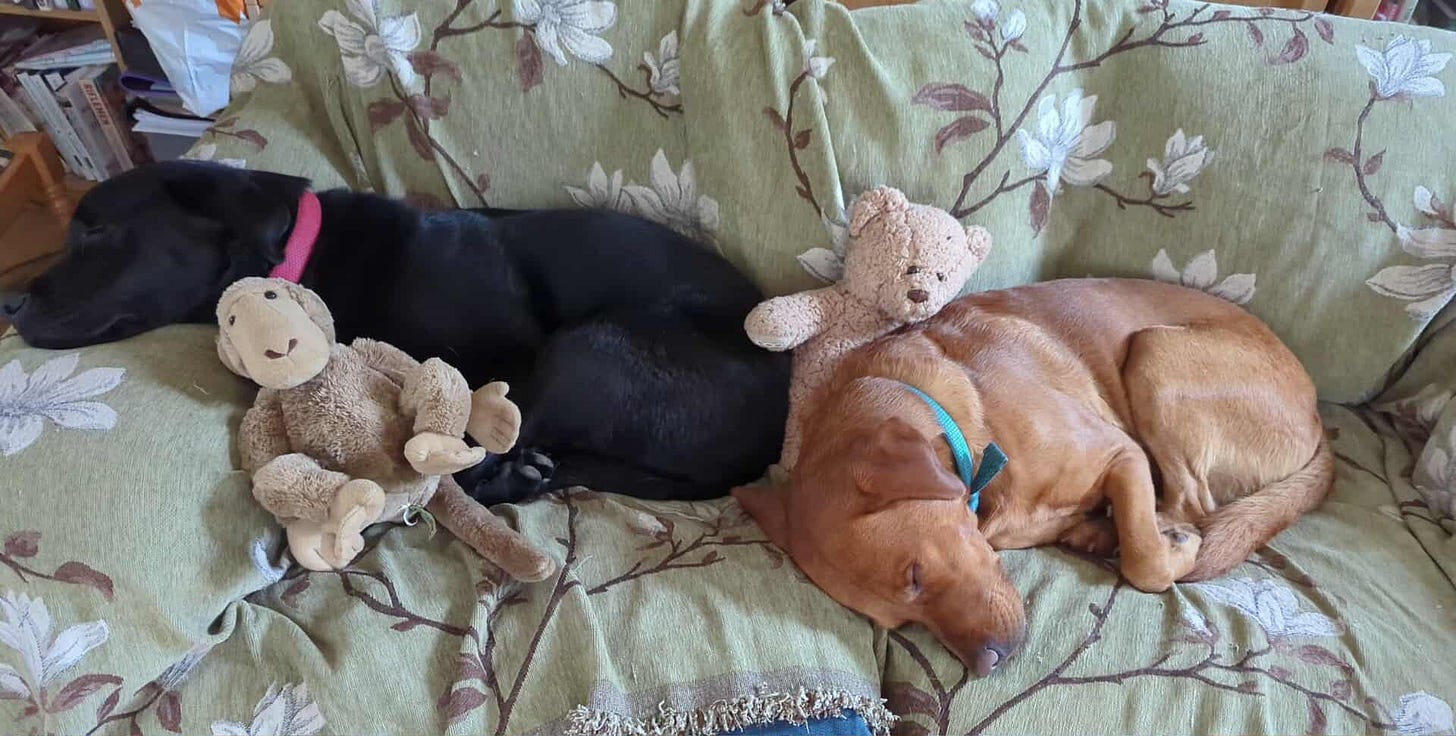
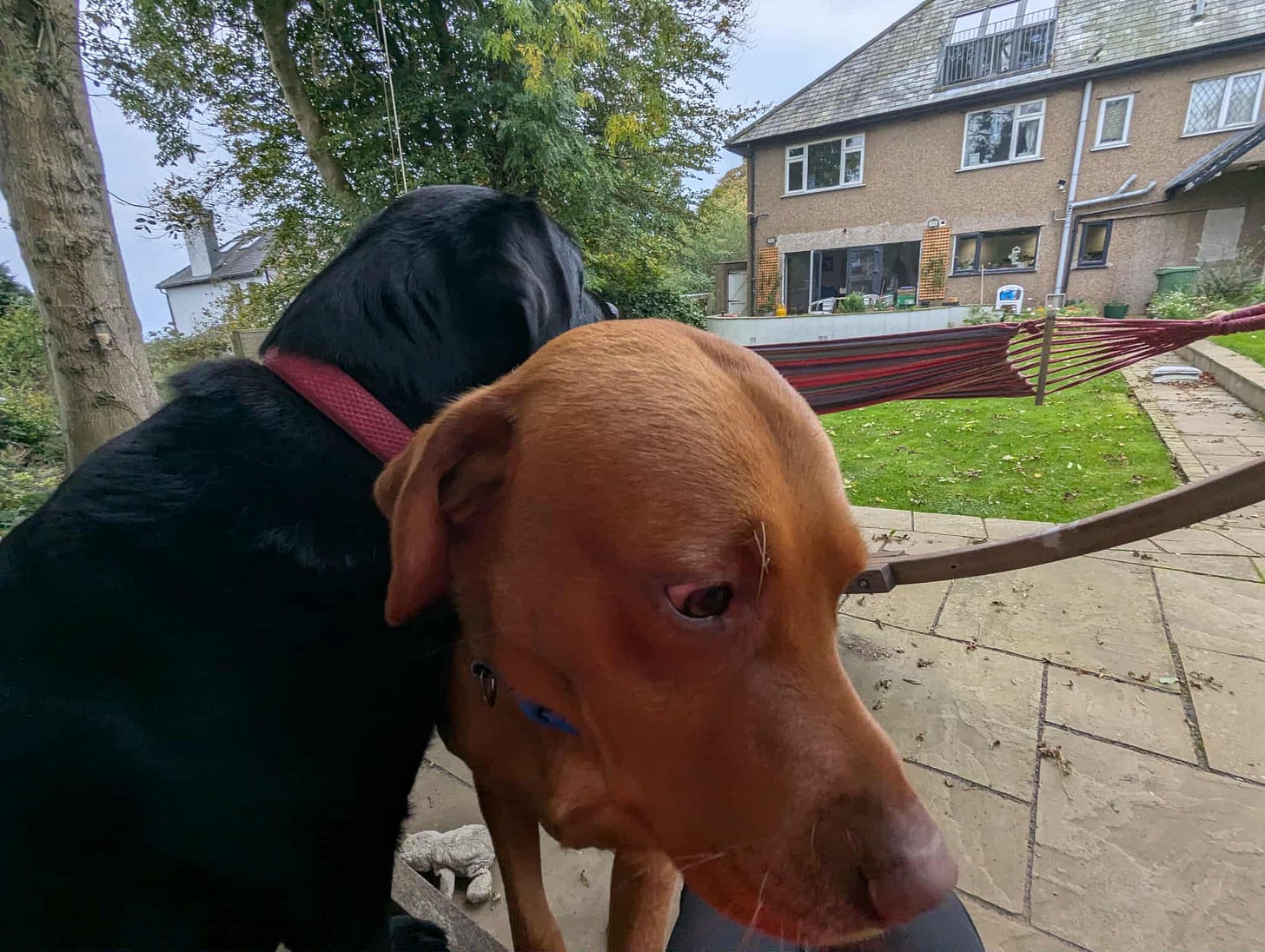
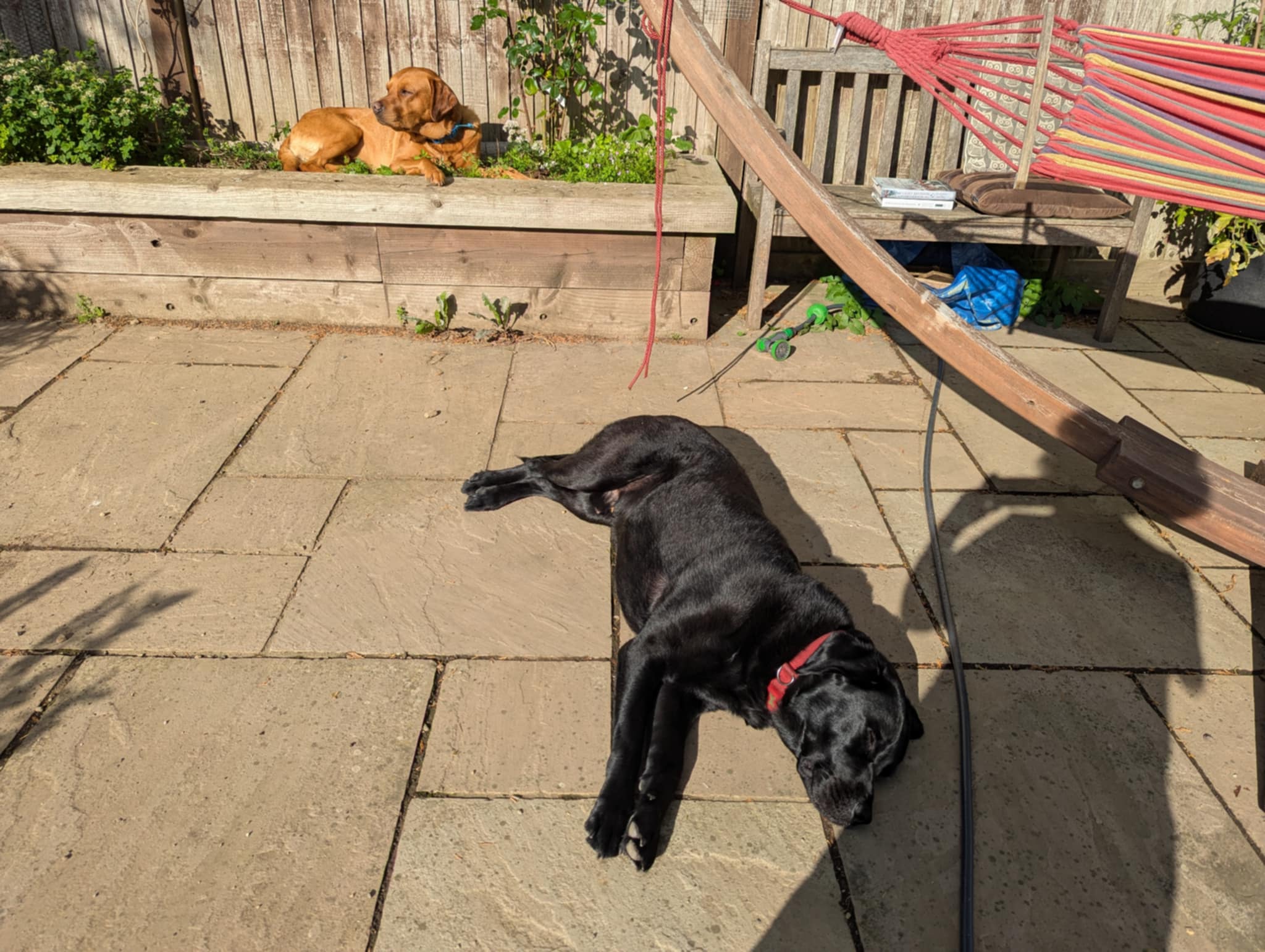
Oscar and Alfie with friends

I’ve written many such posts over the years. In fact the list of my displacement activities to avoid writing is probably into its second volume by now. Dogs are incredibly useful for this because they genuinely need things like walks, feeding, brushing and playtime. My children are less useful than they used to be because they’ve grown up. My son has left home and my daughter is about to do the same for the third and final time as she’s buying her first home with her partner. My husband, who also works from home is two floors up in the loft conversion and only really interrupts me for coffee breaks and lunch.

No matter. I don’t need help to procrastinate. My brain just does it. Knowing how badly I need to finish my Halloween short story before I go away next week, I was just about to open it when I remembered several vital admin tasks that needed to be done. Prior to that I was on my way to my desk when it occurred to me it would do me good to spend a bit of time in the garden before settling down. Now, with the admin done, I realised it was a while since I’d written a post. You get the picture here.

It won’t be a long post but I’ve been thinking over the past few days how much I’m enjoying autumn this year. I always used to love autumn but for the past few years a lot of family stuff has been going on at this time of year and I think I rather forgot to slow down, look around and appreciate the breathtaking variety of colours. This year that has come back to me and it’s an unexpected and much appreciated blessing.

I can’t manage really long walks at the moment as I’m awaiting my second hip replacement, which I’m hoping will be done in February. Luckily I don’t need to go far to get the best of autumn. We live in a tree-lined road and have a good-sized garden with two beautiful beech trees.

The garden is in need of a good tidy-up before winter and I’m a bit behind with that. Some of it is time related but a lot is my usual reluctance to prune and cut back when things are still flowering. We’ve had a few windy days lately so my big dahlias and the roses have taken a battering. I’ve been bringing some of the late roses indoors so that I can appreciate them. They don’t last long but they make me smile.

This morning I sat on the bench at the back of the garden to drink my tea and enjoy watching the birds at the feeders. I do this so often that some of them, particularly the hooded crows have got very tame. They completely ignore my presence and carry on with breakfast. quite close by. Alfie used to scare them off by barking at them but he’s got very relaxed about it these days and just lets them get on with it.

One of my friendly garden crows

We’ve had a good year in the garden, probably because we’ve had more time to work on it. Through most of the spring and summer we spent all weekend out there and it’s paid off. For the first time I managed a proper wildflower patch. It wasn’t easy because the mixed seeds take time to grow and my husband prowls restlessly with a hoe and his favourite weeder, intermittently muttering things like “Are you sure those aren’t just weeds coming up? How can you tell?” He managed to control the urge to dig everything up though and the results were spectacular. They’re coming to an end now but there are still enough flowers to make me reluctant to clear it just yet.

The nasturtiums went mad this year

My dogs take different views of early morning tea outside. Alfie likes to prowl, walking round the perimeter fences on sentry duty, checking if anything has changed overnight and stopping regularly to mark his territory just in case. Oscar will happily wander for a while but then comes to sit with me on the bench. It’s one of his favourite things and has been since he was tiny. He’ll just sit next to me watching the birds and sniffing the air and then eventually snuggles down with his head on my lap patiently waiting for me to give him the last mouthful of tea. I’d never come across a dog who liked tea until Oscar. It’s very companionable.

Eventually Alfie feels that he’s made the garden safe for us again and comes for his share of cuddles, pushing his head in between Oscar and I for strokes and attention. With the tea finished I’m getting colder and it’s time to go inside. Alfie heads straight for the sofa in my study but Oscar waits in the kitchen patiently, making sure I don’t start procrastinating by starting some chore. He knows what I’m like and actually herds me into the study eventually, only settling once I’m at my desk with my laptop open. Then he can relax. This is a daily ritual and always makes me smile because Joey, my much-loved yellow Labrador used to do exactly the same thing. Perhaps he taught Oscar how to do it.

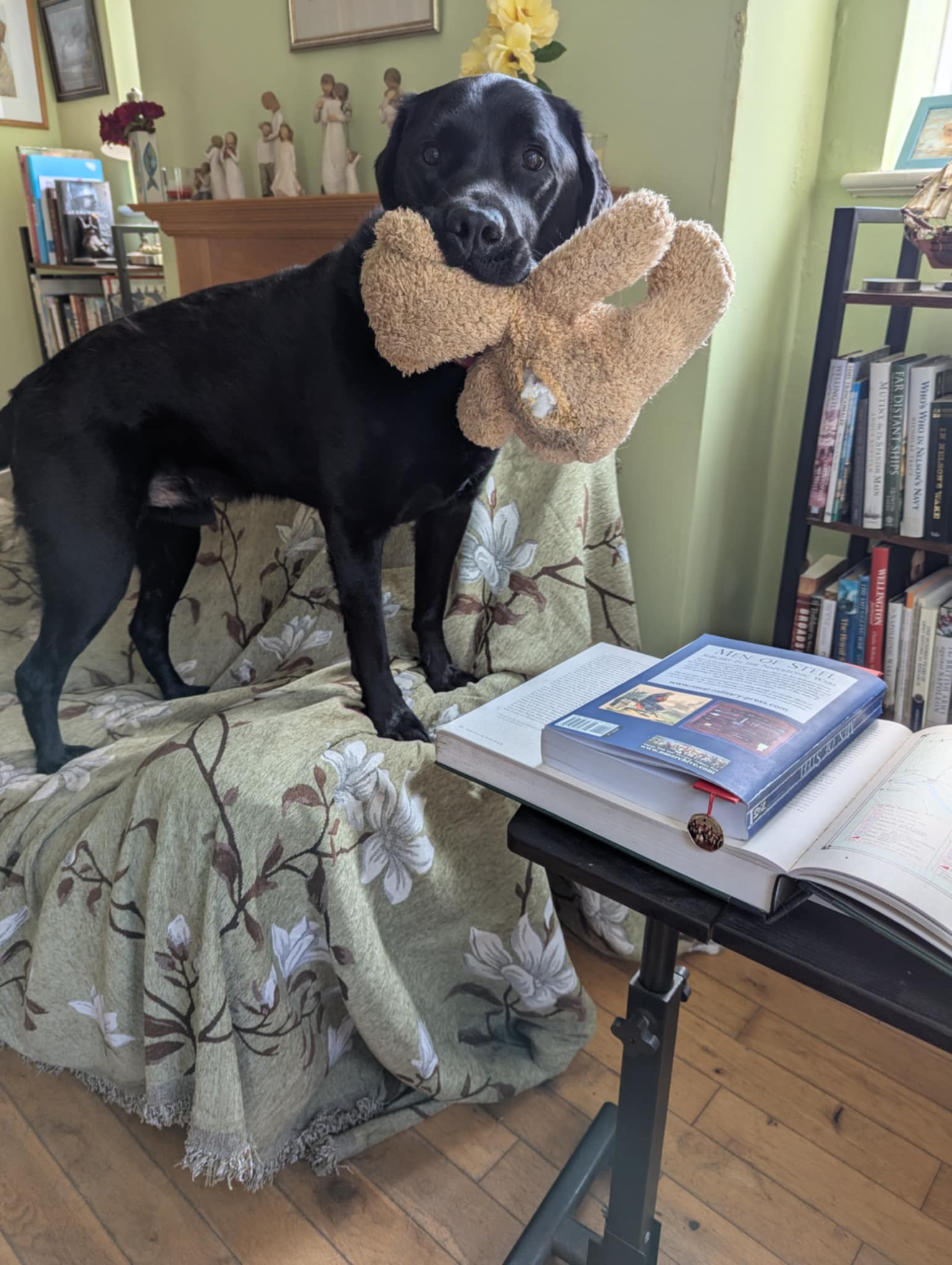
Move over Oscar, it’s my turn to cuddle Mum

Sometimes procrastination is a disaster, but I don’t think days like this are a problem. I recently read an article and I wish I could remember where, about writers feeling the need to treat their work as a nine to five job and trying desperately to glue themselves to their desk during office hours. That can sometimes help if I’m really off course with work but mostly I’ve learned that so much of the writing process goes on in my head before I ever type a word. I can visualise a scene while I’m walking the dogs or weeding the garden and it probably makes my actual writing time far more effective.

I probably have rambled enough now but I’m not sorry. I think this post is really about thankfulness for where life has brought me. The view from my window is a joy through every season and the view behind me is even more precious.

Right. Now it actually is time to get back to October 1812 and the approach of Halloween, or Hop tu Naa as the Manx call it. Wish me luck.

The Pressed Man

I wrote the Pressed Man in 2021. It was part of Paul van Daan’s back story that he was illegally pressed into the Royal Navy when he was fourteen. It’s mentioned a number of times in both series and several readers had asked me if I would ever write the story of Paul’s days in the navy.

I was always non-committal about it, mainly because I wasn’t sure how I could manage it. Paul’s boyhood spell in the Royal Navy was a formative period in his life, but readers of the novels will also know that it was very traumatic in places. When I write about Paul, I find it easy to get inside his head but on this occasion I wasn’t sure that I should be there.

I think I would have continued to dodge it indefinitely if it were not for my friend and editor, Heather Paisley. Having heard some of my ideas about Paul’s brief navy career, she nagged me ruthlessly to at least write the story for her, even if I didn’t publish it. She always wanted to know where a posh boy came up with the endearment ‘Bonny Lass’ for the love of his life – an epithet often associated with ‘Geordies’: hailing from the area around Newcastle upon Tyne.

Once I began writing it, everything fell into place. When Paul first tells Anne about what happened to him as a boy, he briefly mentions the ship’s Bosun who had taken him under his wing. From there came the character of Geordie Armstrong, one of the most important influences in the young Van Daan’s life.

The Pressed Man

April, 1797

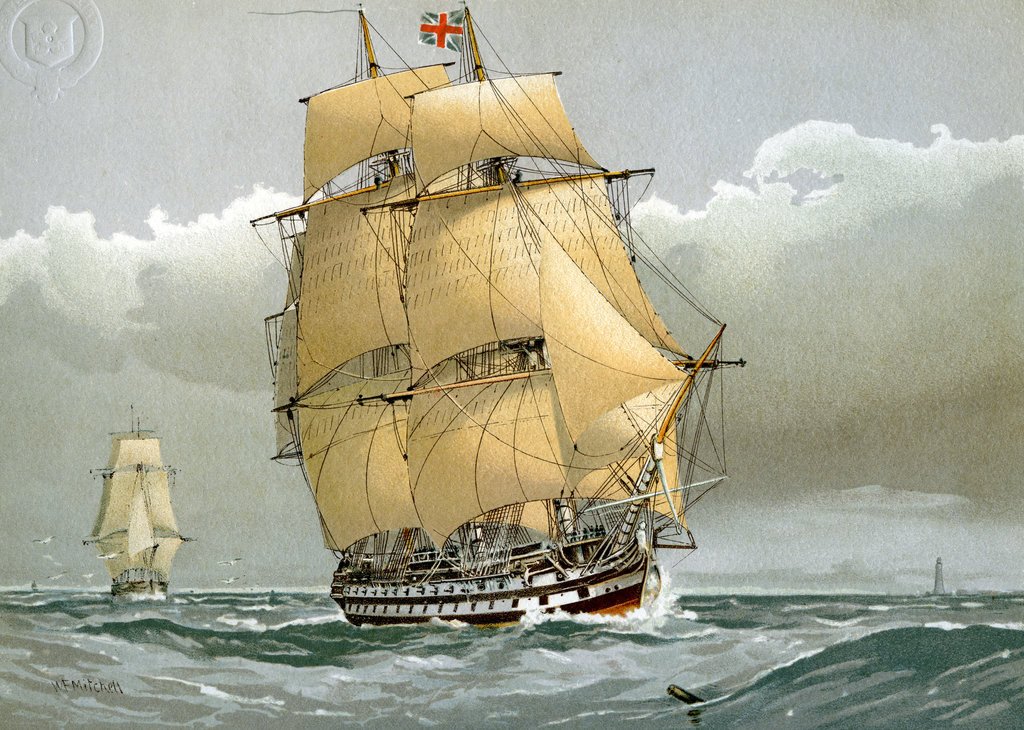
The wind began to pick up ten days after leaving Antigua, following a week of depressing calm. The crew were restless, the Captain morose and the Boatswain, who had been wishing for months that Captain Dalton had not been appointed to command HMS Hera, awoke to an unaccustomed noise from the men’s quarters. The bell had not sounded, so something was clearly wrong. Geordie Armstrong groaned and swung his legs over the edge of the narrow bunk he shared with his wife.

“What is it, my dear?”

“No bloody idea, Janet. Stay there, bonny lass, it’s freezing.”

His wife ignored him and got up, reaching for her gown.

“It can’t be far off the bell, lad and you’ll want your tea. I’ll get to the galley while you find out.”

Geordie stepped to one side to let her reach her shawl. A private cabin was one of the many perks of being Bosun, but it was small, especially for two people. He and Janet had shared such cabins for so many years that they were now expert in moving around it without getting in each other’s way, like the carefully learned steps of a well-known dance. Outside on the wooden companionway they parted, Janet on her way to the galley for hot water, while Geordie made his way down to the lower deck where the crew slung their hammocks.

It was not yet light, but someone had lit a few lanterns. Most of the men were up, in various states of undress, huddling together talking in small, uneasy groups. Nobody had given an order yet, probably because it was too early for the bell. Geordie took out his pocket watch and saw that it was thirty minutes to first bell. He debated with himself. He could pipe for the removal of hammocks then send them about their usual business early, which would get them out of the way, but he knew Captain Dalton loathed even the slightest deviation from routine and he was reluctant to have the argument without knowing what had happened first.

“Bosun. Pipe up hammocks and send a message to the galley. I know it’s early, but we need to get them moving.”

Geordie obeyed, dying of curiosity. He had a lot of respect for First Lieutenant Daniel Eaton, and he knew he would find out in time. It was clear that something unusual had disturbed the crew, but Geordie could not imagine what.

He was too busy during the next hour and a half for speculation. Returning to his cabin, he found that Janet had tea ready for him and he gulped it down gratefully, then set off on his inspection of the rigging. Rashford, the ship’s carpenter, was inspecting the gunports, hatches and boats and Sharpe, the gunner, checked the guns. The three men met at seven-thirty in Captain Dalton’s day cabin to make their reports. They found Lieutenant Torbin, the officer of the watch, already there. Dalton listened in stony silence to Tobin’s report and when Torbin saluted to indicate he had finished, Dalton said:

“Haven’t you missed something, Mr Torbin? What was that God-awful racket that brought me from my bed early?”

Torbin, who was red-haired and had a very fair complexion, went scarlet and saluted again. “Yes, sir. Sorry, sir, it’s just that Lieutenant Eaton said he would report to you about that: he’ll be here any minute.”

“Well unless he’s invisible, he’s not here now. What happened?”

Torbin gulped nervously. “There was a death, sir. Among the crew.”

“Death? Death? What kind of death? Fever? Cholera? By God, if that bunch of scurvy louts we picked up on Antigua have brought sickness aboard my ship, I’ll throw them overboard.”

“Not fever, sir,” Torbin said, in agonised tones. His awkwardness was painful to watch, and Geordie was desperately trying to think of a way of rescuing him without drawing Dalton’s fire himself, when there was a knock on the door and First Lieutenant Eaton entered, saluting.

“Ha, there you are. What’s going on? Torbin is blathering about a death in the night. Is that good enough reason to disturb my sleep at that hour?”

“My apologies, Captain,” Eaton said politely. Geordie hid a smile. Eaton’s unruffled manner made him the best first officer Geordie had ever sailed under, but he knew it infuriated Dalton who was rude, bad-tempered and incompetent and seemed to find Eaton’s placidity a personal insult. “Perhaps I should wait until these gentlemen have given their reports.”

“No, they can bloody wait. What happened? Who died?”

“It was Mackay, sir.”

“Mackay?” Dalton sounded surprised, probably because he knew the man. Dalton did not bother to learn the names of most of the crew, but Mackay had sailed with him for many years. He had been in his forties, a big man from Inverness who was an excellent seaman and an inveterate drunk. “What happened; did he fall out of his hammock onto his head?”

“He was murdered, sir.”

“Murdered?” Dalton froze and sat for a while, his mouth hanging open in surprise. Geordie shared his astonishment. He had been at sea since he was ten-years-old, almost thirty years, and he had never heard of a murder on board. There had been one or two deaths after a fight which had been tried as murder, but nothing worse.

After a long time, Dalton spoke again. “Eaton, I want the full story now. The rest of you, out. You can make your reports later.”

Geordie left and went in search of breakfast with Janet. After the meal he went up to the quarterdeck and smoked a pipe while watching the ship’s marines on their morning parade. He was not disappointed. Just after nine o’clock, as they were beginning drill practice, Lieutenant Eaton appeared and came to join him at the rail. He lit his own pipe and stood smoking in silence.

“The surgeon is inspecting the body at the moment,” he said finally. “He’ll write up a medical report for the Captain and we’ll bury him later today.”

“Aye, sir. Do we know what happened? I mean is there any doubt?”

Eaton shot him a sideways look. “Able Seaman Mackay was found in a dark corner of the hold with his throat slit from ear to ear. Not much doubt.”

“Holy Mary. Anyone suspected?”

“Yes. We’ve arrested one of the new men we picked up in Antigua. He was out of his berth without leave or reason.”

“Any other signs? There must have been blood.”

“Oh there would have been, and that’s what’s suspicious. It seems this man fell overboard with all his clothes on.”

Geordie was startled. “In the dark? How the devil did they find him? And why didn’t I hear the call?”

“There was no call. Nobody saw or heard him go over. His story is that he felt sick and went up for air, came over dizzy and went over the side. He was lucky enough to be near the ladder and the shock of the water woke him up fast. He grabbed hold and pulled himself up.”

“I’m surprised the watch didn’t shoot him.”

“He’d the presence of mind to call up as he was climbing, to identify himself. They pulled him in and hauled him before the watch officer, who was just ordering him put in irons for roaming the ship without permission when they found Mackay’s body.”

“It looks suspicious, sir, no question. But why the hell would anyone kill Mackay?”

Eaton did not speak for a long time. Eventually he said:

“Don’t be bloody naïve, Bosun.”

Geordie felt an odd little lurch in his gut. “Christ,” he said softly. “Do you think that perverted bastard finally went after someone big enough to give him what he deserved?”

“I didn’t tell you the whole,” Eaton said flatly. “They found him dead in a corner. The slash was huge, he’d have bled out in minutes. But whoever killed him cut off his balls and stuffed them in his mouth. I don’t think there’s any doubt why he died.”

Geordie felt sick. “Who could do that? And why?”

“I don’t know, Bosun, but I’m guessing it’s to make a point that any other man who tries buggering the boys is going to get the same. I don’t know if there’s anyone else on this ship who shares Mackay’s nasty habits with the young ones, but if there is, I think he’ll keep it in his trousers from now on.”

“Bloody hell.” Geordie considered himself unshockable, but admitted to himself that he had been wrong. “I wonder what made this man set himself up to defend the ship’s boys? It’s a reet shame he’s like to hang for it; that bastard Mackay has had it coming for years. I’ve only served with him on this one voyage, and I’ve been haunting him ever since young Price went overboard and drowned. It was down as an accident, but the whole crew knew Mackay had been at him for months. I couldn’t get him to testify.”

“You can’t blame him, Bosun. Sodomy is a capital crime, and if Mackay were brought to trial he could easily claim the boy consented.”

“It’s impossible to prove anyway as there have to be witnesses to every detail. I didn’t blame Price, he couldn’t hide from Mackay forever, and he’d have got a good hiding on top of everything else. I tried talking to the Captain about it.”

“Several of us tried, Bosun, but Captain Dalton simply said that Mackay was an excellent and very experienced seaman and that’s all he cared about. I’m not sorry the man is gone; it infuriated me knowing he was getting away with it. But it will be a shame if this boy gets hanged for defending himself.”

“Boy?” Geordie said, startled. “It’s one of the boys?”

“Fourteen or fifteen years old at a guess. I’ve had nothing to do with him so far. He was picked up with the rest of the crew of that shipwrecked merchantman. All the others did the sensible thing and signed up as volunteers, but this boy refused to do so. He’s a pressed man, and Marshall, who’s the petty officer in charge of his mess, says he’s been difficult from the start. At best, he’ll get a flogging for being where he shouldn’t be. At worst, they’ll hang him.”

“But no blood on his clothing,” Geordie said softly.

“A few stains that might be, but we can’t be sure. If he went in before it dried, chances are there wouldn’t be.”

“Clever little bastard.”

***

Prisoners awaiting trial were kept in irons in the half-deck, an area beneath the quarterdeck which was covered but not fully enclosed. It was used partly for storage, but there were often one or two prisoners chained up to heavy metal rings set into the bulkhead. Discipline aboard ship was largely Geordie’s responsibility, with the help of his bosun’s mates, so when he had given his delayed report to the Captain, he gave instructions to his juniors, made a tour of the ship checking that all was well, then went to inspect the accused. The boy was the only prisoner chained there, a leggy form huddled against the wooden wall in an attempt to keep out of the brisk wind. His clothing was still very damp, the regulation loose trousers, rough shirt and blue jacket clinging to his body. His tousled fair head was bowed, and his arms wrapped around his knees. He was visibly shivering, and Geordie swore under his breath.

“On your feet, boy.”

The boy looked up, giving Geordie a glimpse of startling blue eyes, then unwrapped himself and got to his feet in one smooth movement. He stood straight, tall for a boy of his age but still heartbreakingly young. Geordie looked him over curiously. He looked well-nourished when compared to the skinny children who often came into the navy from poor households and although he kept his eyes lowered to the deck, he bore himself with a certain arrogance which aroused Geordie’s curiosity even more. Listening to Mr Eaton’s bloodthirsty tale, Geordie had doubted that any boy of this age could undertake the murder of Jemmy Mackay then endure the freezing waters of the Atlantic. Looking at this boy, Geordie was suddenly not so sure.

“What’s your name?”

The boy looked up. “Van Daan. Paul van Daan.”

Geordie did not respond for a minute. The voice was surprising and raised immediate alarm bells. He had served, during his time, alongside men of all nationalities and all social classes. It was not at all unusual for a young gentleman of this age to join the navy, initially as an officer’s servant, and then as a midshipman, with a view to taking the lieutenant’s examination and becoming an officer. Geordie recognised this boy’s accent, and it did not come from any fisherman’s cottage or dockyard slum. He was beginning to wonder why this boy was below decks as a pressed man.

“Van Daan? That’s not an English name.”

“My father is Dutch; I was born and raised in England.”

The alarm bells were growing louder. Geordie often supervised the signing on of new crew, but the dozen pressed men picked up during their stop at English Harbour had been from the crew of a shipwrecked merchantman. They were obvious targets for the press gang; all were experienced seamen and Geordie had seen no need to get involved. He had a feeling he should have.

Geordie reached for his whistle and summoned one of his bosun’s mates. “Smith, let the watch officer know I’m taking Van Daan below to Janet for a spell. He’s injured and he’s still soaked, and he needs feeding. I’ll return him when he’s fit and I’ll speak to the Captain later to see what charges he’s bringing, if any. Unchain him.”

Smith moved forward readily, but shot Geordie a wary look. “You sure, Bosun? You want to watch this one, he’s like a wild thing. Pushed Marine Bennet right off the dock when they was bringing him aboard and punched the lights out of Snyder when he used his cane on him. Snyder had to give him half a dozen of the best before he went down.”

Geordie studied the boy. He still had the over-long limbs of boyhood, but he had the grace of an athlete and Geordie wondered if he boxed. Geordie had been a very good boxer in his youth and still entered the odd bout during shore leave, just to keep in practice. He was glad of Smith’s warning. Pointedly, he drew the baton he wore at his waist.

“You try that with me, laddie, and you’ll be back in irons with a couple of buckets of cold water over you and a thumping headache to go with it,” he said.

The irons clanked as they were removed and Van Daan flexed his wrists in relief and rubbed them. “What would be the point out here?” he asked. “There’s nowhere to run.”

There was something about the bald truth of that statement which tugged at Geordie’s heart unexpectedly. He motioned for Van Daan to follow him and led the way to the galley. At this hour the huge stove was roaring, and the ship’s cook and his assistants were busy over the main meal. A savoury smell reminded Geordie of how hungry he was. It was almost dinner time and the Captain and the master would be on the quarterdeck taking the noon sight.

There was a wooden bench and table outside Geordie’s cabin which was located in the bow of the ship. Geordie indicated that Van Daan should sit. He opened his mouth to warn the boy again about the consequences of moving, then caught his eye and stopped himself. He did not know why, but he was absolutely certain Van Daan would simply remind him again that he had nowhere to go.

“Janet, are you there, bonny lass?”

“Aye, where else would I be at this hour?” Janet opened the door, a shirt she was mending in her hand, and surveyed the prisoner thoughtfully. The boy stared back.

“And who’s this half-drowned rat you’ve brought for dinner, husband?”

Geordie opened his mouth to explain, but the boy was on his feet and the bow he executed chilled Geordie to the bone. “My apologies, ma’am, I had something of an accident in the small hours. I was feeling sick and leaned over too far. It’s lucky I’m a strong swimmer. Paul van Daan. Pressed man.”

Geordie saw his wife give the youth a long sweeping glance, then she smiled. Janet was a very comely woman with a lovely smile. To Geordie’s complete astonishment, the boy smiled back. “And a bit of a drowned-rat,” he said apologetically.

Geordie put his hand on Van Daan’s shoulder and shoved him back onto the bench. “Will you have a look at that gash on his hand, bonny lass, while I get some dry clothes from the slops for him? He might be about to hang for murder and he’s definitely due a flogging, but we can’t have him freezing to death, it’s not in the regulations. He can eat dinner here with us and warm up a bit and then he’ll need to go back where he should be.”

“Thank you,” Van Daan said. “It’s very good of you, sir.”

“Not sir, laddie. I’m not a commissioned officer: you should call me Bosun.”

“Sorry, Bosun.”

“And try and pretend to do it respectfully, you arrogant little shit. Do you know how much trouble you’re in?”

“Yes, Bosun.”

Geordie studied him, grunted, and disappeared to find clothing. He allowed the boy to change in the cabin, while Janet set the table and went to collect the food. As Van Daan emerged, Geordie ran his eyes over him, and the boy held out his arms at his sides.

“I’ve not stolen anything, I swear, you can search me. I’m not that stupid. Like you said, I’m in enough trouble.”

Geordie could not help smiling. “Oh sit you down and drink your grog. Here’s my lass with the food. Eat.”

Geordie watched the boy covertly as he ate, while telling Janet about the events of the morning. He did not give the full details of Mackay’s murder, but he could see she was still shocked. Van Daan did not look up from his meal, eating stew with the concentration of a boy who had not eaten for a while.

“I just stopped for a chat with Petty Officer Marshall about you, Van Daan,” Geordie said, when the bowl was empty. “He says you’ve not made a good start aboard the Hera. You’ve barely gone a day without a punishment in the log. Insolence, abusing your seniors, fighting in the mess.”

“If I didn’t fight, I wouldn’t eat, Bosun.”

Geordie eyed him with reluctant respect. “Aye, there’s probably something in that, lad, they’ll steal your rations if you let them. But to put another boy in the sickbay for two days…”

“He had a knife. But I did hit him too hard. I was…I got angry.”

Geordie wondered if he had been about to say that he was scared. He glanced at Janet, who got up. “I’ll get you some more,” she said, sounding alarmingly maternal. “If you’ve been fighting over every meal, it’ll make a nice change to sit and eat like a decent human being.”

Van Daan looked up quickly and smiled. “Oh it does, ma’am. But please, I don’t want to put you out.”

“It’s no trouble for a lad with manners like yours,” Janet said, and bustled away. Van Daan’s smile faded, and Geordie thought that without it he looked very young and very lost. He wondered again what the hell this boy was doing below decks as a pressed man.

“All right, laddie,” he said gruffly. “You’ve been fed, and you’ve had your grog. At least…you’ve barely touched it. Don’t you want it?”

The boy gave a somewhat embarrassed smile. “I can’t stand it,” he said frankly. “I’d rather have water, actually.”

Geordie studied him, then sighed. He got up, went into his cabin, and returned with a bottle and two glasses. Setting them on the table he poured.

“Sip it,” he said shortly. “This is not rum grog.”

Van Daan picked up the glass and sniffed suspiciously at the amber coloured liquid. “What is it?”

“Scotch whisky, laddie. Comes from a little distillery just over the border from where I grew up. My sister sends it to me from time to time. Try it.”

Van Daan took a sip. Geordie watched his expression. He swallowed and coughed a little as the peaty spirit caught in his throat then looked up. “That’s excellent.”

“Spoken like a connoisseur,” Geordie said ironically. Janet was back, setting another plate in front of the boy, along with a chunk of dark bread.

“I need to turn the laundry, husband, so I’ll leave you to it,” she said, with her accustomed tact. Van Daan got to his feet with instinctive courtesy. Janet studied him for a moment.

“Eat,” she said. “You’ll need your strength for whatever comes next. And then talk to my husband, tell him the truth, and listen to his advice. He’s a good man.”

The boy offered his charming smile again and Geordie decided that he was glad Van Daan was not ten years older. “Thank you for your kindness, ma’am. Whatever happens, I won’t forget it.”

When Janet had gone, Van Daan returned to his meal. Geordie finished his grog, since it should not go to waste, then sipped his whisky and waited for the boy to finish. He was looking better, with more colour in his cheeks, and the fair hair had dried to a dark gold: shoulder length and tied back with a grubby strip of linen. Eventually, Van Daan set his spoon down.

“That’s the most I’ve eaten since I came on board. Worth getting hanged for. Thank you, sir…I mean, Bosun.”

“Tell me what happened?”

“I already told the Lieutenant. There’s not much to tell. I felt sick. I’m over it mostly during the day, but sometimes at night…I went up on deck because it’s not civil to cast up accounts where men are sleeping.”

“You’re not allowed to wander around the ship at night, boy, they must have told you that.”

“I’d forgotten, I was feeling so ill. Anyway, I must have had a dizzy spell and gone over. Thank God I didn’t hit my head on the way down or I’d have drowned.”

The blue eyes were limpid and innocent. Geordie studied him. Despite his height and surprising air of self-assurance, this was still very much a boy. Geordie thought again about what had happened to Mackay. He could imagine this lad striking out in self-defence, but the cold-blooded killing and mutilation of a man seemed beyond him. At the same time, his story sounded carefully rehearsed rather than natural. Geordie had sent his bosun’s mates to make enquiries among the crew and there was no evidence of anybody else being away from his proper place at that time.

“You must be a very strong swimmer,” Geordie said.

“I am. I learned in the lake as a boy.”

“Which lake?”

“At Southwinds, where I grew up. It’s in Leicestershire.”

“How did you cut your hand?”

“It must have been when I was trying to grab the ladder from the water.”

“A thin cut for a splinter. Almost looked like a knife.”

“No, I’d have remembered if I’d cut it on a knife.”

“You bloody liar,” Geordie said softly. “You killed him, didn’t you?”

“No, Bosun.”

“Well somebody killed him and cut his balls off. Now why?”

“I don’t know, Bosun.”

“Don’t you? I bloody do. Able Seaman Mackay had some very nasty habits with the younger boys aboard ship. I’ve been trying to get somebody to speak up about it for months. One young lad, a boy called Harry Price, drowned himself a few months back, and I’ve always wondered if it was because he couldn’t stand it any longer. What do you think, Van Daan?”

Paul van Daan looked back at him. He had flushed a little, but to Geordie’s surprise he neither turned away nor dropped his gaze, although Geordie could see that his fists had clenched together until the knuckles were white.

“I don’t know what to think, Bosun, I wasn’t there when Price drowned himself. But do you know what? I wish I fucking had been.”

The obscenity sounded odd in Van Daan’s well-spoken accent, but his tone told Geordie everything he needed to know. Reaching for the bottle, he poured another shot into each glass.

“What did he do to you, Van Daan?”

“Nothing, Bosun.”

“What did he try to do?”

“Nothing, Bosun. I never met Able Seaman Mackay.”

Van Daan reached for the glass. Geordie watched as he inhaled the rich aroma of the whisky and swirled it around the glass a little before sipping it appreciatively. Somebody had taught this boy how to enjoy good wine or good brandy.

“You’re a bad liar, Van Daan.”

“I’ve been told that before, Bosun.”

“Don’t you know they could hang you for this?”

“Don’t they have to prove it?”

Geordie met his eyes for a long time. He was fascinated by Van Daan’s odd blend of boyish vulnerability and adult intelligence. During his years at sea Geordie had come across a lot of boys of this age, but he had never encountered one quite like this.

Finally he reached for his own glass. “Let’s try a different question. What the bloody hell are you doing here, boy? For one thing are you even old enough to be pressed? And secondly, from your voice and your manner, you’re not a common seaman.”

“No. I’ll probably need to work on that if I’m going to survive the next few months.”

“Who are you?”

“I told you. Paul van Daan.”

“Your family?”

“My father owns a shipping company.”

Geordie stared at him very hard for a while. The boy’s gaze did not waver. Eventually, Geordie said:

“You’re a gentleman’s son?”

“Yes. And I’m almost fifteen. Not quite old enough to be pressed, but close.”

“Did you tell them that?”

“Do I look stupid? Of course I did. Repeatedly. Then I hit people and tried to escape. That didn’t work either.”

Geordie closed his eyes. “Oh shit. Somebody is going to be very sorry for this.”

“Yes, they are.”

Geordie opened his eyes at the tone. Abruptly he was absolutely sure Van Daan had killed Mackay. Geordie suspected he also knew what had been done to him to drive him to commit such an appalling crime. He understood why Van Daan refused to talk about it. Geordie could only imagine the terror of a gently-bred boy thrown into a situation so far removed from the life he was used to. Mackay’s assault, coming before Van Daan had time to even begin to adjust, would have been enough to break most boys. Geordie wondered what it would take to break this particular youth and hoped passionately he was not about to find out.

“Bosun. Captain wants to see you.”

Geordie sighed. “I’d be willing to bet it’s about you, you troublesome wee bastard. Finish that drink and get up.”

Van Daan obeyed, getting to his feet. “If I can stand. It’s stronger than I’m used to.”

“You’ll need to get yourself a stronger head and stomach if you’re going to survive the navy, laddie.”

“You might not have to worry about that for much longer,” Van Daan said. It was a creditable effort, but Geordie could hear the tremor in his voice. He silently applauded the boy. Only a fool would claim not to be afraid when faced with a hanging, but this slender youth was controlling it very well, and Geordie knew that in the noise of battle or the screaming height of a storm at sea, that was what mattered. He regarded Van Daan and decided to be honest.

“You’re going to get hanged or flogged, Van Daan. I’m going to the Captain and I’m going to tell him the truth about you. I’m also going to try to convince him that a young sprig of the gentry couldn’t possibly slit a man’s throat and mutilate the body. That won’t be difficult because until today, I wouldn’t have thought it myself. But Captain Dalton’s an awkward man and I can’t tell what he’ll do.”

“It’s all right, sir. I mean Bosun. Just…thank you for this. Thank Mrs Armstrong as well, will you? Whatever happens, I’m grateful.”

Geordie studied him, troubled. “No point in asking you why in God’s name you did it that way, I suppose. Given that you didn’t do it.”

“Is it bothering you?” Van Daan said unexpectedly. “I’m sorry. Look…your wife said I should trust you, but I don’t know you yet, it would be stupid. So I didn’t do it. But if you want me to guess, I’d say the man who did it was pretty sure Mackay hadn’t done that for the last time. Maybe he could have found another way to protect himself. I don’t know what’s possible, I’ve not been here long.”

“I know. You poor little bastard, you don’t know your head from your heels, do you? And then this. But Christ, to mutilate him like that…”

“Once again, Bosun, I can only guess,” Van Daan said gravely. “I don’t know how common it is in this navy for a man to do what he did and get away with it for years. How many boys, I wonder? He needed stopping. Not just for one attack but for all the others he was going to do in the future. And if there’s any other perverted bastard aboard this ship thinking about doing the same thing, I don’t think he’ll be in any doubt about what’s going to happen to him if he does. Maybe you don’t think that’s worth risking a hanging. Maybe I don’t. But I can tell you for sure that whoever killed him did.”

Geordie suspected that was the closest he was ever going to get to an admission from this boy. Van Daan’s reasoning made terrifying sense given what had happened to him, although Geordie was still astonished that a lad of not quite fifteen had not only come up with the plan but carried it through. He felt oddly flattered that Van Daan had admitted even this much. Geordie reached for his whistle to summon one of his mates. Derbyshire was in his twenties and of medium height and watching them walk away, back to the half-deck, Geordie realised Van Daan was already as tall and probably still had a few years of growing to do. He hoped the boy survived long enough.

***

Geordie found Lieutenant Eaton with Captain Dalton. The Captain was in a foul temper, which was very common. He barked out questions and Geordie responded, keeping his answers short and factual. When he had finished, Dalton sat back in his chair.

“Did he do it?”

“I don’t think so, sir,” Geordie said without hesitation. “He’s a tall lad, but he’s very young and Mackay was a big man. Besides, I don’t think a boy from his background could do what was done. I don’t think it would occur to him.”

“He was the only man away from his hammock.”

“The only one who was caught, sir, but a murderer would be canny enough to sneak back to his place without being seen.”

“What about the blood?” Eaton asked. “He’d have been covered in it.”

“He could have changed. It’s not impossible that he’d purloined spare clouts from somewhere. Dumped the bloody clothing over the side in the dark, sluiced himself down with a bucket of water and got back to bed. Nobody searched, sir, because everybody thought we’d got our man.”

“Damn it, I still think he’s guilty,” Dalton snarled. “He should be hanged.”

“I think he’d get off at a trial, Captain,” Eaton said quietly. “No witnesses and no evidence. They searched his hammock and the few possessions he has. No knife, no bloody clothing. Nobody saw or heard anything apart from Van Daan scrambling back up onto deck half-drowned. He’s a landsman and a pressed man, it’s not impossible to believe he was seasick and fell overboard.”

“Well who the hell killed Mackay?” Dalton roared. “What if he does it again? What if he kills an officer? What if he kills me?”

Geordie met Eaton’s eyes and looked away quickly, suppressing a snort of unsuitable laughter. “I don’t think that’s likely sir,” Eaton said gravely. “It seems pretty obvious that whoever did this was either a victim of Mackay’s unsavoury practices or a friend of a victim. He’s gone. No reason to kill again.”

Dalton did not reply. He was looking down at a log book. Eventually he looked up. “Well that little bastard isn’t getting away with this. I’m ordering a flogging.”

“What’s the charge, Captain?”

“Being bloody annoying,” Dalton said.

“That’s not actually a crime, Captain,” Eaton said patiently.

“Although with this lad, it probably should be,” Geordie said, mostly under his breath.

“Well he’s been in the punishment book every day since he got here, and he was bloody well out of his hammock when he shouldn’t have been. Maybe fifty of the best will teach him a lesson. See to it, Bosun, tomorrow.”

Geordie froze and looked at Eaton. The First Lieutenant stared back. Neither spoke. A captain could only order twelve lashes without a formal trial. It was not unheard of for a captain to order more, and within reason, it would be quietly ignored, but fifty was too many.

“Sir, we’d need a trial for that. And besides, you can only use the cane on him, he’s fourteen.”

“He commits a man’s crime, he gets a man’s punishment, Mr Eaton. Anyway, I don’t believe he’s fourteen, any more than I believe the rest of that nonsensical story he told you.”

Geordie looked again at Eaton. “Look, sir, I really believe this boy has been pressed illegally. I talked with him for a long time and it’s obvious he’s well-spoken and educated. I don’t think he should be here.”

“He’s taken you for a fool, Bosun. He’s a practiced liar and probably a thief.”

Geordie could feel his temper rising. He opened his mouth to speak then closed it again at a very tiny shake of the head from Eaton.

“Whatever the boy has or hasn’t done, Captain, I think it would be a mistake to administer as many as fifty without a formal trial,” Eaton said. “It is up to you of course, but even if the boy is over fourteen, he is still young, and we do not know his state of health. If anything should go wrong, I am afraid you could lay yourself open to serious criticism.”

“I am the captain of this ship and I will not be held to ransom against the word of a dirty little ragamuffin with a fluent tongue!” Dalton exploded. “Flog him. Thirty lashes, and with the cat, not the cane, during the punishment hour tomorrow. As for this pack of lies about being a gentleman, I want to hear nothing more of it. Get out of here.”

Outside, Eaton beckoned for Geordie to follow him to the starboard rail. “You need to stop pushing him about an illegal impressment, Bosun.”

“Talk to that boy for ten minutes, sir, and you’ll agree.”

“I believe you. But for the boy’s sake, you need to shut up about it. It’s recorded in the log that the boy protested his impressment. Dalton failed to listen, he failed to investigate, and he took that boy to sea in the full knowledge that his impressment might well be illegal, because he was drunk, and he didn’t care.”

“That’s no surprise to me, sir.”

“Or me. But if it turns out that young Van Daan really is the son of a man of influence, and he makes it out of here in one piece, it could mean the end of Dalton’s career. I would rather Dalton didn’t work that out.”

Geordie felt suddenly very cold. He turned his head. “You don’t think he would…?”

“I don’t know what he’d do. I’ve served under him for five months and the minute I get the chance, I am leaving this ship. I don’t care if I have to go onto half-pay, or take a post as a second lieutenant again, I’m not working under that man.”

“I don’t blame you, sir. I’ve been with the Hera a long time, but if he doesn’t go, I might.”

“A bosun of your experience won’t have any trouble finding another ship, Armstrong. It might take me longer, but I don’t care.”

“Can’t we get a letter out to his father?”

“Not without Dalton knowing. He should write one, though, and I’ll take charge of it. If we’re in port, I predict that boy stands no chance of leaving this ship even if he does sign up as a volunteer. But I might be able to send it off.”

“If you’re right about the Captain, that won’t help, sir,” Geordie said. “Because if the boy’s father goes to the Admiralty about getting him back, they’re going to write to Captain Dalton directly, asking him about it. All he has to do is make sure Van Daan has an accident and is buried at sea and then he can throw up his hands and claim he knew nothing about it. Without the boy to speak up, who will care?”

“Dear God, you’re right.”

“The only thing we can do is pretend we all believe the Captain, let him flog the boy and say nothing more about it. After a few weeks of quiet, the Captain will have convinced himself the boy was nothing but a liar and a troublemaker and as long as Van Daan stays out of trouble, he’ll forget about him. When we reach a port with an English consulate, we can get him ashore and out of Dalton’s reach.”

Eaton looked troubled. “How the hell are you going to manage to persuade that lad to keep quiet and keep his head down, Bosun?”

Geordie had already made the decision. “I’m going to tell him the truth,” he said.

***

Geordie brought the boy into the small cabin and closed the door to have the conversation, stationing his wife on the bench outside in case of eavesdroppers. It felt ridiculous to be taking such precautions aboard ship, but Eaton’s words had convinced Geordie.

Van Daan sat at the opposite end of the bunk and listened without saying a word as Geordie related what had happened and repeated his conversation with Lieutenant Eaton. At the end of it, he sat in silence for so long that Geordie wondered if it had, after all, been wrong to speak to such a young boy as though he was an adult.

Eventually Van Daan stirred and looked up. “What do I need to do?” he asked.

Geordie caught his breath and realised that he had not, after all, got it wrong. “Take the flogging,” he said bluntly. “I can’t get you out of it, and it’s bloody painful, lad. I’m sorry. You don’t deserve this.”

Van Daan sat silently for a moment, staring at his linked fingers in his lap. Then he looked up. “To some degree, I do, Bosun.”

Geordie could not help smiling. “Is that a confession, lad?”

“Oh no.”

“I didn’t think so. I’ll take care of you, you’ll be all right, and Mr Eaton will make sure it doesn’t go too far. After that, I’m going to get you signed up as a volunteer. I want you to behave. Keep your head down, do as you’re told and stop demanding to be taken to the nearest English port.”

“Will that work?”

“The Captain’s not that bright, laddie. If you stay out of trouble he’ll forget about you. I don’t know how long it will take, but eventually me and Mr Eaton will find a way to get you off this ship. I wish I could do better, but for now Dalton is in charge and you’re a long way from home.”

“I’m sorry, I’m causing you a lot of trouble and you’ve been very good about it. I understand, and I’ll do the best I can.”

Geordie studied him. “What does that mean?”

“Only that I’m not that good at keeping my head down. I’m not sure I can manage it for that long. But I think I know what to do to fit in better. So don’t worry.”

***

Geordie had both attended and arranged many floggings but had never before felt such distaste for the process. Van Daan was the only miscreant up for punishment the following day. At eleven-thirty, Geordie gave the order for the ship’s company to muster by watches on either side of the main deck. Van Daan was brought on deck. Tradition allowed him to plead his case to the Captain. On this occasion, Geordie could not imagine what the Captain would ask or what the boy would say. He found himself rigid with tension as Van Daan stepped forward. He looked very young, the fair hair lifted in the breeze away from the smooth lines of his face.

“You are accused of absenting yourself from your berth, boy, along with numerous other offences since your arrival aboard ship,” Dalton said, his voice harsh. “Have you anything to say?”

“No, sir.”

“Nothing? No excuse for your behaviour?”

“Only that the life is new to me, sir, and I’ll try to improve.”

It was perfect and Geordie thanked God he had not tried to coach Van Daan since he could not have done better. If he had been in Dalton’s place he would not have believed a word of it, but Geordie could see the Captain relax. He appreciated humility and seemed completely unable to see that the boy’s stance radiated contempt.

“Thirty lashes Bosun.”

Geordie gave the order, and Smith stepped forward with the cat. The handle was covered with red cloth and the whip consisted of nine thin pieces of line with each section knotted several times along its length. A new cat was made for each flogging by one of the bosun’s mates. It was their duty to administer the flogging, swapping over after each dozen to ensure that a tired arm did not lessen the punishment.

Geordie had selected the three mates with care and had spoken to them in advance very specifically. He could not prevent the boy’s suffering, but he could ensure that over-zealous administration did not make it worse.

Van Daan was stripped to the waist and bound by the wrists to the wooden grating situated at the gangway. Lieutenant Gordon stepped forward to read the Article of War pertaining to the boy’s crimes aloud and then stepped back. There was complete silence across the deck. Geordie wondered if it was his imagination that the atmosphere was more tense than at a normal flogging, possibly because of the victim’s youth and possibly because of the spectre of Mackay’s unsolved murder hovering in the background.

The cat fell across Van Daan’s back, leaving long red weals. The boy’s body jumped but he made no sound. The cat fell again and again. Geordie felt himself flinch internally with each blow. He had never felt like this before at a flogging and he could not decide if it was the injustice of it or if it was because of his enormous liking and respect for the boy being beaten.

At the first changeover, the ship’s surgeon went forward to inspect Van Daan’s back. Geordie thought he looked uncomfortable. Eaton had told him that Dr Baird had insisted on registering a formal objection to the cat being used on a boy this young, and Geordie respected him for it.

At twenty lashes the skin broke. Van Daan had still not made a sound, though his body convulsed at each blow. Geordie realised he was clenching his fists so hard that his nails were digging into his palms, leaving marks. He imagined himself punching Captain Dalton over and over until he did not get up, and it helped a little.

At twenty-six lashes, Van Daan’s back was bloody and for the first time he uttered a little cry, quickly bitten back. Geordie thought about the other injuries, the bruising and the muscle damage and the battering to the internal organs, and he wondered if the crew would support him if he drew his pistol and shot Dalton through the head. He thought they might.

At thirty lashes, the third bosun’s mate, Petty Officer Ferris, lowered the cat with an air of relief. The surgeon moved forward.

“One moment, Doctor.”

Captain Dalton walked across the deck towards Van Daan. Geordie moved forward as well, ignoring the frantic signals from Lieutenant Eaton. He wanted to hear what was said. Dalton reached up and caught the long fair hair, wet with sweat. He twisted his hand in it and yanked the boy’s head back.

“Do you hear me, Van Daan?”

“Yes, sir.”

“Did you kill Mackay?”

“No, sir.”

“Louder, Van Daan.”

“No, sir.”

“What if I told you I could whip you until you confess?”

Geordie realised he was poised, ready to attack. He had never felt such an urge to kill in his life.

“Well I can’t stop you, sir.” Van Daan’s voice was faint but his tone was loaded with so much contempt that even Dalton could not miss it. Geordie groaned inwardly.

Dalton stepped back. “Another dozen, Ferris,” he said loudly.

Ferris looked over at Geordie, appalled. Geordie took a deep breath. He decided that he was about to commit mutiny and he prayed that whatever happened, Janet would be all right.

“Belay that order, Petty Officer Ferris,” Lieutenant Eaton called out.

Ferris lowered his arm, looking relieved. Dalton swung around. “What did you say, Mr Eaton?” he demanded.

“Sorry, sir, it’s just that you’ve miscounted. The sentence was thirty, and I remember you didn’t want more than that on a boy this young, especially with the cat. It’s recorded in the log, sir.”

There was a long moment of agonised silence across the deck and Geordie silently thanked God that Daniel Eaton had all the intelligence and integrity that his Captain lacked. He hoped somebody at the Admiralty realised it soon and gave the man a command of his own. The ship’s log was inviolate and if Dalton continued with the punishment it would be recorded and could be used against him.

Dalton glared at his First Lieutenant with sheer hatred, then turned to the surgeon and nodded. Geordie felt as though the entire crew let out a collective sigh of relief. He called the order and two of his mates went forward to untie the prisoner. Abruptly, Dalton stopped and stooped. He picked up a wooden pail of salt water, turned back to the boy on the grating and threw the entire contents over the boy’s back. Van Daan screamed. Dalton turned away and stomped back to his cabin, leaving Geordie and the first officer to stand the crew down.

Geordie ran to the boy as the mates lowered him face down onto the deck. After that one agonised yell, he had made no further sound and Geordie felt a sense of panic. The damage done to a man by a flogging could be completely unpredictable, depending on the physical condition of the victim. Paul van Daan was young, much too young to have been beaten by the cat which was usually reserved for adults. He was also, Geordie discovered, a mass of bruises all over his fair skin, presumably due to the over-enthusiastic use of the cane on the recalcitrant new recruit during his first week aboard ship. Geordie had known a man die from damage to his kidneys after a flogging and he knelt beside the boy, running his eyes over the bloody mess of his back, seeing new bruising coming up beneath the existing marks.

“Van Daan. Can you hear me?”

“He’s fainted, Bosun.”

“Carry him to the sick bay,” Geordie said, getting up. “Dr Baird will see to him there.”

“I will. And please understand, Armstrong, that I will be keeping detailed notes of this boy’s condition. If he dies because of what has been done to him aboard this ship, it will be fully recorded, and I intend to complain to the Admiralty.”

“Good,” Geordie said. “Lift him carefully, Ferris.”

“Get your fucking hands off me,” a voice said distinctly. “Or I will break your fucking fingers.”

The men froze. Geordie motioned them back. “It’s good to see your punishment has settled you down proper, Van Daan. They’re trying to help you, you mannerless young twat.”

“If this is their idea of help, I’ll live without it.” The boy turned his head to look at Geordie. “I wouldn’t mind a hand up though, Bosun.”

“Let them carry you.”

“I’ll walk.”

Geordie said nothing. He watched as, slowly and painfully, Van Daan heaved himself onto all fours. He stopped, wincing at a sudden pain, and put his hand to his side. “Christ, that hurts.”

“You may have a broken rib, it’s not uncommon,” Dr Baird said, coming to his side. “Will you not let them carry you, boy?”

Van Daan turned his head to look at him, and surprisingly managed a shadow of his charming smile. “Thank you, Doctor. I probably sound mad, but I really need to walk away from this. Would you?”

Baird offered his hand without speaking and between him and Geordie, they got Van Daan onto his feet. The tall form swayed for a moment and Geordie stood ready to catch him, but Van Daan steadied himself. He shook his head at the doctor’s proffered arm but did it with a faint smile. He walked carefully, but seemed reasonably steady. Geordie trod behind him trying not to fuss like a hen with one chick. He wished the obstinate whelp had remained unconscious.

Once he had reached the sick bay, Van Daan became more cooperative, and Geordie left him with Baird and went to find Janet. He was not surprised to discover that his wife had expressed her sympathy by laundering and mending Van Daan’s few items of clothing. She had also added to them, and Geordie recognised an old shirt and trousers of his own, spotlessly clean, and neatly darned. He hid a smile, wondering if Van Daan knew that he had been adopted by the fiercest creature on the ship.

Geordie went through the rest of his day as normal, forcing himself to leave the boy alone. Van Daan needed rest in order to heal, and at least in the sick bay he would get solitude and relative quiet. He looked in at five o’clock, after the men had been issued with their second grog ration, and the mess cooks were beginning to collect provisions for supper.

There were eighteen berths in the sick bay which was on the starboard side of the ship. Half a dozen of them were occupied by sick or injured sailors, but Baird had put his newest patient in one of the two curtained alcoves which he reserved for more serious cases, where privacy might be required. Van Daan was asleep, lying on his front, the rough blankets pushed down to his hips to avoid touching his wounds.

Geordie stood looking down at him. In sleep, the boy looked more like the child he really was. What Geordie could see of his body was a mass of red bleeding stripes and black bruising, overlaying the yellowing remains of older injuries. Geordie thought he must have been in pain ever since he arrived on board and was thankful that at least now he would have no choice but to rest and heal. All the same, as he left he paused by the surgeon’s table, where Baird’s assistant was writing up the daily returns in a ledger.

“Keep an eye on Van Daan, will you, Harris? If he makes any attempt to get up and go back to his duties, tell him I’ll give him a kicking that’ll make that flogging look like a picnic.”

Harris grinned, showing yellowed teeth. “Already told him once, Bosun. Don’t worry, we’ll keep him quiet. Poor little bastard. Got balls though, I’ve seen grown men break down sooner than he did. He still a pressed man?”

“I’ll be down to get him properly signed up as a volunteer tomorrow. When he’s fit for duty, I’m getting him assigned to the rigging.”

“He’s a landsman, Bosun. He’ll kill himself.”

Geordie glanced back at the cubicle where the sleeping boy lay. “You need to trust me with this one, Harris. If we don’t keep him busy, he’ll stir up the entire crew of this ship until somebody really does kill him.”

Harris looked amused. “You adopting him, Bosun?”

“I’m going to train him. And I’ll speak to the schoolmaster about moving him up to take lessons with the older boys. He can already read and write, so he can study seamanship. At least it’ll keep him out of mischief. For now, just let him rest. He bloody needs it after what he’s been through.”

May, 1798

Geordie was writing up the Boatswain’s accounts in his store cabin, a job he loathed, when First Lieutenant Eaton appeared in the doorway.

“Do you have a minute, Bosun?”

“I’ve got an hour, sir, if it’ll get me away from this.”

“Come down to your dinner bench. I’ve got some news and we’re celebrating.”

Eaton lifted a wine bottle and Geordie grinned and got up. He locked the door carefully behind him. He could guess Eaton’s news and he was pleased for the man, although he would miss him. Seated at the wooden table, Eaton poured two cups.

“To the third rate, HMS Triumphant and her new post-captain, Bosun.”

“Congratulations, sir, it’s well deserved. Came with the mail boat, did it?”

“Yes. I’m to sail back with her almost immediately The Triumphant is with the fleet off Toulon. An old ship and in need of an update, but my first post command.”

“You’ll be missed.”

“I wish I could take you with me, Armstrong.”

“You’ll have a good bosun of your own, sir, who knows the ship. Mediterranean Fleet then?”

“Yes, and in a hurry. They’re sending a fleet under Nelson, hoping to engage the French.”

Geordie hid a smile at Eaton’s attempt to sound nonchalant. At his age, Geordie had also longed for battle and glory and the chance to shine. These days he preferred the long, easy days of blockade duty and would be happy to never hear a gun fired in anger again. He raised his cup.

“Good luck, sir.”

“Captain Dalton is going to get Powlett to act up as first lieutenant.”

“Is he sorry to see you go, sir?”

“I can’t tell, Bosun, he’s such a miserable bastard all the time, I’m not sure how I’d know the difference. But I wanted to speak to you about Van Daan.”

“No reply to your letter, then?”

“No, and there should have been. I think it got lost or went down with a ship. I was hoping I might be able to get the boy ashore, but they’re ferrying me straight to the ship, there’s no time. And I’ve no wish to dump him somewhere he might get picked up by another press gang. We need to get him to the British authorities and do this properly. A long way from Captain Dalton.”

“Once you’re away, you’ll be able to write again, sir. Dalton has taken no notice of Van Daan for a long time.”

“He might, if he receives a stiff letter from the Admiralty asking why he has an illegally pressed gentleman’s son aboard and hasn’t returned him to his proper place. Dalton got himself into this because he was too lazy and too much of a drunkard to do his job properly, but if he finds out Van Daan really is everything he claimed to be, I wouldn’t trust him not to quietly find a way to shut him up before he can give evidence about what was done to him. Look, Bosun, I know Van Daan is a bit of a favourite of yours and Janet’s. But I was thinking of taking him with me as an officer’s servant. Once aboard, I’ll promote him to petty officer. I’ll write again immediately to his father, and I’ll write to the Admiralty as well.”

“You’re taking him into battle, though, sir.” Geordie felt slightly sick.

“Probably. I can’t turn the ship round to get him to safety. But the first chance I can, I’ll drop him off at an English consulate. If he wants to go.”

Geordie laughed. “I see right through you, you duplicitous bastard, sir. You’re going to promote him to midshipman as fast as you can and hope he’ll decide to stay on and try for an officer’s commission, aren’t you?”

“Oh come on, Bosun, what would you do in my place? When did you last see a boy with his talent for leadership? I’d be mad not to try.”

Geordie got up. “Just so long as you give him a choice.”

“You’ll miss him.”

“Like a piece of my heart,” Geordie said simply. “We never had children, Janet and me. Told ourselves it was just as well, since it’s meant we’ve been together all these years. But the Van Daan boy reminded both of us what we’ve missed. Still, I’m proud of the man he’s going to become. If he can get there without getting himself killed, the reckless young bastard. Come and find him and tell him the good news.”

Up on deck, there was a flurry of activity in the rigging as the officer of the watch had ordered the main topsail to be set. The topmen were clambering up the shrouds towards the main top. Geordie and Eaton stopped to watch them, shading their eyes against the sun. They were fast and nimble, scrambling barefooted over masts and sail.

First to the top was a tall slim figure. He had removed his blue jacket and hat, and the sun sparked an occasional golden light off his fair hair. Arriving at his destination, he looked back at his fellows and pantomimed waiting impatiently for the others to be in place, the young face alight with laughter.

The sail had been tightly reefed in and Geordie watched as the men loosed the sail then kicked it out and down, where other crew members eased on the lines. It was a process Geordie had watched a thousand times during his time at sea, and probably performed as many. He watched now as the topmen completed their task then swarmed back down the rigging. It was not supposed to be a race, but the younger men often made it so. When Van Daan was firmly back on the deck, Geordie raised his voice.

“Van Daan. I catch you using the rigging as a race track again, you’ll get a clip round the ear. Get yourself over here, the officer wants a word with you.” The boy approached at a run, scooping up jacket and hat from a grating along the way and managing to arrive looking vaguely presentable. Geordie reached out to give him an affectionate cuff, knocking his hat off again, partly to prove that he was still just tall enough to make it possible and partly because he knew how much he was going to miss that simple act after tomorrow.

“First Lieutenant Eaton wants to speak to you. When he’s done with you, come down to the stores, I want a word.”

“Yes, sir. Yes, Bosun.” Van Daan eyed him warily. “Am I in trouble? What have I done?”

“Oh, wipe that innocent look off your face or I’ll do it for you, it doesn’t sit well there. And pick up your hat or I’ll charge you for it.”

Van Daan picked up the battered straw hat with a grin. “You couldn’t legitimately charge me a halfpence for this, Bosun, look at the state of it.”

“Well you’re not getting a new one, you’d wreck it in a week. Get along with you.”

It was thirty minutes before Van Daan joined him in the store, and the laughter had been replaced by an unusually serious expression. Geordie pointed to a stool and went for beer.

“So you’ll be leaving us. Officer’s servant, no less.”

“Only until we reach the Triumphant. Then it’s to be petty officer.”

“I’ll be saluting you one day, laddie, I’ve known that for a long time.”

“I don’t think so, Bosun. I’ve been honest with Mr Eaton because it’s only fair. I’ll go with him this voyage. I think I owe him that. But afterwards, since it looks as though it will be possible, I think I’ll go home.”

“To see your father?”

“I’d be happy never to set eyes on him again,” the boy said flatly. “He doesn’t want me there, he sent me to sea in the first place, to teach me discipline, since he couldn’t be bothered to do it himself. Well I think I’ve learned it.”

“Then why leave? You’re good at this, Van Daan. You’ll be a midshipman in a year or so, and you’ll pass the lieutenants’ examination without any effort at all.”

Van Daan gave a little smile. “And post-captain a year later? It’s a nice story, Bosun. Don’t think I’ve not considered it. There are things about the navy I like. But too much has happened here. And besides…a ship is too small.”

Geordie considered it and knew he was right. “Aye, that’s the way of it with you. Some of us feel secure within these wooden walls. Some feel trapped by them. Go home then, laddie, and make your peace with your Da however you can. But if you take my advice, you’ll not let him push you behind a desk in a shipping office, or into the silk suit of a gentleman. You’re not cut out for that. Think about the army. Mr Eaton is right, you’ve the makings of a bloody good officer if you can learn some respect for your seniors and keep your mouth shut occasionally.”

“The thing I will miss about this ship, is you. And Mrs Armstrong. Does she know?”

“Aye, I’ve told her. She’s in the cabin, mending everything you own twice over. You should go and see her and be prepared for her to cry over you, for she will.”

“I might cry over her too,” Van Daan said, getting up. “The packet ship leaves early. I was wondering…”

“Eat your dinner down with us today, laddie. It’ll be the last time, and I’ll miss sampling the whisky with you.”

The boy smiled. “I’ll write,” he said. “And I’ll send you a bottle myself when I can. To remember me by.”

“I’ll not be forgetting you, Paul van Daan. The ship’ll be a lonelier place without you.”

“You’ll be all right, Bosun, while your wife is here to look after you. You’ve been like my family. Some day…I wonder if I’ll ever marry? If I did, I’d like it to be the way you are with her. You’re so close.”

Geordie could feel tears tightening his throat. “Go and see her. And don’t worry about it. When you’ve done sleeping with every pretty girl that’s willing, now you’ve found what to do with them, there’ll be a bonny lass waiting for you somewhere. Write and tell me about her if I’m still alive.”

“I promise I will.”

Van Daan was outside the door when Geordie had another thought. “Van Daan – what are you going to do about the Captain? Will you report him, d’you think?”

Van Daan raised his eyebrows. “I don’t see that I can do anything else, Bosun. My father might not like me, but he’s a proud man and he’ll be furious about this. He’s going to want Captain Dalton’s head on a plate with an apple stuffed in his mouth when he sees the scars on my back, and I’m not covering up for the drunken, spiteful bastard. Why, will it bother you?”

“Not at all. I was thinking, it would be good to serve under a different captain. It’s a fine ship, the Hera. Could do great things under a better man.” The boy studied him for a long moment then gave one of his broad smiles. “I’ll see what I can do for you, Bosun.”

***

The boat left as dawn was just beginning to stain the sky with a pink wash. Geordie stood beside his wife at the rail, his arm about her, watching the oarsmen pull smoothly through the water. Eventually they could no longer see the boy’s face clearly, but Geordie remained there as the rising sun spilled amber and gold across the water. Several sea birds swooped low past the hull, diving for fish then soaring up again. The packet ship waited at anchor, its rigging outlined against the glory of the morning sky. Geordie could see the figures clambering out of the boat and climbing up the side of the fast little ship, and he felt a sudden fierce envy of the boy, setting out on a new adventure with no idea where it might take him.

“I hope he’ll be all right, Geordie. Do you think he’ll write, as he promised? A young gentleman, back with his own kind, he might well forget.”

“Well we’ll have to wait and see, bonny lass. But I do wonder you know, if yonder lad is going back to his own kind or if he’s just left them.”

“I wish he was going directly home,” Janet said. “Packet ships are often ambushed and sunk, and even if he makes it to the Triumphant, he’s likely to be in a battle before he’s safe with his family.”

“He’s fought with us in two skirmishes, Janet, and he’s a man grown now, or very near.”

“He’s just sixteen and I want to know he’s safe.”

“I think he’ll write. I’m sure he’ll write. Now dry those tears and let’s get some tea before the bell.”

They had finished their tea and Geordie had just called the pipe for hammocks to be stowed for the day when he heard a noise from the quarterdeck above. There was a commotion of shouting and then Geordie heard the Welsh accent of First Lieutenant Powlett calling down the companionway.

“Bosun, get yourself up here. There’s something wrong with the Captain.”

Geordie arrived at the door to the Captain’s bedroom, which was on the starboard side of the ship beside the master’s sea cabin, where the charts and navigation equipment was stored. The Captain’s servant, a skinny thirteen-year-old by the name of Fletcher, was holding a jug of steaming water. Beside him was Kingsley, the ship’s master and Lieutenant Marshall who commanded the marines.

“I know he’s in there, sir, he’s been making funny noises. I think he must be ill. Maybe he’s had a seizure.”

“The door?” Geordie asked.

“Locked from within,” Powlett said briefly. “I’ve sent for the carpenter.”

The ship’s carpenter arrived looking exasperated rather than worried, his curly dark hair untidy as if he had just emerged from his bed. The last rays of the glorious dawn gave a slightly garish light to the deck as they waited for Rashford to open the door. Geordie gently removed the heavy water jug from Fletcher and set it down out of the way.

Eventually the door was open. Rashford stood back with the air of a man who did not much care what was found within. Geordie looked over at him.

“I’d get to your inspection, Rash. Will you call Dr Baird first in case he’s needed?”

“I will, but we all know he’s probably dead drunk,” Rashford said contemptuously. “Let me know when I can put the lock back.”

Powlett was stepping cautiously into the cabin. It was spacious, with a curtained bunk, a wash stand and clothing chests, a red velvet armchair and small side table. The furniture was arranged incongruously around the two nine pounder guns and on the opposite wall was a closed door which led into the Captain’s day cabin, in which he dined, entertained, and took his ease. The bed curtains were closed.

As Geordie followed Powlett into the room, motioning for the others to stay back, the first thing he noticed was a muffled squawking sound from the bed. The second was the smell, which was appalling. At first, Geordie wondered if somehow a chamber pot had been kicked over, but this was far worse. The livestock pens were situated in the waist of the ship and it was often possible to smell them throughout the vessel if they were not regularly cleaned, but never this strongly.

Powlett seemed frozen in surprise, so Geordie walked forward and drew back the bed curtain. For a long moment, he stood very still, unable to believe his eyes. Captain Dalton lay on the bed. He was naked and had been neatly trussed at both wrists and ankles, which were then tied together at his back, leaving him in a painfully unnatural position. The bedclothes were in a heap on the floor and Dalton’s teeth were chattering with cold around the gag which had been stuffed into his mouth.

The only garment which the Captain was wearing was his wig. It had been placed very firmly upon his head, glued in place with a dark sticky substance which Geordie was easily able to identify as animal manure. He had a strong suspicion that the animal pens would not need mucking out this morning as they had been very thoroughly cleaned out during the night. The rest of the manure had been plastered over the Captain’s body in huge reeking dollops. Beside the bed, left very neatly, was the bucket and shovel that the assailant must have used. The Captain’s chamber pot was beside them, pointedly empty. Geordie could not be sure and had no intention of checking, but he suspected that the Captain was also wearing the contents of that.

“Oh my God,” Powlett whispered. “Who in God’s name…and how? Fletcher! Get yourself in here and help the Captain. Bring the hot water. In fact, we’d better send for more hot water. A lot of it. This is going to take some cleaning up.”

Geordie retreated to give the orders. Then, as he was fairly sure he would not be observed in the mayhem of the Captain’s deliverance, he slipped through the opposite door into the day cabin and stood looking around. It was an elegant room, with long windows which let in the light and could be opened to let in fresh air. It was clear that somebody had decided the room needed a good airing because one of the windows was wide open.

Geordie went to the window and stuck his head out, looking upwards towards the poop deck. It would be a scramble, but Geordie decided that should the mad idea ever take him, there were enough handholds for a man to pull himself upwards. It would be even easier for a slender, agile boy.

Geordie went back through the cabin and joined the master on the quarterdeck. “Any ideas?” he asked.

“God knows. The Captain isn’t the only victim. The boy who guards the livestock was found tied up, and so was the marine on duty by the Captain’s cabin.”

“I’d keep looking,” Geordie said cheerfully. “Check on anybody you think might be suspected of being involved in this, and I think you’ll find them safely tied up and remarkably unharmed. Just free of suspicion. Was the Captain hurt at all, do you know? Apart from his pride.”

“Only one injury. He didn’t see the face of his attacker, he wore some sort of black mask over his head with the eyes and mouth cut out. And he never spoke. But before he left he gave the Captain a huge whack across the nether regions with what looks like a cat o’ nine tails. Some nasty weals.”

Geordie took his pipe from his pocket and began to fill it. “Aye, that can hurt. All the same, I reckon he got off lightly, when all’s said and done. He can rest easy now. At least until the next packet ship reaches him with letters from England. If you’ll excuse me, I should be starting my inspection.”

An Unconventional Officer – free promotion

An Unconventional Officer - love and war in Wellington’s army
An Unconventional Officer - love and war in Wellington’s armyIt’s been a while since I did one of these but for three days only, starting tomorrow, An Unconventional Officer, the first book of the Peninsular War Saga, is free on Amazon kindle. If anybody who hasn’t already read it would enjoy a story of love and war in Wellington’s army, now’s your chance. The promotion is from 19-21 September 2025. I hope you enjoy it.
The year is 1802.
A fragile peace has been reached in Europe, but Britain is at war against the Maratha in India. In its Leicestershire barracks, the 110th infantry welcomes a new officer.
Paul van Daan is no typical young subaltern. Ambitious, talented and a charismatic leader of men, he has the means to buy his way up the ladder of promotion. He has an unconventional past, a fierce temper and a passion for justice which brings him into conflict with other officers.
As Paul searches for a way to adjust to the realities of life in the officers’ mess while remaining true to himself, he makes enduring friendships, forged on the battlefields of India and Europe. He also builds an unexpected bond with the unemotional commander of the Peninsular army, Sir Arthur Wellesley.
By the time the 110th joins Wellesley in Portugal, Paul has established a reputation as a respected officer, a courageous fighter and a shameless womaniser. Two women have shared his journey.
Rowena Summers is gentle and shy and brings companionship and stability to his life.
Anne Howard, the daughter of a wealthy manufacturer, bursts into his life like a shooting star, leaving him dazzled. Beautiful, intelligent and courageous, she refuses to conform to the expectations of the men around her, and changes forever everything Paul thought he knew about women.
From the slaughter of Assaye to the bloody battlefields of Portugal and Spain, this is the first book in the Peninsular War Saga which follows Paul van Daan and the 110th through war, loss, triumph and an unforgettable love story.

September Ramblings of a Historical Fiction Writer

My favourite reading spot on a much sunnier day than this.

It’s early on Sunday morning and the rest of my household is sound asleep. I should be too, but arthritic hip number two woke me at two thirty this morning and hasn’t really settled down since. Number one, which was replaced in January is mostly well behaved these days although the scar sometimes objects if I sleep on that side all night.


It’s a grey morning with on and off drizzling rain and a breeze which feels oddly warm. I can’t really get my head around that. I went outside with my first cup of tea to sit on the bench at the back of the garden and expected to feel cold before I finished it. The sight of trees and shrubs dancing in the wind and leaves beginning to swirl down onto the lawn says autumn to me but this mild breeze speaks more of summer.

Oscar: “Are we going outside yet Mum?”

The dogs enjoy an early cuppa on the patio. They waited patiently while I caught up on some work on the laptop, clearly wondering why I was awake and typing in the middle of the night but the moment I put the kettle on they were waiting hopefully by the back door ready to join me on a morning inspection of the garden. It was pretty much the same as during their evening inspection but they have to check all the same.


I’ve just left the latest instalment of the Peninsular War Saga with my editor along with the next volume of short stories and the notes for a talk I’m giving next week. It feels very satisfying to move work off my desk and on to hers, even if it’s only for a short while. Fairly soon chapters will start winging their way back to me for corrections. At the moment though, it’s quite a pleasant limbo.

The hydrangeas have been particularly lovely this year, even so late.

I wish I was better at knowing what to do with that time. I’d like to spend it in the garden; I love gardening but it’s a funny time of year. The weather is unpredictable and as much as I love autumn it’s not the same as the excitement of sowing and planting and watching new flowers grow in spring.


I’ve spent a few days getting my website up to date. I was honestly embarrassed at how behind I’d got with it but I’ve decided to blame that on a hip replacement and a new book. I’ve also finally committed to uploading regular posts onto Substack. I joined ages ago as part of my ongoing quest to find a new way of connecting to readers. One of the things I’ve never managed to do in the eight years since I started publishing is establish any kind of mailing list, despite being told regularly how essential it is for an author.

I think I was put off the whole mailing list experience by my fear of spamming my poor readers. I have a Facebook page and a Twitter / X account which for years worked very well at getting the word out to people but although I still get a fair bit of engagement on Facebook, Twitter is not what it once was. I’ve experimented with BlueSky and Threads but neither of them really did what I wanted and I found them terminally irritating. Instagram remains the ultimate mystery to me although I think that might be because I’m old.

I like Substack so far because it’s easy just to transfer blog posts over from my website. So easy in fact, that I’m going to start transferring my short stories over gradually in the hope that they’ll reach a new audience. More to the point, it’s possible for readers to subscribe if they want, to keep up to date with new books, short stories and general ramblings from the world of Writing with Labradors.

So if you want to keep up with my news, please subscribe here. I’ll try not to spam you with endless links to BUY MY BOOK, though there will be book related news. But there are just as likely to be pictures of Labradors, flowers in the garden and my new obsession, Colin the fledgeling hooded crow and his family who seem to have moved into my garden.

Colin the Hooded Crow. He’s a bit scruffy still, I think he’s growing into his feathers…


Thanks for reading.

Endings

Endings

Endings have been on my mind rather a lot recently.

For me this is not usually the time of year to think about endings. Summer is here, as much as it ever is on this windy island home of mine and although the solstice has passed and I’m aware that the evenings will be growing shorter from now on, it’s still warm and there’s sunshine between the inevitable Manx showers.

There are some life stages slowly coming to an end though. Both my offspring are in their twenties now and my son has recently moved out to share a house with friends. My daughter is back home along with her partner, but it’s temporary; they’re viewing houses and hope to buy their first house soon. It will be the first time that I’ve really experienced an empty nest and that will definitely be an ending to be marked in some way. It’s also a new beginning.

But I’m not deceived that my slightly melancholy sense of the end of something important has been caused by my children moving on with their lives. It is changes in the lives of my fictional offspring which are causing me to pause and reflect. For the past eight years my working life has been dominated by a series of books called the Peninsular War Saga. I’m now working hard on book ten and there are constant reminders as I write that the Peninsular War is coming to an end.

Dear Readers, don’t panic. This doesn’t mean the end of my writing career or even the end of time spent with these characters. I’ve always promised that I’d follow Paul van Daan and the 110th light infantry through the Battle of Waterloo and I have every intention of further books featuring some of the characters from my most popular series. I also have the Manxman books to pick up and my new Age of Sail series for Sapere Books which is ongoing in the background.

Still, when the fighting ends in the vicinity of Toulouse in April 1814 nothing will ever be quite the same. Wellington’s Peninsular army was gradually broken up over the next months. Some regiments went home to England. Others were sent to America to fight in the closing stages of the War of 1812. Some would later go further afield to Britain’s expanding colonies in places like India and South Africa. But they did not all go together.

I’ve recently published a collection of short stories entitled Brothers in Arms. As I’ve stressed in the blurb, most of these stories aren’t new; they’ve been published on my website and are still available for free. The only exception is the title story, which I wrote specifically for this collection and which won’t be available anywhere else. The title for the story and the collection was suggested by my editor and although the phrase has been used so many times before, I loved it for this book because it says so much about how I’ve come to view my characters over the years.

For six years the men of Wellington’s army and the women who accompanied them fought and died over the hills and plains of Portugal and Spain, through the heights of the Pyrenees and into France itself. For eight years I’ve been writing about them. Some of the stories have been bloody, brutal and tragic. Others have been funny. I’ve tried to portray these people as flawed human beings, living their lives in the midst of war.

It’s gone better than I ever expected. When I decided to take the independent publishing route I was just grateful to anybody for reading my books. Every good review was a celebration and every bad one was a tragedy. I’ve come a long way since then.

Back in 2017 I wrote a short piece on my blog about how difficult I found it to call myself a writer. These days I’m proud to tell people what I do. I do it full-time and I no longer say it with an apologetic tone. I have the best job in the world and it isn’t going to end when Paul, Carl, Johnny and the rest of their brothers in arms say goodbye to each other after Toulouse. It isn’t even going to end after the bloody Waterloo campaign.

I will feel sad though. There’s a strong urge to try to find ways of keeping them all together. Above all I’ve loved writing about the bonds of friendship and loyalty forged in those long years of war. I won’t do it because it wouldn’t be realistic. Over the coming years, they’ll never forget each other. Some of them will remain with the army, in their current regiments and go off on new adventures. Others will choose to settle quietly at home, making up for lost time with wives and families. Some may decide to forge a new and interesting path. My brain is teeming with ideas.

Some may not be going home at all. There are still several months of fighting to go and then there’s Waterloo. The Peninsular War Saga isn’t over yet, but I – along with my characters – can see the end approaching. We’re all going to share a sense of mingled joy and sadness along with a sense of pride at how much we’ve achieved together. We’ll also be looking ahead to see what we can achieve next.

Last night I had dinner with my editor and close friend Heather Paisley from Dieudonne Editorial Services. She’s been eagerly following the progress of book ten as she’s an enthusiastic reader as well as the woman who deals with commas so that I don’t have to. Unexpectedly she asked a question.

“How far are you through this book. I mean have you worked out yet where it’s going to end?”

The Final Charge of the British Cavalry at the Battle of Orthez by Denis Dighton

I hadn’t realised until that point that I couldn’t really answer her. When I finished the previous book I thought there was so much still to do that there would probably be two clear books before the war was over. Now that I’m in the middle of this one I’m not so sure. There are still several important battles to go but the Light Division isn’t always as heavily involved in them as in the rest of the war.

I admitted my indecision to Heather and talking it through with her helped to clarify things. Which turned out to be not very clear at all, but I’m happy with that. I know where my characters are going, both historically and in their personal lives and I’ve decided this time just to let them get there in their own time. I don’t want the end of this part of the series to meander on until everybody dozes off but I’m also not prepared to rush it just to get to the Grand Finale. This is not the final series of Game of Thrones, people.

My instinct is that I probably won’t reach Toulouse in this book but the following book will definitely take Paul and his men into peacetime. I want to do justice to these final battles because they were more than just a sideshow while the European powers fought their way towards Paris. Men still fought and died, right up to the end of the war.

So I’m just going to keep writing this and I’ll decide when to end it when I get there. I’m really enjoying book ten. There’s a lot of action right from the start but also some reflective moments as my characters contemplate the approach of the end of the war and the changes about to overtake them.

Battle of Waterloo by William Sadler

Of course unlike me, they have no idea that many of them will be back in the field facing Bonaparte himself the following year. That’s just an author’s privilege.


In the meantime I thought I’d share the opening paragraphs of An Inexorable Invasion, book ten of the Peninsular War Saga. I hope my readers are looking forward to it. I think you’re going to love it.

And for anybody new to the series, An Unconventional Officer is where it all began…


The Bridge at Orthez

Southern France, December 1813

The forward pickets were relieved at dusk and were almost blue with cold by then; blowing on numb fingers to keep them nimble enough to load and shoot a musket if necessary. The changeover was usually accompanied by cheerful greetings and a good deal of banter as the departing sentries described how miserable the posting was going to be while their replacements scoffed at them for being softer than the camp women who would probably make a better job of guarding the outposts.

For weeks, the Light Division had set their picket line so close to the French that it had led to a few skirmishes and a good deal of fraternisation. This was particularly bad among the German hussars who often accompanied them because they had quickly discovered that the opposing French cavalry vidette was also provided by a German regiment. The opposing sets of cavalrymen spent much of each day in friendly conversation but this evening brought an unpleasant shock. Along with the relieving pickets, provided by a company of the 110th light infantry and a dozen cavalrymen from the 9th Dragoons, rode a tall figure on a big roan gelding.

The officer’s uniform was hidden by a dark greatcoat but every one of the pickets immediately recognised the commander of the third brigade of the Light Division. He was accompanied by his ADC, a slim young man in a grey cloak on a neat bay mare. Both reined in, staring in surprise at the scene before them. They had arrived just in time to find the cavalry chatting about the best fishing spots on the banks of the River Nive while the pickets from the 43rd light infantry were bartering for French brandy with half a dozen French infantrymen. They appeared to be offering the French packets of tea and what looked like wrapped packages of tack biscuits in return and these were being accepted.

There was a long, agonised silence as the two groups stared at each other.

For anybody interested in regular updates on what’s happening at Writing with Labradors I’m now publishing on Substack as well and you can sign up for free. Here’s the link.


England’s Golden Warrior – an interview with Paula Lofting on Harold Godwinson

Welcome to England’s Golden Warrior – an interview with Paula Lofting on Harold Godwinson here at Writing with Labradors.

Today I’m delighted to welcome Paula Lofting. Paula has been a guest before, talking about Sons of the Wolf, her series of novels set in the years leading up to the Norman Conquest. She’s here today wearing a different hat, however; she’s just published her first historical biography. Paula, congratulations.

Thank you, Lynn. I am amazed I survived. It was a long hard slog, but I got there in the end.

I’m impressed you made it. Paula your book is called Searching for the Last Anglo-Saxon King: Harold Godwinson – England’s Golden Warrior. This is your first non-fiction book, and it feels to me as though you didn’t choose an easy subject to start with. What made you want to write about Harold?

I have to admit, I thought it was going to be a much easier job than it was. Having been writing the novels in which Harold is a secondary but important character, I thought I had all the research under my belt already. But I found myself looking into things more deeply, and it was a surprise to me that I didn’t know everything after all!

I had chosen to write about Edmund Ironside first, but then I decided actually, why not write a new bio about Harold Godwinson, especially as most of the most well known books about Harold had already been published and needed refreshing. I thought I could do him justice and so when I embarked on the project, I found that what was most important to me was to ‘find’ the real essence of Harold with the scant information we have. Who he was, how his background shaped him, what were the influences that formulated his decision-making. What others thought of him, and how he came to be demonised.

I guess I could qualify for historian status but as a novelist, I’m more emotionally invested in characters and that is why I don’t hold back in giving my opinions in a less objective manner that perhaps an academic would.

I think that’s one of the things about the book that I enjoyed. While you clearly looked at a variety of different opinions, it was obvious that you’re a bit of a fan of Harold. Paula, one of the reasons I said you chose a challenging subject was that there aren’t that many sources, surely? How difficult was the research on this book?

You could say that the fewer sources to read the easier, but it also gives you less scope. I would say that someone who writes about the Peninsular War needs to cover a lot of information and the need to find every little bit of it is far more stressful than the issues I had. I count myself lucky in that respect.

I think the hardest part is sifting through the later sources and the tendency for writers of that time to embellish and fictionalise. Its difficult to take writers like Henry of Huntingdon and William of Malmsbury seriously.

I suppose you have to look at them critically and work out what snippets of truth you can find in the midst of the story telling. I’ve read the book and thoroughly enjoyed it – my review is here if anybody wants to read it. The various sources paint very different pictures of Harold Godwinson, depending on where they came from and when they were writing. Was it difficult to build up a coherent picture of the man?

I would say not, though the Victorians probably had less information to go on than we have now. Once you realise what was propaganda and what was not, I think it is easier. For one thing most of the Norman chronicles after 1066 were fictionalised to make William of Normandy look like an angel and Harold as Satan but they don’t produce solid evidence to back it up. A lot of it is unquantified name calling. Even the famous Papal Banner turned out to be fictionalised, though that took decades and decades to conclude.

As for Harold’s character, if you study his actions in the context of the 11th century environment and the factors surrounding the events of the time, you will find a Harold of some sort in there. That’s why I try to give options for the reader so they can work it out for themselves. Not everyone will agree with me, but that’s ok. As long as most of the possibilities are presented.

One of the things I enjoyed about this book was some of the myth-busting. The last time I learned about the Norman Conquest was during the first year of secondary school which is history in its own right. I didn’t realise how much work had been done since then. Was it scary moving from fiction to historical biography? I’ve never had the nerve to try it myself. In what ways was it different?

Completely different. For a start you have to be more objective and less subjective, and present evidence and facts rather than a story that you make up as you go alone. Then there’s the ‘notes’ you have to make to back up your narrative and the indexing! Whilst I try to inject humour and a little irony into it, there is no dialogue or made up stuff, though there is conjecture aplenty, it’s all based on the evidence written in the sources which can come from a range of areas. Archaeological, written, or illuminated manuscripts.

I could sort of imagine doing it for my own Napoleonic period, just about, because I understand the sources available. I think going back this far must be more challenging. And in fiction, nobody expects footnotes or an index, thank goodness. Harold is a recurring character in your novels as well. Was it difficult to separate out your fictional Harold from the real man you’ve written about in this book?

Not really. I try to portray him realistically in my novels. He’s not your perfect hero who rescues women from their vicious husbands (though there is a myth that said he rescued his second wife from hers) and often makes decisions that badly affects my MC, Wulfhere, which leads Wulfhere to hate him at times. His decision to back the northern rebels instead of his brother Tostig would have displeased many, as it must have done the king. Sometimes he was backed into corners, and it appears that he did what he believed to be right at the time. I think I have portrayed him fairly, according to his deeds and the circumstances he found himself in.

Yes, he comes across as very human. I want to ask about your writing style. One of the things I like about this book is despite the huge amount of research you’ve obviously done, it’s not heavy to read. You’ve kept a light storytelling tone. Was that deliberate or does it just come naturally because of the fiction writing?

It is deliberate, I think. I don’t want my readers to get the idea that I think they are stupid, I just believe in making reading enjoyable and if a text is too difficult or highbrow to read, then I am not achieving this. That’s the beauty of popular history, most writers tend to use easy to understand terms and paint a picture of a landscape inside the readers head of what happened, when, how, and why. I think that it what most people want. But as my dear mentor Sharon Bennett Connolly showed me, you want to be taken seriously too, so there has to be a balance.

As I said before, I really liked the balance you achieved in the end. I don’t know how much of a struggle it was, but it comes across as a really good read but definitely not an Idiot’s Guide to Harold Godwinson. There’s a lot of scholarship tucked away in there. How long did it take you to write this book, including research?

A lot longer than I’d hoped. 2 years I would say.

I think two years is pretty impressive for a project like this to be honest. I wonder how much of that was actual writing and how much was research, indexing and notes? There’s a big cast of characters in a biography like this. Do you have any favourite secondary characters? Maybe someone you’d like to follow up either with another biography or in fiction?

I think I know who you would like to hear more about and as I don’t want to disappoint you, I’ll say Swegn Godwinson. What a character! Swegn was the black sheep of the family. He was a troubled soul and could not get anything right and I have a penchant for bad boys, so I have a soft spot for him as a historical character. There were so many things he did that were just wrong, but in the end, he tried to atone for everything and that is what endears him to me. Sadly, it cost him his life. Such a sad tragic ending. But I shan’t give it away.

I also have a soft spot for the Mercian brothers, the young earls of the North. They were referred to as boys of noble stock which is why I think they were in their teens when they became earls in their own right. They fought a hard battle at Fulford Bridge and despite losing the battle, which was against the Mighty Harald Hardrada, they were said to have fought bravely. Both boys went on to survive the 1066 Conquest and were held as hostages by William. They were given their freedom, but William did not come through with their promises that he’d made to them, good marriages and their own earldoms were given to William’s mates, so they rebelled and got involved with Hereward the Wake’s uprising. In the end, eventually, Edwin died, and Morcar submitted to William and led a comfortable rest of his life as a hostage of William’s.

You’re right, I do love the story of Swegn even though he must have been an absolute nightmare for his family to deal with. There’s probably not enough information out there for a full-blown biography of him, but I wonder if we’ll be seeing something more of him in an article one day, or perhaps a blog post? Or even in fiction. Now I know this can be a difficult question for a biographer but at the end of it, did you like Harold? Did what you learned along the way make you admire him more or less?

I guess I’ve always had a soft spot for Harold since I started reading about the era about 20 years ago, however, I really did think doing all this research would lose me that rose-coloured tinted glasses because when you go as deep as you possibly can, you tend to see the ‘real’ person more and you find out that perhaps they are not as squeaky clean as you think they are. But in Harold’s case, despite the more unsavoury things he did that I never really thought philosophically about until now, I can’t say that I like him less for it because you cannot judge a medieval king with 21st century morals. In fact, it gave me the confidence to actually say that when you compare him to many of the other medieval leaders, he was pretty much one of the good guys. I have come to see that despite being ambitious, I do really believe that he cared considerably for his England and her people. He fought desperately and bravely for his life, and to save his country. He had seen what kind of a man William was and certainly did not wish that on his people. Sadly, he failed.

What was Harold’s best quality and what was his worst?

His best quality was his use of diplomacy rather than going all guns blazing. He was patient with the Welsh until one day they pushed too far, and his patience ran out. He invaded with the help of his brother Tostig, and the power of Wales was diminished. You might say that he was patient to a point and once he snapped, everyone needed to look out.

So his best quality was his patience and his worst was what happened when he lost it? That makes a lot of sense. Paula, you’re probably aware of the new drama series coming out soon about William of Normandy and Harold Godwinson? Will you be watching it or do you think you’ll end up correcting the history too much?

I’m going to try and watch it. I’ll have to find a way around it because I don’t have a TV licence!

And after people have watched the series, your advice is to immediately buy your book I imagine?

Most certainly!

You heard it here first, people. Final question, Paula. What’s next? I know those of us who have read the first two books in your Sons of the Wolf series have been waiting for the further adventures of Wulfhere. Or are there more historical biographies in the future?

I do have the Edmund II book to complete, however I’m hoping to make sure I get my third novel in the Sons of the wolf series finished, Wolf’s Bane. Wulfhere and his lot are getting up to too much mischief!

I’m very much looking forward to that. I suspect you’ll have a much clearer picture of Harold when he wanders into the pages of your novels in the future. And after reading your book, I think I will too.

Paula, thanks so much for coming along to talk to us today. Good luck with the book, you deserve to do well, and perhaps you’ll come back to tell us about your next project when it’s ready to go.

I certainly will. I’ve really enjoyed being on here with you!

My thanks to Paula Lofting for joining me to talk about her new biography of Harold Godwinson. 

About the Author

Paula was born in the ancient Saxon county of Middlesex in 1961. She grew up in Australia hearing stories from her dad of her homeland and its history. As a youngster she read books by Rosemary Sutcliff and Leon Garfield and her love of English history grew. At 16 her family decided to travel back to England and resettle. She was able to visit the places she’d dreamt about as a child, bringing the stories of her childhood to life. It wasn’t until later in life that Paula realised her dream to write and publish her own books. Her debut historical novel Sons of the Wolf was first published in 2012 and then revised and republished in 2016 along with the sequel, The Wolf Banner, in 2017. The third in the series, Wolf’s Bane, will be ready for publishing later this year. 

  In this midst of all this, Paula acquired contracts for nonfiction books with the prestigious Pen & Sword publishers. Searching for the Last Anglo-Saxon King, Harold Godwinson, England’s golden Warrior is now available to buy in all good book outlets, and she is now working on the next non-fiction book about King Edmund Ironside. She has also written a short essay about Edmund for Iain Dale’s Kings and Queens, articles for historical magazines. When she is not writing, she is a psychiatric nurse, mother of three grown up kids and grandmother of two and also re-enacts the Anglo-Saxon/Viking period with the awesome Regia Anglorum. 

You can find Paula on the following social media sites:

https://www.instagram.com/paulaloftingwilcox/ 

https://www.facebook.com/Wulfsuna?locale=en_GB  

https://www.threads.net/@paulaloftingwilcox?xmt=AQGzt4dBTQyhpi3KALo3S2LlPFu675xU76a9176zAtMjRdA  

https://x.com/longshippub  

https://bsky.app/profile/paulaloftingauthor.bsky.social

www.threadstothepast.com  

Paula’s books are available on the following links.

https://mybook.to/Haroldpreorder


https://mybook.to/viym88


https://mybook.to/MBgXo


WordPress Appliance - Powered by TurnKey Linux